TL;DR: There is no single best place to sell handmade crafts. It depends on what you want: online marketplaces like Etsy give you reach, your own store gives you control and margin, and local venues like craft fairs give you face-to-face sales and instant cash. Most successful makers use a mix of online and in-person channels rather than betting on just one.
If you make handmade crafts, the hardest part often isn't the making. It's figuring out where people will actually buy them. Search "where to sell handmade crafts" and you get a wall of "Etsy!" answers, which is fine as far as it goes, but Etsy is one option among many, and it isn't always the right first one.
I run a print-on-demand research tool, so I spend my days looking at where handmade and made-to-order products actually sell. What I've learned is simple: the right venue depends less on the craft and more on your goals. Do you want the biggest possible audience? The best margin? A local following you can shake hands with? Each of those points you toward a different place.
Below are 12 places to sell handmade crafts, grouped into online marketplaces, your own store, wholesale, social selling, and local in-person venues. I've kept the fees high-level on purpose, because platforms change their pricing often, so always confirm current numbers on the platform itself before you commit.
Don't miss the next one.
New POD niche analysis every Wednesday.
How to choose where to sell
Before the list, a quick framing. Every selling venue trades off four things:
- Reach. How many potential buyers can find you. Big marketplaces win here; your own website starts at zero.
- Control. Whether you own the customer relationship, the branding, and the rules. Your own store wins; marketplaces own the customer.
- Margin. What you keep after fees. Selling direct or in person keeps the most; marketplaces and wholesale take a cut.
- Effort. Time and energy per sale. A marketplace listing sits and works for you; a craft fair is a full day on your feet.
No venue is best at all four. A marketplace gives you reach but takes margin and control. A local fair gives you margin and a real connection but almost no reach beyond the people in the room. That's exactly why most makers I talk to run two or three channels at once: one for reach, one for margin, and often one in-person channel for cash flow and feedback.
Keep that trade-off in mind as you read. The question isn't "which is best," it's "which fits what I want right now."
Online marketplaces
1. Etsy
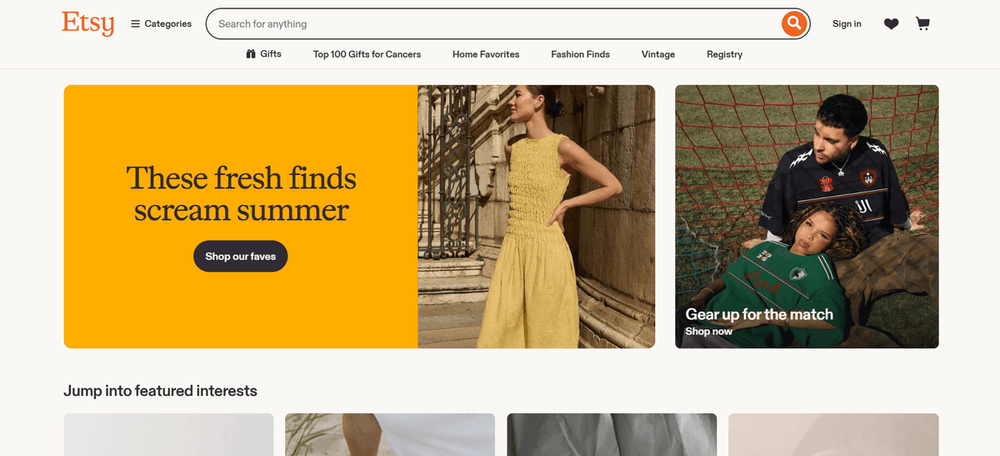
Etsy is the default for a reason: it's a huge marketplace where people arrive specifically looking to buy handmade, vintage, and craft-supply items. That built-in buyer intent is the whole draw.
Best for: Makers who want reach fast and don't want to drive their own traffic yet.
Pros: Massive built-in audience, buyers who already trust the handmade format, straightforward listing tools, and strong search visibility if your titles and tags are good. If you're new, start here to learn what sells.
Cons: Fees stack up (listing, transaction, payment processing, and optional ads), competition is fierce, and you don't own the customer, Etsy does. Policy and fee changes are out of your hands. If you want a sense of what actually moves there, I wrote a separate guide on what sells best on Etsy, and a practical walkthrough on how to sell on Etsy.
2. Amazon Handmade
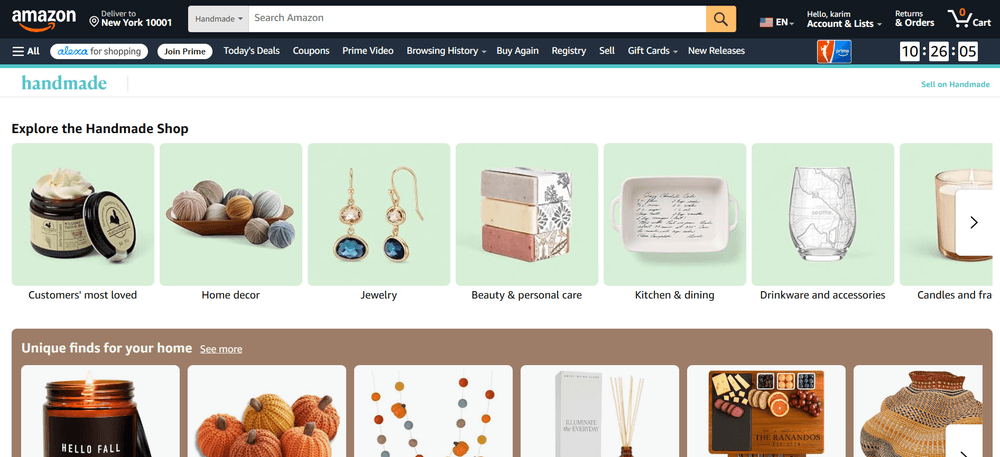
Amazon Handmade is Amazon's handmade-only section, a curated area separate from the main marketplace where sellers apply to be approved as artisans. Once you're in, your products sit in front of Amazon's enormous buyer base.
Best for: Makers who can handle Amazon's operational demands and want access to a shopping audience even larger than Etsy's.
Pros: Enormous reach, buyers primed to purchase, and the handmade badge signals you're not a mass producer. Fulfillment options can help you scale.
Cons: There's an application and approval step, the platform is built around volume and speed, and the seller experience is more corporate and less craft-community than Etsy. Fees apply, so confirm the current structure before listing.
3. Folksy (and other niche handmade marketplaces)
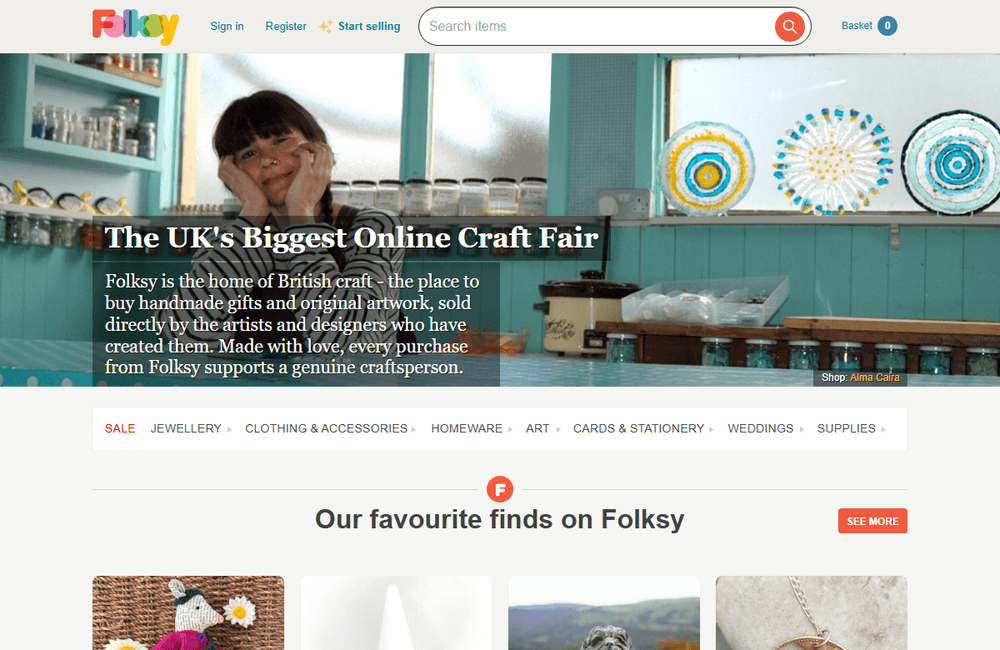
Folksy is a UK-based marketplace for handmade and craft items, often described as a British alternative to Etsy. It's smaller, but the audience is specifically there for handmade goods made in the UK. Other regions have their own equivalents, and there are curated craft marketplaces that vet sellers for quality.
Best for: UK makers, or anyone who wants a smaller, more community-driven marketplace with less noise than the giants.
Pros: A focused handmade audience, a supportive community feel, and less overwhelming competition than the big platforms. Good as a second channel alongside Etsy.
Cons: Far less traffic than Etsy or Amazon, so it works best as a complement rather than your only shop. For a fuller rundown of Etsy-style competitor marketplaces, see our guide to Etsy alternatives.
Your own store
4. Shopify (or your own website)
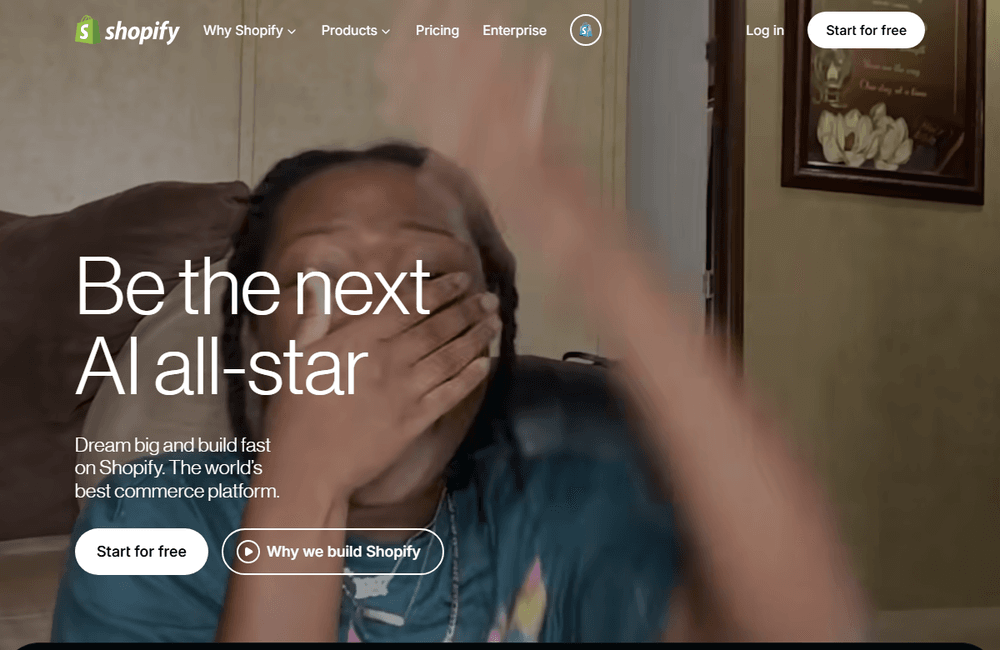
Your own store is the opposite of a marketplace: no built-in audience, but total control. You set the branding, the prices, the rules, and you own the customer list. Shopify is the most common way makers do this, though any website builder with a shop feature works.
Best for: Makers who already have some following (from Etsy, Instagram, or local sales) and want to keep more margin and build a real brand.
Pros: You keep the most margin (just payment processing and your platform cost), you own the customer relationship, and you can build a brand that isn't buried among competitors. No marketplace can change your fees overnight.
Cons: You start with zero traffic. You have to drive every visitor yourself through social, email, ads, or SEO. It's the highest-control option and also the highest-effort one. Most makers open their own store after a marketplace has proven there's demand, not before.
Wholesale
5. Faire
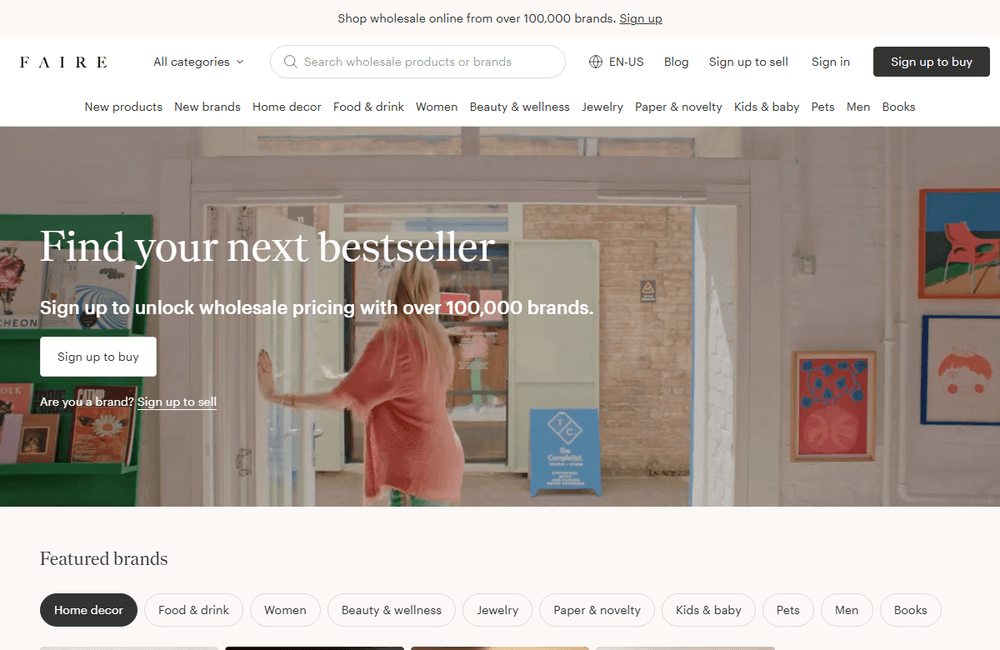
Faire is a wholesale marketplace that connects makers and small brands with retailers (boutiques, gift shops, and other stores) who buy in bulk to resell. It's a completely different model from the others here: you're selling to shops, not directly to shoppers.
Best for: Makers who can produce at volume and want fewer, larger orders instead of many small retail sales.
Pros: Larger order sizes, a single wholesale relationship can be worth dozens of retail sales, and it gets your products onto real store shelves. Good for scaling once your process is efficient.
Cons: Wholesale pricing means thinner per-unit margin, you need production capacity to fill bulk orders, and it suits makers who've already nailed a consistent, repeatable product. Not a starting point for a brand-new maker.
Social selling
6. Instagram

Instagram is where a lot of craft buying starts, even when the sale finishes elsewhere. Strong photos and video of your process build an audience that trusts you, and shopping features let people buy without leaving the app in supported regions.
Best for: Visual crafts and makers willing to post consistently and show their process.
Pros: Free to start, excellent for building a brand and a loyal following, and process videos convert browsers into buyers. It feeds every other channel you run.
Cons: It's a slow build, the algorithm decides who sees you, and it rewards consistent posting. Selling directly in-app can be clunky, so many makers use Instagram to drive people to Etsy or their own store.
7. Facebook Marketplace
Facebook Marketplace is built for local, mostly in-person sales. It's less about brand-building and more about moving items to people near you, often with cash or a quick local pickup.
Best for: Makers who want fast local sales with no listing fees and don't mind meeting buyers.
Pros: Free to list, a large local audience, and quick turnaround. Great for testing prices and clearing inventory.
Cons: Buyers expect low, bargain-style prices, it's not built for a premium handmade brand, and you'll field lowball offers and no-shows. Better for volume and cash flow than for building a reputation.
8. Facebook groups
Beyond Marketplace, niche Facebook groups (local craft groups, buy-and-sell groups, and hobby-specific communities) can be quietly excellent. Members are already interested in what you make, and a well-run group builds trust fast.
Best for: Makers in a specific niche or town who want a warm, targeted audience.
Pros: Highly targeted, free, and community trust converts well. A group that loves your work becomes repeat buyers and word-of-mouth.
Cons: Many groups ban or limit selling, so read the rules first, and you have to genuinely participate, not just drop links. It's relationship-building, not a storefront.
Local and in-person
9. Craft fairs and markets
Craft fairs put you face to face with buyers who came specifically to shop handmade. You get instant sales, instant feedback, and a chance to tell your story in person.
Best for: Makers who enjoy talking to people and want cash-in-hand sales plus real market research.
Pros: Immediate payment, priceless feedback on what people pick up and what they walk past, and full margin minus the booth fee. You learn more in one weekend than in a month of online guessing.
Cons: Booth fees are paid whether you sell or not, it's physically demanding, and sales are weather- and foot-traffic-dependent. You're trading a full day for a limited local audience.
10. Consignment shops and local boutiques
Consignment means a local shop displays your products and takes a cut, paying you only when an item actually sells. Some boutiques instead buy your work outright at wholesale. Either way, your crafts get a physical home in a curated store.
Best for: Makers who want a steady physical presence without running a booth every weekend.
Pros: Ongoing visibility in a real shop, no daily effort once your products are placed, and the shop's regulars become your buyers. Consignment carries low upfront risk for you since you're only paid on sales.
Cons: With consignment the shop takes a percentage and you wait to get paid until items sell, so cash flow is slower, and you're relying on someone else's store traffic and display choices. Confirm the split and payment terms in writing before you hand over stock.
11. Farmers markets and pop-ups
Farmers markets and short-run pop-up events reach a slightly different crowd than dedicated craft fairs: people out for local, small-batch goods, often as part of their weekend routine. Pop-ups (a weekend table in a cafe, a holiday market, a shared space with other makers) let you test a location cheaply.
Best for: Makers with consumable or gift-style crafts (candles, soap, food-adjacent items, small decor) and anyone testing whether a location is worth committing to.
Pros: Repeat local foot traffic, a loyal regular crowd, and lower commitment than a full craft-fair circuit. Pop-ups are a cheap way to try a new area or season.
Cons: Audiences skew toward lower price points, availability of stalls is limited and seasonal, and like all in-person selling it's weather- and turnout-dependent.
12. Local retail partnerships and gift shops
Similar to consignment but worth its own mention: approaching independent gift shops, museum stores, tourist shops, and specialty retailers directly. Many will stock local handmade goods either wholesale (they buy from you) or on consignment.
Best for: Makers with a distinct local or regional angle (place-name goods, local materials, souvenirs) and consistent supply.
Pros: Ongoing shelf space, a retailer who markets to their own customers, and repeat wholesale reorders once a product proves itself. It scales your reach without you working every sale.
Cons: You need reliable production, wholesale or consignment margins are lower, and it takes real outreach to get a "yes." Treat it like building relationships, not a quick listing.
Online vs local at a glance
Here's how the main options compare across the trade-offs that matter. "Fees" is directional; always confirm current numbers on each platform.
| Venue | Reach | Control | Margin kept | Effort per sale | Best for |
|---|---|---|---|---|---|
| Etsy | High | Low | Medium | Low | Reach and fast validation |
| Amazon Handmade | Very high | Low | Medium | Medium | Volume, huge audience |
| Folksy / niche marketplaces | Low-medium | Low | Medium | Low | UK / focused handmade audience |
| Your own store (Shopify) | Starts at zero | High | High | Medium-high | Brand and margin, once you have demand |
| Faire (wholesale) | Medium (retailers) | Medium | Lower per unit | Low per unit | Bulk orders, scaling |
| Medium-high | Medium | High | Medium | Brand building, feeding other channels | |
| Facebook Marketplace | Local, high | Medium | High | Medium | Fast local sales |
| Facebook groups | Niche | Medium | High | Medium | Targeted community selling |
| Craft fairs and markets | Local | High | High (minus booth) | High | Face-to-face sales, feedback |
| Consignment / boutiques | Local | Low | Lower (shop's cut) | Low | Steady physical presence |
| Farmers markets / pop-ups | Local | High | High | High | Consumables, testing locations |
The pattern is clear: online buys you reach at the cost of margin and control, local buys you margin and connection at the cost of reach. That's why the combination usually beats any single choice.
Widening your range with print-on-demand
One thing I see a lot: a maker has three or four handmade products and hits a ceiling, because every new item costs hours of their own time. A common fix is to add a few print-on-demand products (mugs, tote bags, art prints, stickers) alongside the handmade line. Those are printed and shipped on demand, so they widen your range without adding making hours, and they often pair naturally with a handmade brand's style.
The catch is choosing designs and niches people actually want, not just whatever seems fun to make. That's the part my tool handles: Trendlytic finds print-on-demand niches and keywords with real demand across Etsy, Redbubble, TeePublic, and Amazon Merch, scored for demand and competition, with a live USPTO trademark check so you don't design something you can't legally sell. It's $19.99 a month for 100 searches, with a free trial. If you want the full picture on the model first, here's our complete print on demand guide. And if your work is more digital or art-based, see where to sell AI art for that angle specifically.
That's an option to widen your range, not a replacement for your handmade work. Plenty of makers do fine with handmade alone.
FAQ
Where is the best place to sell handmade crafts? There's no single best place. For reach and fast validation, start with Etsy. For the most margin and control, sell through your own store. For instant sales and feedback, do local craft fairs. Most makers combine an online marketplace with at least one in-person channel.
Where can I sell handmade items besides Etsy? Plenty of places: Amazon Handmade, niche marketplaces like Folksy (UK), your own Shopify store, Faire for wholesale, Instagram and Facebook for social selling, and local venues like craft fairs, consignment shops, and farmers markets. See our Etsy alternatives guide for the marketplace options in depth.
Where can I sell crafts locally? Craft fairs and markets, consignment shops and local boutiques, farmers markets and pop-up events, and Facebook Marketplace or local buy-and-sell groups. Local retail partnerships with gift shops and specialty stores are another route if you can supply consistently.
Is it better to sell handmade on Etsy or my own website? Etsy gives you a built-in audience but takes fees and owns the customer. Your own website gives you full control and better margin but zero starting traffic, so you drive every visitor yourself. Most makers start on Etsy to prove demand, then open their own store once they have a following to bring with them.
Where do handmade sellers make the most money? Per sale, direct channels (your own store and in-person selling) keep the most margin because there's no marketplace cut. In total revenue, high-reach marketplaces or wholesale can move more volume. Sellers who earn the most usually combine a reach channel with a high-margin one rather than relying on a single platform.
Do I need a business license to sell handmade crafts? It depends on where you live and how much you sell. Casual online sales and the occasional craft fair often have different requirements than a registered business, and rules vary by country, state, and city. Check your local regulations before you scale up, especially for in-person markets and wholesale.
Conclusion
The best place to sell handmade crafts is the one that matches what you want right now: reach, margin, or real-world connection. Start with one channel that fits your goal, learn what sells, then add a second so you're not depending on a single platform's rules or a single weekend's weather.
Which channel are you leaning toward first, an online marketplace or a local market? Tell me what you make and I'll point you toward the venue that fits it best.
Like this? Get one like it every Wednesday.
Niche data, trademark alerts, one tactic per week.
Try Trendlytic
Find your next winning POD niche in 40 seconds
Live data from TeePublic, Amazon Merch, Redbubble, and Etsy, with a trademark check built in. Then turn any winner into a listing for a design of your own in that niche. Plans from $19.99/month.
Start researchingKeep reading
- Trendlyticetsy alternatives
9 Best Etsy Alternatives for Sellers in 2026 (Honest Comparison)
The Journal9 Best Etsy Alternatives for Sellers in 2026 (Honest Comparison)
July 13, 2026 · 18 min read
- Trendlyticcustom stockings
Custom Stockings for Christmas: Names, Suppliers, Dates
The JournalCustom Stockings for Christmas: Names, Suppliers, Dates
October 5, 2026 · 18 min read
- Trendlyticshopify vs etsy
Shopify vs Etsy in 2026: Fees, Buyers and Which to Pick
The JournalShopify vs Etsy in 2026: Fees, Buyers and Which to Pick
October 3, 2026 · 18 min read