TL;DR: The right Etsy alternative depends entirely on what you sell and whether you can bring your own buyers. For handmade goods with built-in traffic, Amazon Handmade and eBay are the closest fits. For print-on-demand designs, Redbubble, TeePublic, and Amazon Merch. To own your store and margins, Shopify or Big Cartel. For selling into shops, Faire. For digital downloads, Payhip. Most sellers should diversify off Etsy, not fully abandon it, because Etsy still holds the biggest ready-made buyer crowd for handmade and craft.
If you sell on Etsy and you have started searching for a way out, I doubt it came from nowhere. Fees keep creeping up. A listing that used to get views now sits at zero. You got quietly enrolled in Offsite Ads and watched a chunk of a sale disappear. Or worse, you woke up to a suspended shop with no clear reason and no human to email. Any one of those is enough to make a seller wonder what else is out there.
So let me be straight before the list. There is no single platform that replaces Etsy for everyone, and anyone who tells you otherwise is selling something. Etsy still has the largest built-in audience of people actively shopping for handmade, vintage, craft supplies, and digital downloads, and that reach is the exact thing that is hard to walk away from. For most sellers the smart move is not "leave Etsy," it is "stop depending only on Etsy." This guide is written for that seller, and every option below is judged on what it actually does for someone who wants somewhere else to sell.
Don't miss the next one.
New POD niche analysis every Wednesday.
Why sellers want out of Etsy
It helps to name the frustration first, because it decides which alternative fixes it and which just moves the problem.
- Costs stacking up. Between the listing fee, the transaction cut, payment processing, and the ad take, the total bite per sale has grown, and small-margin makers feel it most. (If you want to see exactly where the money goes, the Etsy fee calculator breaks it down per order, and Etsy fees explained covers each line.)
- Saturation and thinning reach. More sellers, more listings, and an algorithm you do not control means the organic views you used to count on are no longer promised. A good product can still go unseen.
- Offsite Ads you did not really choose. Above a revenue threshold you cannot opt out, and a sale that comes through those ads carries an extra fee whether you wanted the promotion or not.
- Account risk. Suspensions and holds happen, sometimes by automated flag, and the support experience when it does can be slow and impersonal. Losing years of reviews overnight is a real fear.
- One platform, all your income. Even a thriving Etsy shop is fragile if it is your only channel.
Notice that only the fees are truly unique to Etsy. Saturation, algorithm risk, and single-channel fragility follow you onto almost any open marketplace. Keep that in mind, because it changes which alternative genuinely solves your problem versus which one just gives you the same headache in a new place.
The 9 best Etsy alternatives at a glance
I have grouped these by how they work, not by a made-up ranking, because "best" is meaningless until you know what you sell and who brings the traffic. Here is the shortlist, then a section on each.
| Alternative | Type | Best for | Who drives traffic |
|---|---|---|---|
| Amazon Handmade | Handmade marketplace | Genuine handmade goods wanting Amazon's reach | The platform |
| eBay | Open marketplace | Vintage, craft supplies, wide categories | The platform |
| Redbubble | POD marketplace | Print-on-demand art and apparel, hands-off | The platform |
| TeePublic | POD marketplace | Apparel and niche/humor designs | The platform |
| Amazon Merch | POD marketplace | Apparel at scale, if accepted | The platform |
| Shopify | Own store | Building a real brand with full control | You |
| Big Cartel | Own store | Small makers wanting a simple free-tier shop | You |
| Faire | Wholesale marketplace | Selling in bulk to retail shops | The platform |
| Payhip | Digital + own store | Digital downloads, templates, printables | You (mostly) |
The first five bring their own shoppers, so you trade margin and control for reach. Shopify and Big Cartel are stores you own, where you keep more per sale but send the visitors yourself. Faire and Payhip serve two common needs: selling wholesale, and selling digital products. The single biggest fork is who supplies the traffic, because it changes the whole trade you are making.
| Group | Traffic | Margin per sale | Effort to start |
|---|---|---|---|
| Marketplaces (Amazon Handmade, eBay, POD sites) | Built in | Lower (fees/royalties) | Low |
| Own store (Shopify, Big Cartel, Payhip) | You drive it | Higher (you set prices) | Higher |
| Wholesale (Faire) | Built in, bulk buyers | Lowest per unit, sold in volume | Medium |
Alternatives with built-in traffic (marketplaces)
These work most like Etsy in the way that matters: shoppers are already there, and you get found through search and browse rather than by marketing to strangers. You give up some margin and you do not own the customer, but you skip the hardest part, which is traffic.
1. Amazon Handmade
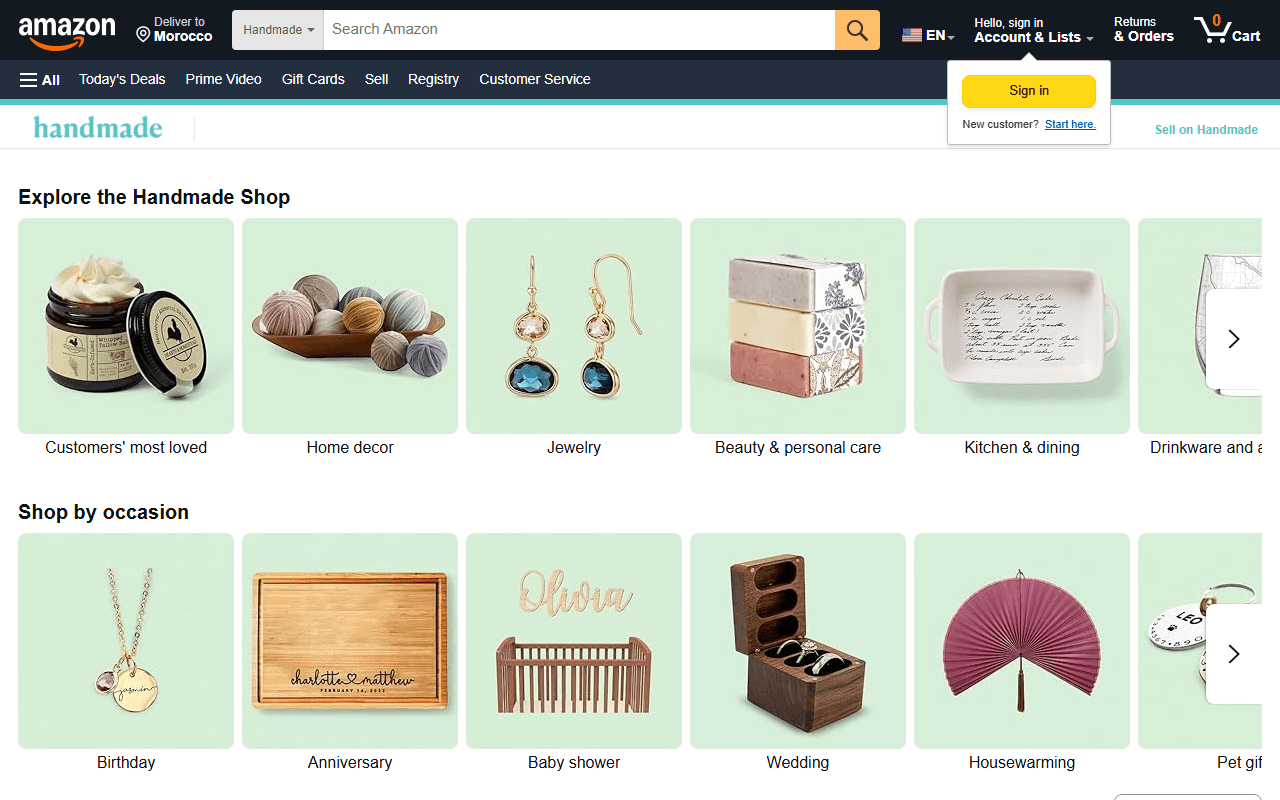
What it is: Amazon's dedicated storefront for genuinely handcrafted products, sitting inside the wider Amazon marketplace. Listings show a "Handmade" badge and reach Amazon's enormous shopper base.
Who it's best for: Makers of true handmade goods (jewelry, home decor, personalized gifts) who want Amazon-scale traffic and Prime-level buyer trust without building their own site.
Fees and model: There is no per-listing fee like Etsy's, but Amazon takes a referral commission on each sale, and that percentage tends to run higher than Etsy's transaction cut. You apply and get approved as an artisan before selling.
The honest downside: The application is stricter than Etsy's open sign-up, because Amazon vets that your items are actually handmade. The commission is meaningful, so price for it. And the interface is built for volume sellers, so Etsy's artisan-friendly, story-driven feel is mostly absent. Buyers here compare on price and shipping speed more than on maker charm.
2. eBay
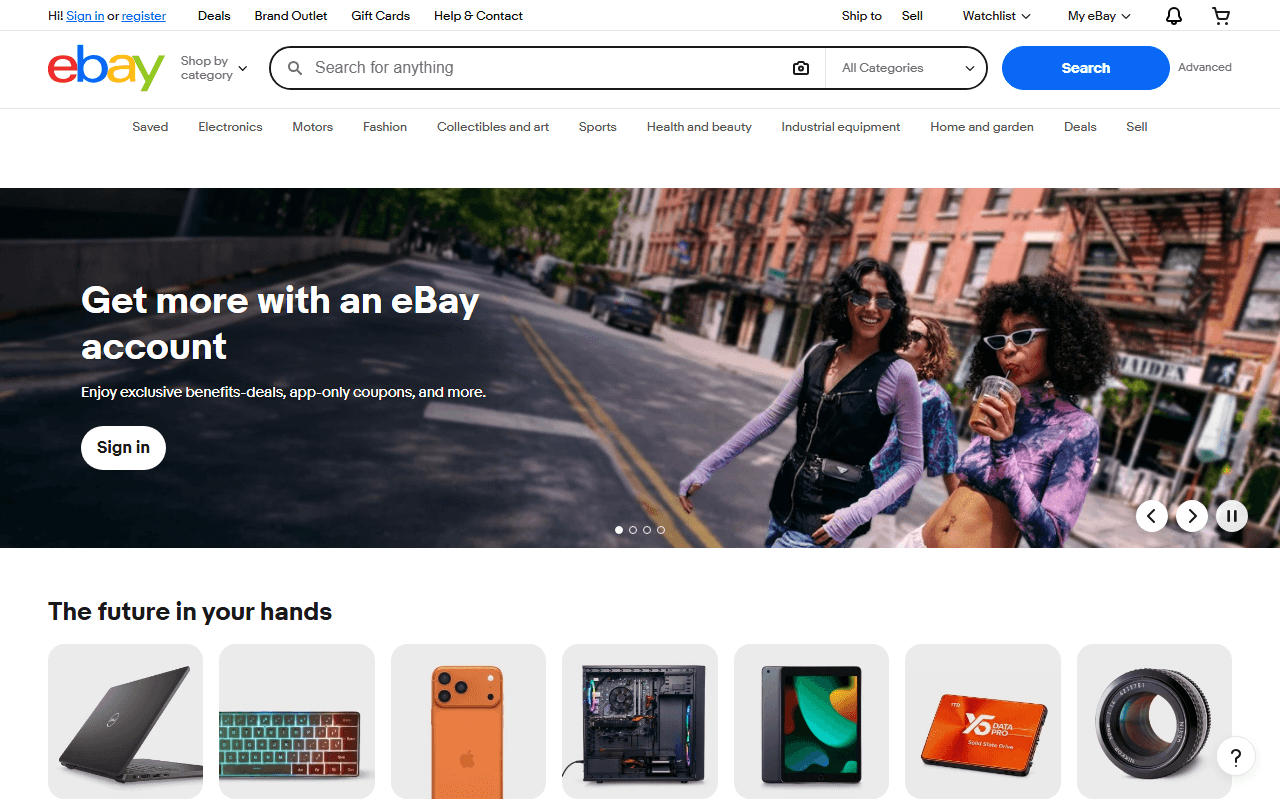
What it is: One of the oldest and largest general marketplaces on the internet, covering nearly every category, with a huge audience for vintage, collectibles, craft supplies, and handmade one-offs.
Who it's best for: Sellers of vintage and secondhand items, craft materials, and unique pieces where buyers are hunting for something specific. It is also strong for anyone who wants an auction option alongside fixed-price listings.
Fees and model: eBay charges an insertion fee structure (with a bank of free listings for most sellers) plus a final-value fee, which is a percentage taken only when the item sells. You often pay less to list than on Etsy, but the sale commission is the real cost.
The honest downside: eBay's brand skews toward deals, used goods, and bargain hunting, so premium handmade can feel out of place next to secondhand electronics. There is no curated craft aesthetic, and buyer expectations lean transactional. It suits vintage and supplies far better than it suits a polished handmade brand.
3. Redbubble
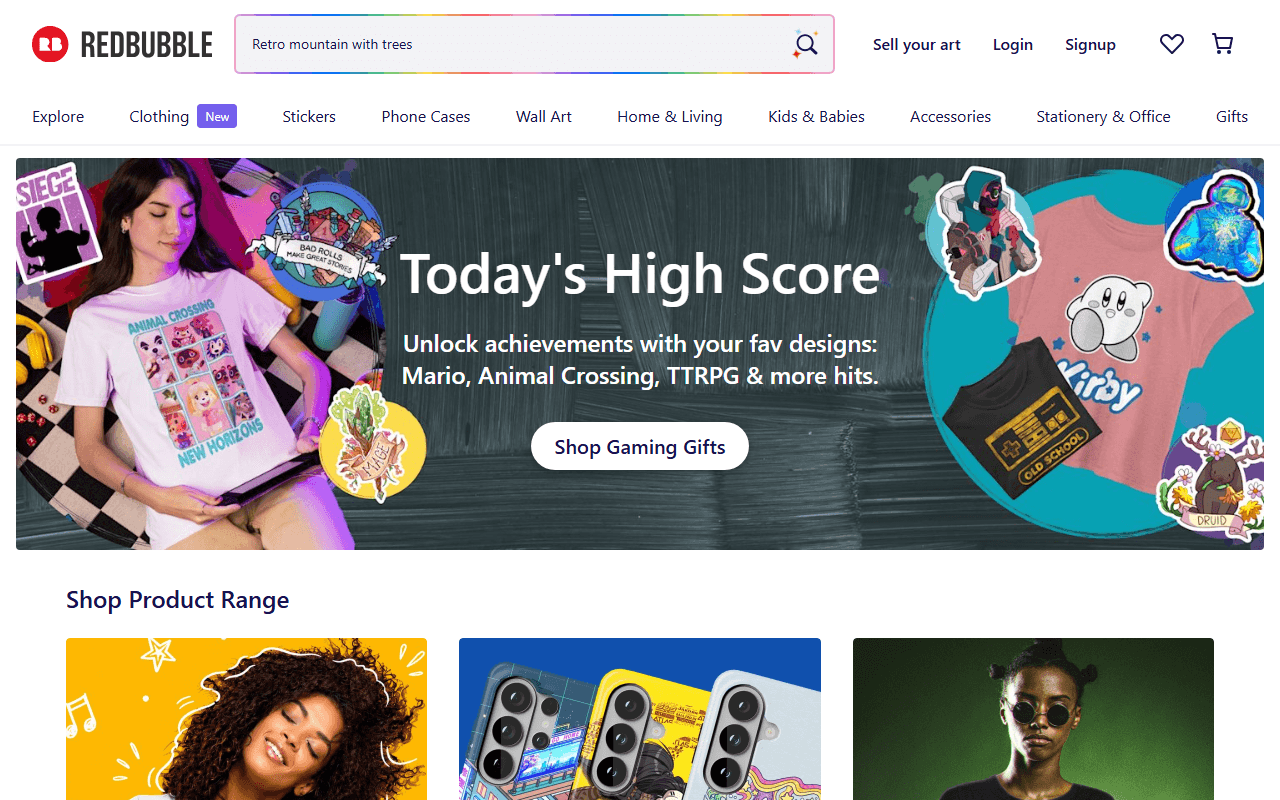
What it is: A large print-on-demand marketplace where you upload designs and the platform prints them on stickers, shirts, mugs, and more when someone buys. To be clear, this is for print-on-demand artwork, not handmade physical goods.
Who it's best for: Sellers who make (or want to make) graphic designs rather than physical crafts, and who want a fully hands-off channel with no inventory. If your Etsy shop already sells digital art or POD-style designs, this is a natural second home.
Fees and model: Free to list. You set a markup over Redbubble's base price and that markup is your royalty. No monthly cost, no upfront fees.
The honest downside: Royalties per item are modest, and the marketplace is deeply saturated, so getting seen is on you through tags and steady uploads. It also runs an aggressive trademark scanner that can pull designs. If you are weighing whether these marketplaces are worth trusting the way Etsy is, the same due diligence applies, and how to sell on Redbubble walks through getting started properly.
4. TeePublic
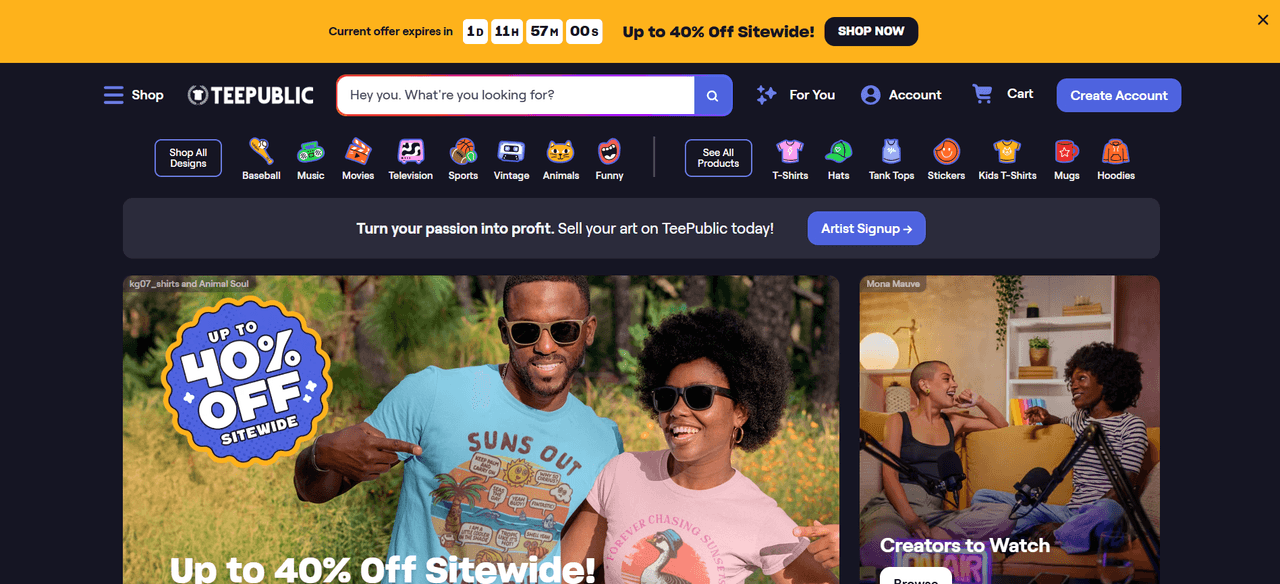
What it is: An apparel-first print-on-demand marketplace, part of the same group as Redbubble, known for a niche and humor-loving audience and frequent sitewide sales.
Who it's best for: Anyone selling graphic tees, especially punchy text designs, fandom-adjacent art, and meme-style humor. The built-in sales events move real volume during promo windows.
Fees and model: Free to join and list. Like Redbubble, you earn a royalty on each sale, and the model rewards a broad catalog over a single hit.
The honest downside: Those constant sales mean your royalty is often calculated on a discounted price, so the per-unit margin is thin. Discovery favors established shops, so a brand-new seller climbs slowly. It is apparel-centric, so it does nothing for handmade or decor sellers.
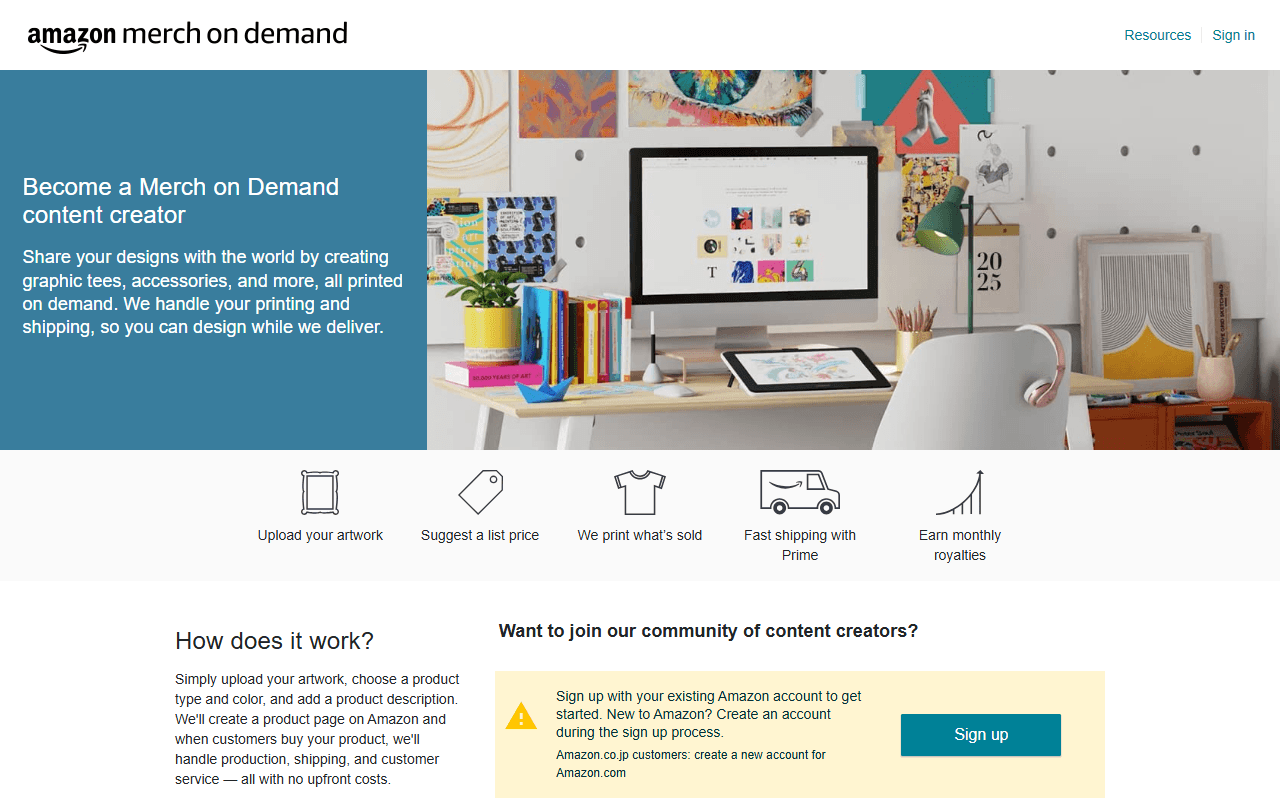
5. Amazon Merch on Demand
What it is: Amazon's own print-on-demand program for apparel and a few other products. Your designs appear as regular Amazon listings, backed by the biggest retail audience anywhere.
Who it's best for: Apparel-design sellers who want raw reach and are disciplined about trademarks. Nothing else on this list puts your work in front of as many ready-to-buy shoppers.
Fees and model: Free to use. Amazon handles printing, shipping, and support, and pays you a royalty per sale. It is invite and tier based, so you start with a small number of upload slots and unlock more as you sell.
The honest downside: The acceptance gate is real, and the tier system means slow early growth. It is also the strictest platform on trademarks by a wide margin, where a single registered phrase can get the whole account banned. It is apparel-focused, so it is no home for handmade or fine-art prints. For the full picture of the POD field, the best print on demand companies roundup compares them on royalties and entry.
Alternatives where you own the store (you bring traffic)
This group is a different bargain. There is no built-in crowd, so you drive the visitors through SEO, social, email, or ads. In exchange you set your own prices, keep far more per sale, own the customer relationship and their email, and build a brand that is yours instead of rented. It is more work and more upside.
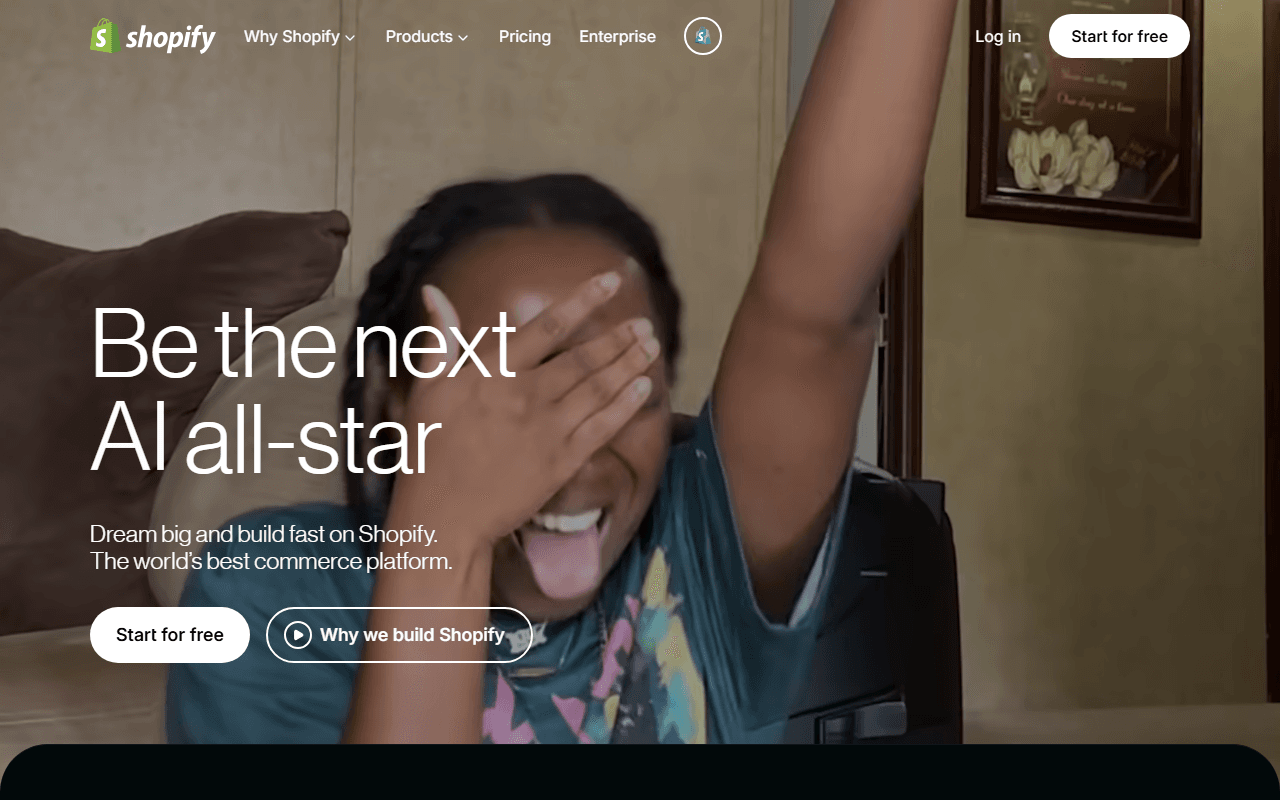
6. Shopify
What it is: The most established store builder for independent sellers, giving you a full branded website with checkout, inventory, apps, and integrations to nearly every fulfillment and marketing tool.
Who it's best for: Sellers ready to treat their shop as a real business, who want complete control over branding, margins, and the customer experience, and who can send their own traffic.
Fees and model: A monthly subscription plus payment processing on each sale. There are no per-listing or marketplace commission fees, so once traffic is flowing your margins are the best of any option here.
The honest downside: Shopify gives you zero traffic. An empty Shopify store is a beautiful shop on an empty street, and filling it is entirely your job through marketing that takes time and often money. The monthly cost applies whether you sell or not. It rewards sellers who already have an audience or the patience to build one. Many makers run Shopify alongside Etsy, using Etsy for discovery and Shopify for repeat, brand-loyal buyers.
7. Big Cartel
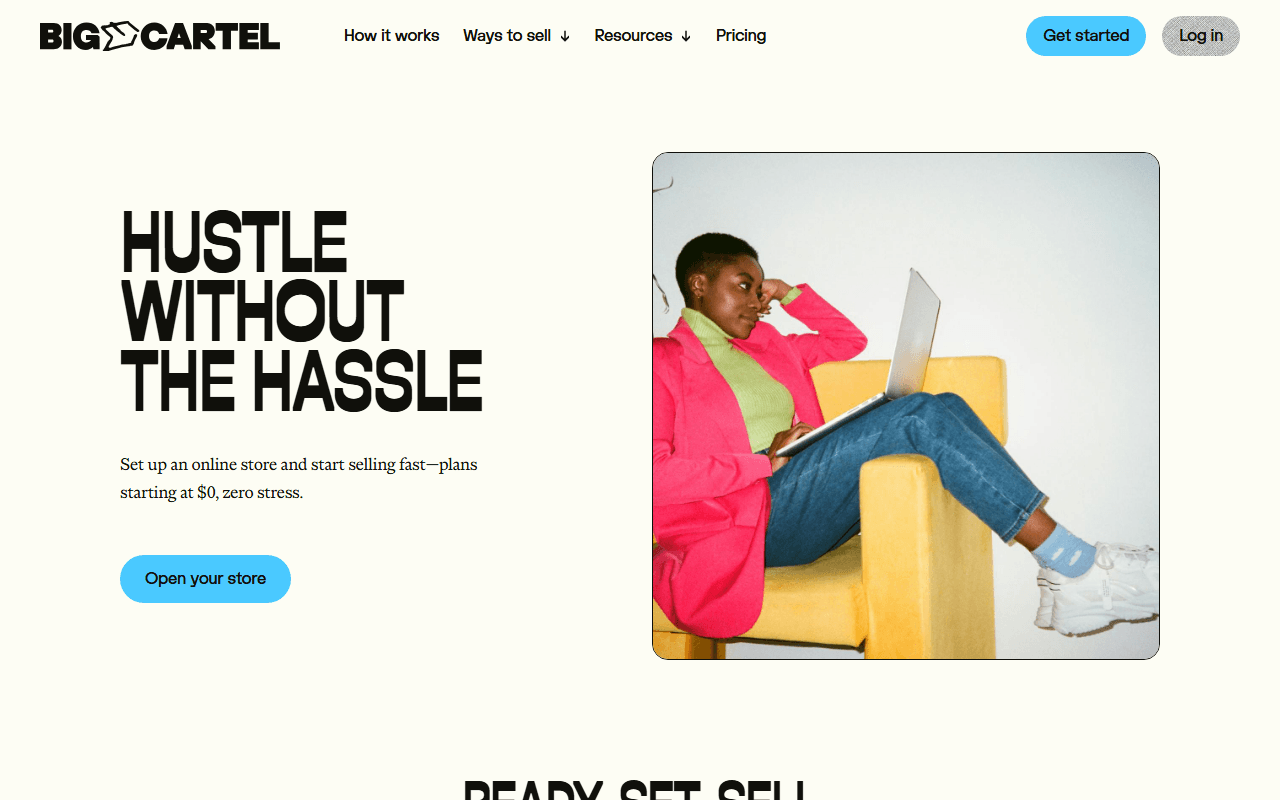
What it is: A simple, artist-friendly store builder aimed at small makers and independent creators who want their own shop without Shopify's complexity or cost.
Who it's best for: Small-volume makers, artists, and musicians selling a modest product line who want a clean branded store and simple setup over deep customization.
Fees and model: Big Cartel is known for a genuinely free plan that covers a small number of products, with low-cost paid tiers as you grow. Crucially, it does not take a commission on your sales, so what you charge (minus payment processing) is what you keep.
The honest downside: It is deliberately lightweight, so the features, themes, and integrations are far more limited than Shopify's, and it does not scale to a large or complex catalog. Like any own-store option, it brings no traffic of its own. It is a simple shop for a focused product line, not a growth engine.
Wholesale and digital alternatives
These two do not replace an Etsy retail shop directly. They open a different sales channel that many Etsy sellers overlook, and either can add income without competing with your existing listings.
8. Faire
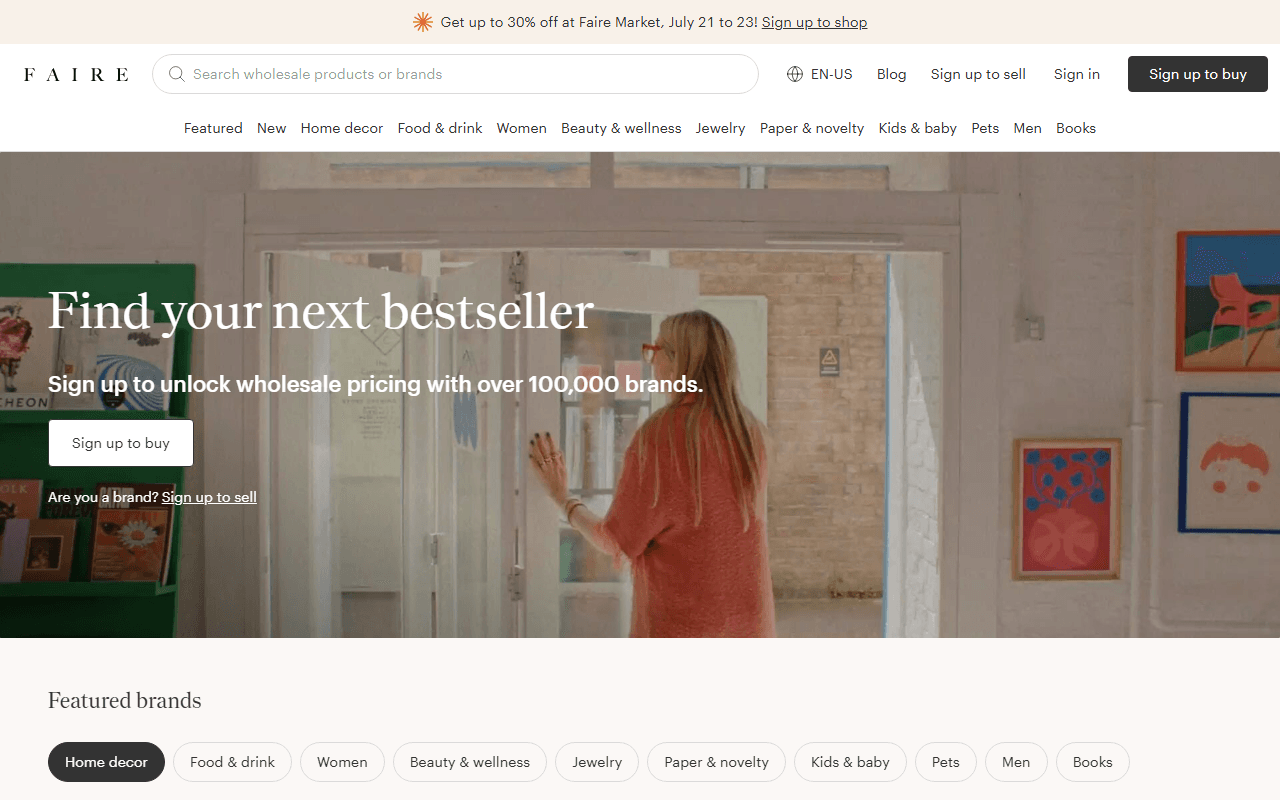
What it is: A wholesale marketplace that connects makers and brands with independent retail shops. Instead of selling one item to one shopper, you sell in bulk to boutiques and stores that then resell to their customers.
Who it's best for: Makers with a product that can be produced at volume and a margin that survives wholesale pricing. If shops are already asking to stock your work, or you want steadier bulk orders instead of one-off retail sales, this is the channel.
Fees and model: Free to list, with Faire taking a commission on orders, and typically a reduced or waived commission on customers you bring yourself. The model is built around recurring wholesale reorders rather than single retail sales.
The honest downside: Wholesale pricing means a much lower price per unit, so your production cost and margins have to work at roughly half of retail. It is not for one-of-a-kind pieces or anyone who cannot fulfill larger, repeatable orders. It is a genuinely different business model from retail on Etsy, and it only fits certain products.
9. Payhip
What it is: A simple platform for selling digital products (ebooks, templates, printables, courses, design files) and physical goods, either through its own storefront or embedded on a site you already have.
Who it's best for: Sellers of digital downloads, which is one of Etsy's most competitive and rule-heavy categories. If you sell printables, SVGs, planners, or templates on Etsy, Payhip lets you own that sale and skip the marketplace cut.
Fees and model: It offers a free plan that takes a small percentage of each sale, with paid monthly tiers that lower or remove that fee. You keep the customer relationship, which matters a lot for digital products with repeat buyers.
The honest downside: Like the own-store options, it brings no built-in audience, so digital sellers relying on Etsy's search traffic will need another way to be found. It works best as a channel you own next to a marketplace that still brings discovery.
Should you leave Etsy or just diversify?
Here is the part most "alternatives" lists skip, and it is the one that actually matters.
One note first if you make things by hand: this list is online platforms only. Craft fairs, consignment shops and local boutiques are covered with the online options in where to sell handmade crafts.
For the large majority of sellers, the honest answer is diversify, not quit. Etsy still holds the biggest crowd of people actively shopping for handmade, vintage, and digital goods, and that discovery is hard to rebuild from scratch elsewhere. The stronger play is to keep Etsy working for what it is good at (getting found) while adding a second and third channel so a single suspension or fee hike can never take you to zero. Plenty of sellers use Etsy for reach, an own store for margin and repeat buyers, and a marketplace like Amazon Handmade for a different audience entirely.
But diversifying is not the deepest lesson. Only the fees are really an Etsy problem. Saturation, algorithm risk, and single-channel fragility travel with you. A product nobody wants does not suddenly sell because you listed it on eBay instead, and a flooded category is just as flooded on Amazon Handmade. Moving a weak catalog to a new platform usually earns you the same silence in a new place.
The real lever is almost never the platform. It is picking something people actually buy, and not trapping all your income on one channel. Whichever alternative you choose, validate demand before you commit. That means looking at what is genuinely selling, not just how many people search a phrase, because high search volume behind a wall of established sellers is a saturated niche, not an opening.
If part of your diversification is moving into print-on-demand marketplaces, this is where I can be useful and honest at the same time. Three of the alternatives above (Redbubble, TeePublic, and Amazon Merch) are POD marketplaces I research directly. Trendlytic shows what is actually selling across TeePublic, Amazon Merch, Redbubble, and Etsy in a single search, and its USPTO trademark check looks up any phrase in the live register in one click, so you can catch a protected phrase before a design is built around it. It starts at $19.99/mo after a 3-day trial. For the manual, non-POD side of validating demand, the print on demand pillar and the free tools cover the groundwork.
FAQ
What is the best Etsy alternative? The best Etsy alternative depends on what you sell. For handmade goods with built-in traffic, Amazon Handmade is the closest fit. For vintage and craft supplies, eBay. For print-on-demand designs, Redbubble or TeePublic. And for full control over your brand and margins, your own Shopify or Big Cartel store. Most sellers do best adding one of these alongside Etsy rather than fully leaving.
What is the cheapest alternative to Etsy? The cheapest to start are the marketplaces that cost nothing upfront. Redbubble, TeePublic, and Amazon Merch are free to list and pay you a royalty per sale. Big Cartel offers a genuinely free plan for a small catalog with no sales commission, which makes it the cheapest own-store option for a small maker.
What is the best Etsy alternative for digital products? Payhip is a strong pick for digital downloads because it lets you sell printables, templates, and files while keeping the customer relationship, with a free tier that only takes a small cut per sale. Gumroad is a similar option. The trade-off is that neither brings Etsy's search traffic, so you supply the audience.
What is the best Etsy alternative for print-on-demand? For print-on-demand specifically, Redbubble and TeePublic are the easiest hands-off marketplaces to start on, and Amazon Merch on Demand offers the most reach if you get accepted. If you are weighing TeePublic and want to be sure it is trustworthy first, here is the honest answer on whether TeePublic is legit and safe. All three are free to join and pay royalties, and none of them work for handmade physical goods, only for designs printed on products.
Is it better to leave Etsy or diversify? Diversifying is usually the better move. Etsy still has the largest ready-made audience for handmade and craft, so keeping it for discovery while adding another channel spreads your account risk without giving up that reach. Fully leaving only makes sense if you can reliably drive your own traffic to a store you own.
Can I sell on multiple platforms at the same time? Yes, and most established sellers do exactly that. Running Etsy alongside an own store and a marketplace or two spreads your risk and multiplies where buyers can find you. The main thing to manage is keeping listings, pricing, and (for POD) trademark checks consistent so a phrase that is safe on one channel does not cause a strike on another.
Conclusion
The best Etsy alternative is the one that matches what you sell and who brings the traffic. Want built-in shoppers for handmade goods? Amazon Handmade, then eBay for vintage and supplies. Selling print-on-demand designs? Redbubble, TeePublic, or Amazon Merch. Ready to own your margins and your brand? Shopify, or Big Cartel for something simpler. Selling wholesale or digital? Faire and Payhip cover those. And for most sellers, the smartest step is not walking away from Etsy at all, but adding a second and third channel so you are never one suspension away from nothing.
Just hold on to the honest throughline. A new platform does not fix an old problem. If a product is not selling because the category is flooded or the demand was never really there, it will not sell on the alternative either. So whichever route you take, confirm the niche actually sells and is not already saturated before you rebuild anywhere. Trendlytic answers the demand half of that in a single search over TeePublic, Amazon Merch, Redbubble, and Etsy, while the trademark half comes down to a one-click USPTO lookup on whichever phrase you are considering. Start a free trial, and validate what will sell before you spend a month setting up a new shop.
What is really pushing you off Etsy, the fees, the saturation, or a scare with your account? That answer usually points straight at which alternative on this list is the right one for you.
Like this? Get one like it every Wednesday.
Niche data, trademark alerts, one tactic per week.
Try Trendlytic
Find your next winning POD niche in 40 seconds
Live data from TeePublic, Amazon Merch, Redbubble, and Etsy, with a trademark check built in. Then turn any winner into a listing for a design of your own in that niche. Plans from $19.99/month.
Start researchingKeep reading
- Trendlyticcustom napkins
Custom Napkins: Sets, Weddings and What Sells in 2026
The JournalCustom Napkins: Sets, Weddings and What Sells in 2026
October 10, 2026 · 20 min read
- Trendlyticdtf vs sublimation
DTF vs Sublimation in 2026: Which One Fits Your Product?
The JournalDTF vs Sublimation in 2026: Which One Fits Your Product?
October 6, 2026 · 18 min read
- Trendlytict shirt mockup generator
Best T-Shirt Mockup Generator in 2026: 8 Options Compared
The JournalBest T-Shirt Mockup Generator in 2026: 8 Options Compared
October 5, 2026 · 19 min read