TL;DR: Most types of hoodies are one garment with one thing changed: a zipper, a shorter body, no sleeves, a roomier cut, no pocket. For a seller, every change moves where a design can go. The pullover is the default and the easiest first listing. A full zip splits the front, so zip-up designs live on the left chest and the back. Oversized cuts carry big back prints, cropped and pocketless fronts change the shape of the front print, and kids' sizes need smaller artwork. Below are 15 types, who tends to buy each one, and where the print goes.
Search "types of hoodies" and you get long lists of names, some of them thirty deep. Handy if you're shopping for one. If you sell, two other questions matter more: once this hoodie is on someone, where does my design end up, and is anyone in my niche buying this cut?
So each type below gets a plain description, the buyers it tends to suit, and what it changes for the print. Where I give a size, it comes from one of our own free tools, and I say which. If you're choosing a hoodie for yourself, the table and the fabric section still apply; skip the shop parts.
Types of hoodies at a glance
| Type | What it is | Best print spots | Who it suits (seller angle) |
|---|---|---|---|
| Pullover | Over the head, solid front, pouch pocket | Front above the pocket, back, left chest | Every shop |
| Zip-up (full zip) | Opens all the way down | Left chest and back, never across the zip | Badge designs, clubs, crews |
| Quarter-zip or half-zip | Short zip from the collar | Left chest, back | Workplace and club niches |
| Cropped | Ends at or above the waist | Upper chest, a shorter back | Gym, festival, aesthetic shops |
| Sleeveless | No sleeves | Front and back only | Gym niches, warm places |
| Oversized or drop-shoulder | Boxy, shoulder seam down the arm | Big back print, small chest mark | Streetwear shops |
| Longline | Runs past the hips | Back placed high, front | Streetwear, layered outfits |
| Funnel-neck | Tall collar around the neck | Front starting lower, back | Outdoor and minimal styles |
| No drawstrings | A hood with no cords | Front, a little higher | Kids' sizes, minimal designs |
| Pocketless | No pouch on the front | Taller front, back | Tall designs from a tee |
| Raglan sleeve | Sleeves run up to the collar | Front and back, off the diagonal seams | Varsity looks, two-tone |
| Double-layer hood | Hood sewn from two layers | Same as the body | Higher-priced listings |
| Heavyweight or lightweight | Thick, or thin for layering | Same spots | Streetwear (heavy), spring (light) |
| All-over print | Printed edge to edge | The whole garment | Pattern designs, festival wear |
| Kids' and youth | Smaller sizes | Smaller front, back | Family sets, gifts |
"Print spots" means the places most print services offer on that style. Not every service prints sleeves, hoods or collars, and your provider sets the print area on each blank, so their product page has the final word.
On names: a hoodie is simply a sweatshirt that has a hood. I compared the two for sellers in sweatshirt vs hoodie, so I won't go over it here.
The two you'll list first
1. Pullover hoodie
The pullover is the hoodie most people picture. It goes on over your head, the front is one solid panel, and a pouch (the kangaroo pocket) sits across the stomach. Almost every print service carries it, which makes it the natural first hoodie in a shop.
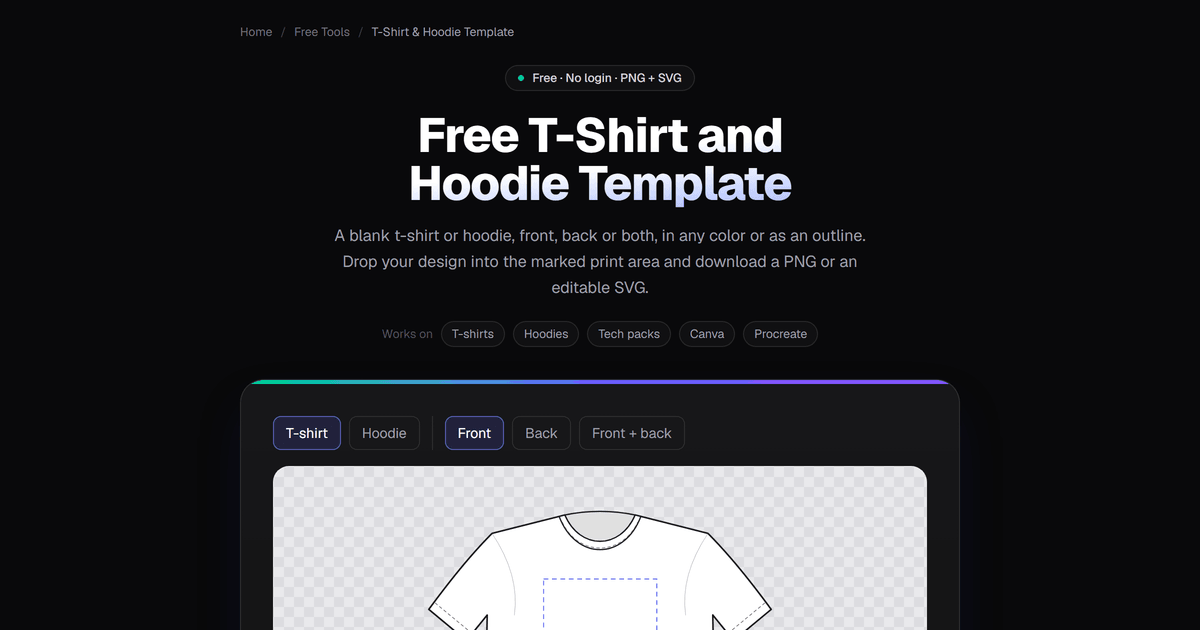
The pocket shapes the front. Our free hoodie template gives an adult L a front print area of about 12 x 11 inches above the pocket, so the shape is wide and short. The back is the big space, as much as 12 x 16 inches below the hood. For a small mark on the left chest, the hoodie rows of our DTF size chart allow as much as 4 x 4 inches. The design placement guide draws each of these spots on a hoodie, with the file size to make.
If you need things to put on it, I sorted 50 hoodie design ideas by niche and by spot on the garment.
2. Zip-up hoodie (full zip)
A zip-up opens all the way down the front with a zipper, and the pouch is usually split into two pockets, one on each side. People like zip-ups for layering: on over a tee in the cold morning, hanging open by lunchtime.
For a seller, the zip is the whole story. It runs straight through the middle of the front print area, and most print providers ask you to keep artwork off the zipper and seams. So a full-front design from your pullover doesn't carry over. Zip-up designs live on the left chest and the back: a small mark in front, the main design behind. Even where a provider prints both sides of the zip, the halves stop lining up once the hoodie is half open.
That pairing suits club and team hoodies, workplace crews, small business merch, any design that works as a badge. If a design is already laid out as left chest plus back, a zip-up is a second listing with almost no extra artwork.
Partial zips, short cuts and no sleeves
3. Quarter-zip and half-zip hoodie
A quarter-zip or half-zip has a short zipper from the collar partway down the chest. It pulls on like a pullover but opens at the neck, and plenty of quarter-zips have no hood at all.
They read a little smarter, so they suit workplace, coaching and club niches. The zip covers only the top of the front, which is exactly where a chest print would start, so most designs go on the left chest, often embroidered rather than printed, with a back design where your provider offers one.
4. Cropped hoodie
A cropped hoodie ends at or above the waist. Many have no pocket or a shallow one.
Cropped hoodies are usually cut as women's styles and lean young; gym, festival and aesthetic shops carry them. The front is short, so tall artwork gets squeezed. Wide, short layouts fit best: one word across the upper chest, a small graphic, a line under the neckline. The back is shorter too, and your provider's cropped blank has its own print area, separate from their regular hoodie.
5. Sleeveless hoodie
A sleeveless hoodie keeps the hood and the body and drops the sleeves, often with deep armholes. It's training wear, and it suits warm places where a full hoodie never makes sense.
No sleeves means no sleeve print, and deep armholes can narrow the usable width near the top of the back. Front and back carry everything. Bold, short text suits the gym crowd: a line someone can read from across the room.
Fits that change the back print
6. Oversized and drop-shoulder hoodie
An oversized hoodie is cut big on purpose: a wide, boxy body and a shoulder seam that sits down on the upper arm instead of on top of the shoulder. That lowered seam is what "drop-shoulder" means, and it gives the relaxed streetwear shape.
This is the cut for back prints. There's more fabric across the back, and a streetwear buyer wants that space filled. Our DTF size chart lists an oversized print at 12 to 14 inches wide, where the regular hoodie back in our template tops out around 12 inches wide. Pair it with a small chest mark; the streetwear logo maker is a quick way to rough one out.
Say in the listing that the cut runs big on purpose, so buyers can choose their size knowing it.
7. Longline hoodie
A longline hoodie runs past the hips, sometimes with a curved hem or side splits. It's a streetwear and layering look, often worn over joggers.
Don't assume the print grows with the garment. The print area comes from your provider and their equipment, not from the length of the hoodie, so the extra length usually shows as plain fabric below the design. That's fine: place the back print high, under the hood, and let the length do the styling.
Neck, strings, pocket and sleeves
8. Funnel-neck hoodie
A funnel neck is a tall collar that stands up around the neck. Some funnel-neck hoodies have a hood above it; others replace the hood with the collar and close with a short zip or snaps. They turn up in outdoor and minimal styles.
The collar takes space at the top of the front, so a chest print starts a little lower, and you shouldn't count on printing the collar itself. Keep the designs quiet: a small word, a simple icon, a mountain or forest scene on the back.
9. Hoodie with no drawstrings
Plenty of hoodies come without cords in the hood. Kids' hoodies especially: cords at the hood and neck of children's clothing are a known safety risk, and safety rules in the US and Europe restrict them in children's sizes. Adult hoodies without strings exist too, sold for a cleaner look.
With no strings, nothing dangles across the upper edge of a chest design. It can sit a touch higher, small text near the neckline stays readable, and the listing photo looks tidier.
10. Pocketless hoodie
A pocketless hoodie has no kangaroo pouch, so the front is one clean panel from neckline to waistband, much like a crewneck with a hood added.
With no pocket in the way, a tall design has room, and artwork laid out for a t-shirt often moves across without a new layout. If your strongest designs are tall rather than wide, a pocketless blank is where they belong.
11. Raglan-sleeve hoodie
On a raglan, each sleeve runs in one piece up to the collar, with a diagonal seam from the underarm to the neckline instead of a seam on top of the shoulder. Many raglans have sleeves in a contrasting color, which gives a sporty, varsity feel.
The front and back panels narrow toward the top because of those seams, so keep wide designs clear of them near the neckline. Varsity lettering, numbers and invented clubs suit the style, and a two-tone raglan does half the design work before you add anything.
Hood, weight, print method and age
12. Double-layer hood
A double-layer, or lined, hood is sewn from two layers of fabric instead of one. It holds its shape, lies better when it's down, and keeps in more warmth when it's up.
It doesn't change the body's print spots. It changes how the hoodie looks in a photo and feels in the hand, which is part of what a buyer is paying for, so if your blank has one, say so in the listing. Want a print on the hood? Check that your service offers it on that exact blank first.
13. Heavyweight and lightweight hoodies
A heavyweight hoodie is thick, warm and holds a structured shape, a look streetwear buyers often want. A lightweight hoodie is thinner, made for layering, spring, and places that never really get cold.
The print spots stay the same, but weight moves the price you pay, the price you can ask and the season you sell in. Your provider lists the weight on each product page, in ounces per square yard or grams per square meter; the bigger the number, the heavier the hoodie.
14. All-over print hoodie
An all-over print hoodie is printed edge to edge: body, sleeves, hood and often the pocket. These are usually polyester, because the method used (sublimation) bonds the ink into polyester fibers, and many are printed as flat panels before the hoodie is sewn.
You design a pattern or a full scene, not a placed graphic. Repeating patterns are forgiving at the seams, where one large image can shift slightly as the panels meet. They suit pattern-led niches: florals, a repeated small icon, camo-style prints, novelty and festival wear.
15. Kids' and youth hoodies
Kids' and youth hoodies are the same styles in smaller sizes, mostly pullovers, and many skip the hood cords for the safety reasons above.
Smaller garment, smaller print. The youth rows on our DTF size chart are measured on youth tees and put the front at around 8 to 9 inches wide, and a hoodie pocket takes height on top of that, so plan a separate kids' version with text large enough to read at that size. Kids' sizes are also what make family sets possible.
Fleece, French terry and weight in plain words
Fleece is brushed on the inside, so the inner face is fluffy and soft. It traps warmth, and it's what most people mean when they call a hoodie cozy.
French terry has small loops on the inside instead of brushed fluff. It's lighter, breathes better, and suits spring, layering and warmer places.
Both usually have a smooth outer face, and that's where the print goes, so choosing between them is about warmth and season more than the design.
Cotton, polyester or a blend. Most hoodies mix cotton and polyester, and the fiber decides how a hoodie can be printed: direct-to-garment printing is generally meant for cotton-rich fabric, sublimation needs polyester, and DTF transfers work across a wider range of fabrics. Your provider picks the method for each blank, so in practice you choose the blank and the method follows.
Which types of hoodies to offer in your shop
Fifteen types doesn't mean fifteen listings. Every type you add is another file to prepare, another set of photos and another listing to maintain. This is the order I'd build in.
Start with the pullover. It takes front and back designs, nearly every print service carries it, and it's the shape most shoppers picture.
Add a zip-up for left chest and back designs. A design built as a small front mark and a big back print moves across with no new artwork. Don't force a full-front design onto one.
Add an oversized cut for streetwear back prints. If the people you design for dress that way, a large back design on a roomy hoodie is the look they're after.
Add kids' sizes when a design works for families. Matching sets for trips, birthdays and holidays turn one order into several hoodies.
Leave the rest until a niche asks for it. Cropped, sleeveless, longline, raglan and all-over print hoodies are specialist styles. They earn a place when your buyers wear them.
Where you sell sets the menu. On Redbubble, TeePublic and Amazon Merch you choose from the short list of hoodie styles each one prints. On Etsy you pick blanks from your print provider's catalog, so the choice is wider, and so is the work.
The niche matters more than the type
A hoodie doesn't sell because of its cut. A cropped hoodie in a niche nobody is buying still sits there, and a plain pullover in a niche with eager buyers moves. So before you choose types, look at what's actually selling in the niche you have in mind, and how crowded it already is. A search count can't tell you either; what buyers are paying for can. Checking that by hand takes hours across Etsy, Redbubble, TeePublic and Amazon for every idea, and it's the part Trendlytic was built to do for you.
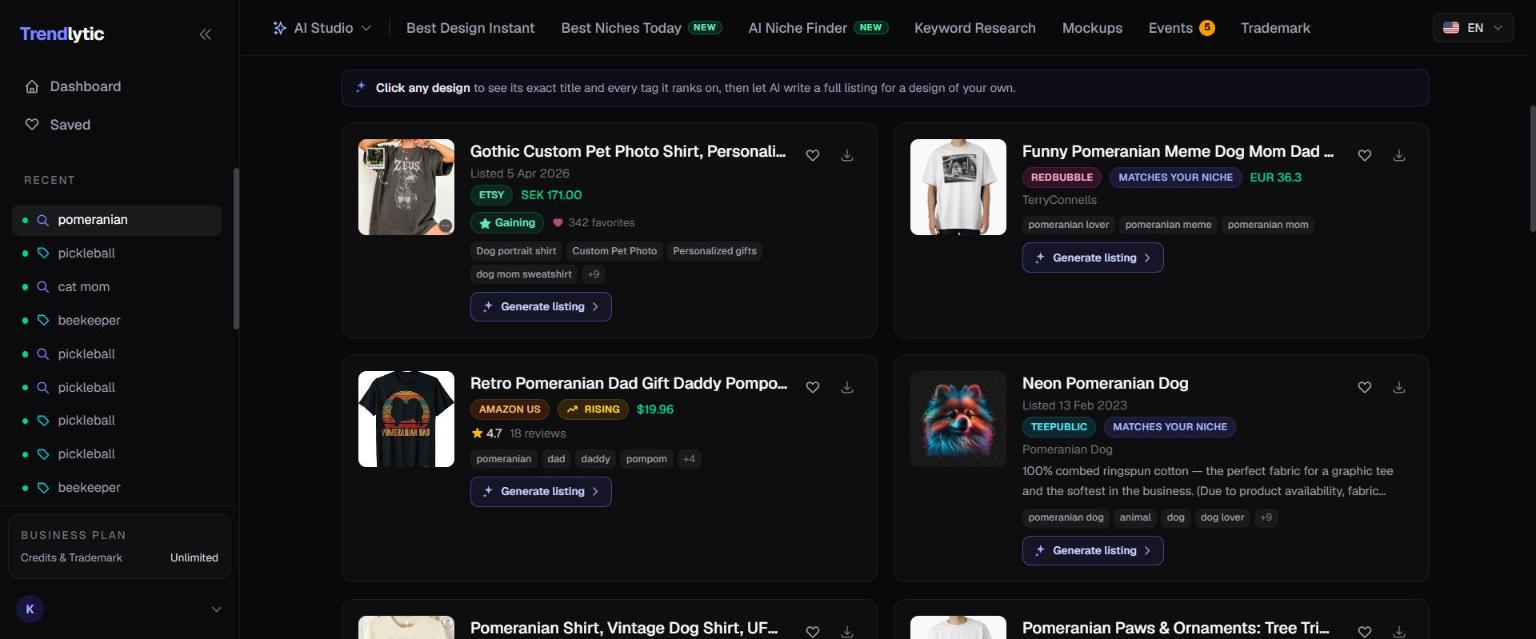
A design that's clearly selling in your niche is proof of a buyer, not a template. Make your own version for that same buyer, with your own words, another hoodie type or a new place for the print.
Showing each type in your listing photos
Buyers can't touch the hoodie, so the photos have to show the type: the zip, the cropped hem, the boxy shoulders, the print on the back.
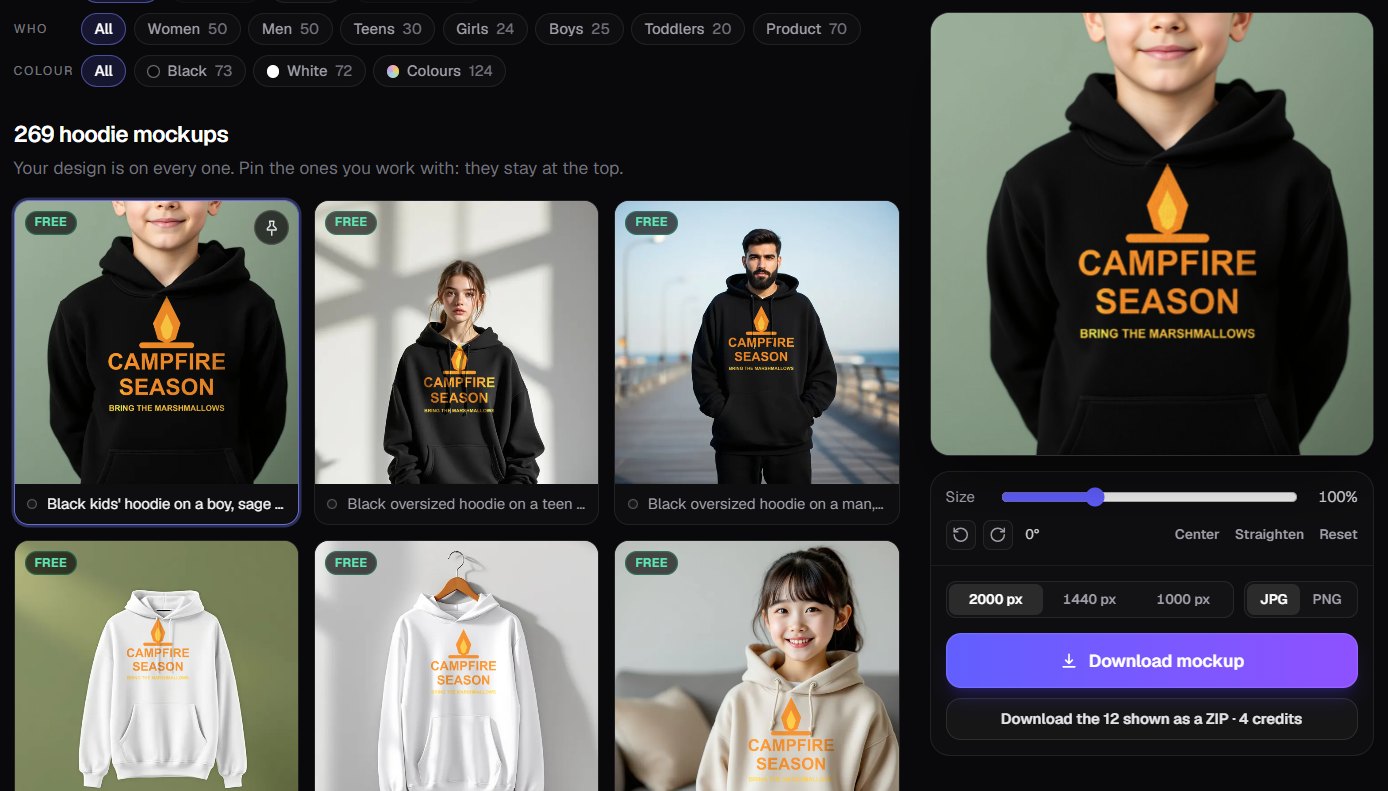
Our hoodie mockup generator has pullovers, regular and oversized, worn by adults, teens and kids or shown flat and on a hanger, in black, white and other colors. Upload a design once and it appears on all of them, a quick way to see whether it holds up on dark and light hoodies.
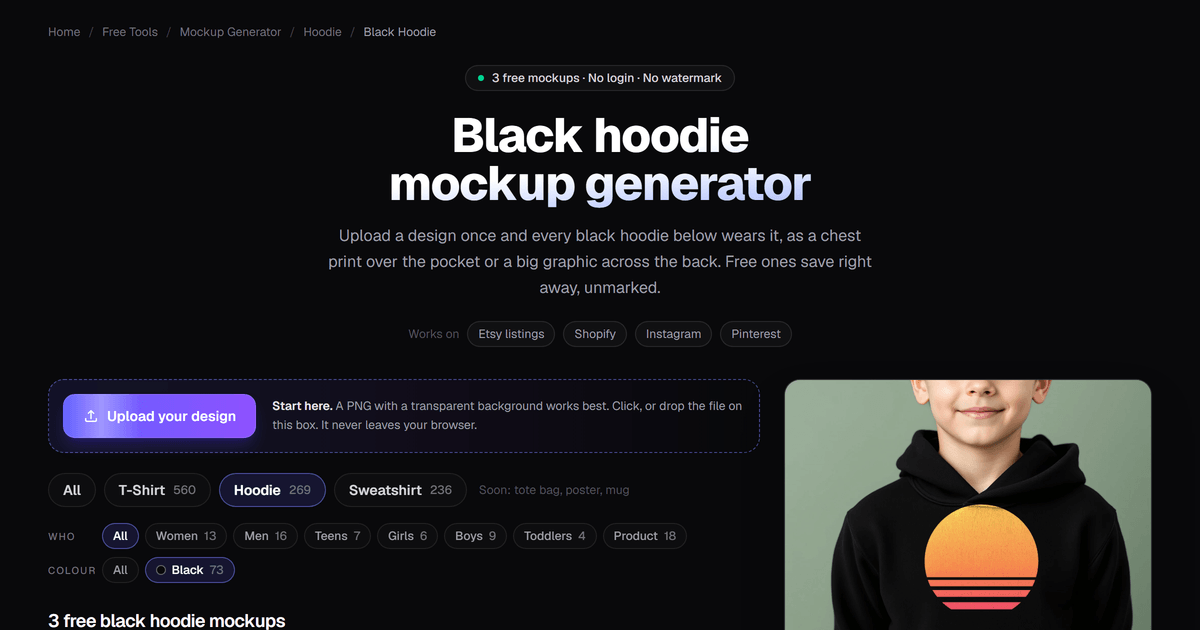
If most of your designs are light ink meant for a dark garment, there's a separate black hoodie mockup page.
For zip-ups, cropped hoodies and other cuts we don't photograph, your print provider's own mockup tool shows its exact blank; I compared eight options, some with zip-ups, in best hoodie mockup generator. Whatever you use, show the back when the design is on the back. A zip-up listing with only a front photo hides the very thing people are paying for.
FAQ
What are the main types of hoodies?
The two main types are the pullover and the zip-up; most others change the cut, length or a detail, like the quarter-zip, cropped, sleeveless, oversized, longline, funnel-neck, pocketless and raglan hoodies. Fabric and weight split each of those again.
What is the difference between a pullover and a zip-up hoodie?
A pullover goes on over your head and has one solid front with a pouch pocket, while a zip-up opens down the middle with a zipper. For a seller, the pullover takes a full-front print; on a zip-up the design moves to the left chest and the back, because most providers ask you to keep artwork off the zipper.
Which type of hoodie is best for print on demand?
The pullover is the safest first choice, because nearly every print service carries it and it takes both front and back designs. Whether a hoodie sells depends far more on the niche and the design than on the cut.
Can you print on a zip-up hoodie?
Yes, as long as the design stays off the zipper. Zip-up designs usually go on the left chest (as much as 4 x 4 inches, per the hoodie rows of our DTF size chart) and on the back (as much as 12 x 16 inches in our free template).
What is a drop-shoulder hoodie?
A drop-shoulder hoodie has its shoulder seam set lower, down on the upper arm, which gives a relaxed, boxy fit. It's the cut most oversized hoodies use, and it suits streetwear designs with a large back print.
What is the difference between fleece and French terry hoodies?
Fleece is brushed on the inside for a soft, warm feel, while French terry has small loops on the inside and is lighter and more breathable. Both usually have a smooth outer face for the print, so the choice comes down to warmth and season.
Conclusion
Most of these 15 types are variations on one garment, and for a seller they all come back to one question: where can the design go? Start with the pullover, add the types your designs and your buyers actually call for, and lay out the artwork for each one instead of stretching one file across all of them.
I built Trendlytic because the slow part of selling hoodies isn't picking a cut. It's learning which niches people are paying for right now, before a design even exists. Pricing starts at $19.99/month for 100 credits, which read up to 6,000 designs on the marketplaces with a verdict on every niche, plus the 1,000 top designs in Best Design Instant, re-ranked every hour. Its hoodie mockup library puts your design on black, white and colored hoodies, worn or laid flat, so you can see it on the garment before you list. Any phrase you want on the front can be looked up on the USPTO register in one click. A card is needed for the 3-day trial, which runs a $1 check. Try Trendlytic for 3 days.
Which type of hoodie are you adding to your shop next, and what's going on it? I'd like to hear.
Try Trendlytic
Find your next winning POD niche in 40 seconds
Live data from TeePublic, Amazon Merch, Redbubble, and Etsy, and a one-click USPTO lookup on any phrase. Then turn any winner into a listing for a design of your own in that niche. Plans from $19.99/month.
Start researchingLiked this? Learn niche research in 5 short emails.
One email a day for 5 days: how sellers pick niches, why designs fail, and how to check yours. Unsubscribe in one click.
Keep reading
- Trendlytichoodie design ideas
50 Hoodie Design Ideas for 2026, by Niche and Print Spot
The Journal50 Hoodie Design Ideas for 2026, by Niche and Print Spot
November 14, 2026 · 18 min read
- Trendlytichoodie mockup generator
Best Hoodie Mockup Generator for 2026: Free and Paid
The JournalBest Hoodie Mockup Generator for 2026: Free and Paid
October 14, 2026 · 19 min read
- Trendlyticwhat is a mockup
What Is a Mockup? Meaning, Types and How Sellers Use Them
The JournalWhat Is a Mockup? Meaning, Types and How Sellers Use Them
November 17, 2026 · 15 min read