TL;DR: SPOD is legit, but it no longer goes by that name: it is now Spreadconnect, the fulfillment service of the Leipzig-based Spread Group, the company behind Spreadshirt and Spreadshop. Its real strength is speed, with a stated goal of producing and shipping most orders within 48 hours from its own US or European production, and it costs nothing to join. What you give up: a modest, apparel-first catalog, plain white-label packaging, uneven support reviews, and a narrow integration list that currently shuts new European sellers out of Etsy. Skip it if most of your sales happen on Etsy or you want a big lifestyle catalog with custom branding.
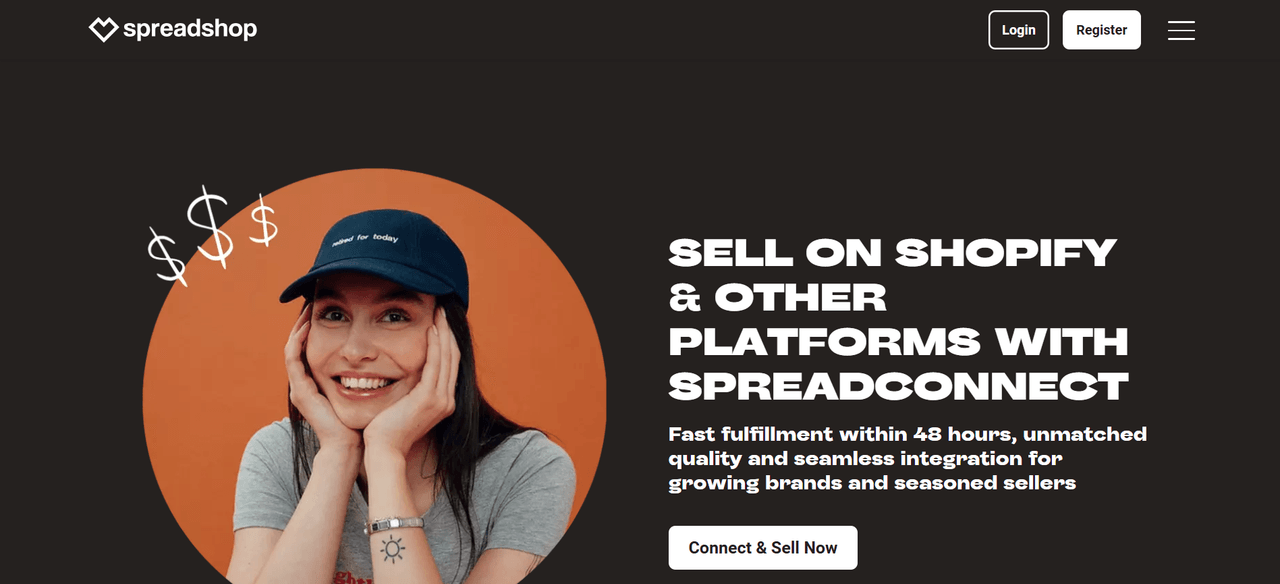
If you typed "SPOD review" into Google, you may have noticed something odd: spod.com no longer shows you a site called SPOD. It forwards you to a Spreadconnect page on spreadshop.com. That redirect is the first thing worth understanding, because a lot of older reviews still talk about SPOD as if nothing changed.
I'm Karim, the founder of Trendlytic, software that helps POD sellers decide what to design. I don't sell printing, so I have no stake in whether you pick SPOD or anyone else. What I do have is a habit of reading supplier help centers line by line, and that is what this review is built on, along with what sellers say publicly after using the service.
The short version of what SPOD does: it sits behind your own online store. A customer buys a hoodie from your Shopify shop, the order passes to SPOD, it gets printed in one of the company's own facilities, and it ships to your customer without SPOD's name on the box. You never hold stock.
Don't miss the next one.
New POD niche analysis every Wednesday.
SPOD at a glance
Before the detail, here is the whole picture on one screen.
| Question | Short answer |
|---|---|
| Current name | Spreadconnect (formerly SPOD, short for Spreadshirt Print-On-Demand) |
| Parent company | Spread Group, founded in Leipzig, Germany in 2002 |
| Sister brands | Spreadshirt (marketplace and custom products), Spreadshop (free hosted stores) |
| Production | Company-run facilities, in either the US or Europe depending on the region you pick |
| Speed claim | Most orders produced and shipped within 48 hours |
| Catalog | A few hundred products, weighted toward apparel |
| Default print method | Direct-to-garment, with DTF, sublimation, flex and flock also available |
| Main integrations | Shopify, WooCommerce, Squarespace, Magento, Shopware, TikTok, Order Desk, API |
| Etsy | Restricted for new European merchants since July 2025 |
| Cost to join | Free, no subscription; you pay product and shipping per order |
| Branding | Neutral white-label packaging, no custom inserts or packaging at the time of writing |
What SPOD is, and what it is called now
SPOD started as the business-to-business fulfillment arm of Spreadshirt. The name literally stood for Spreadshirt Print-On-Demand. The idea was simple: Spreadshirt already ran large print factories for its own consumer business, so why not let independent store owners send orders into the same production lines.
The service has since been renamed Spreadconnect. According to the company's own rebranding notice, the new name was meant to tie the service more closely to the Spread Group family, while the software, processes and legal entity (Spreadshirt Print On Demand GmbH) stayed the same. Old logins at login.spod.com were pointed at the new Spreadconnect login. So if a guide mentions SPOD and another mentions Spreadconnect, they are describing the same product.
It helps to separate the three Spread Group names sellers mix up most often:
- Spreadshirt is the consumer brand. It has marketplaces where you list artwork and collect a royalty whenever shoppers pick it, with Spreadshirt bringing the traffic.
- Spreadshop is a free, hosted store builder. You get your own branded shop on their system, set your prices, and find your own customers.
- Spreadconnect (formerly SPOD) is for people who already have a store on another platform, like Shopify or WooCommerce, and just want printing and shipping handled.
That third one is what this review covers. Hoping for built-in shopper traffic? Then Spreadshirt itself is the relevant option, not SPOD.
Is it legit? Yes. Spread Group has been printing on demand for more than two decades, runs its own production sites, and has a large public footprint, including a Shopify app with well over a hundred reviews. Legitimacy is not the open question here. Fit is.
The catalog: apparel first, and not huge
On its Spreadconnect page the company describes more than 250 products, running from t-shirts and hoodies to lifestyle items and accessories. Its Shopify app listing gives a somewhat higher figure. Either way, you are looking at a few hundred items, not the thousands you would browse on the largest network-based platforms.
The shape of the range matters more than the count. It is built around clothing: tees in several cuts, sweatshirts, hoodies, kids' sizes, plus hats and bags. Beyond that you get drinkware and a thinner layer of home and accessory products. One seller who used Spreadconnect across two web shops described the selection as focused on clothing and mugs and very limited beyond that.
That lines up with how we summarized the company when we ranked the best print-on-demand companies: quick production and a narrower, apparel-leaning catalog.
For a clothing line, that is probably enough. If you want one illustration on a shirt, poster, phone case and blanket, you will run out of options fast. Availability also differs between the US and European regions, so check the catalog for the region you plan to join.
Print methods and quality
SPOD's help center lists direct-to-garment (they call it Digital Direct) as the standard method. Around it sit several others: thermo sublimation for items like mugs, direct-to-film transfer printing, a digital or laser transfer option, and three "plot" styles, flex, flock and special flex.
The plot methods are the interesting part. Flex gives a smooth, slightly glossy finish that suits stretchy fabric. Flock is soft and velvety and stands slightly off the garment. Many print-on-demand suppliers don't offer these at all, so if your designs are bold text or simple shapes, they give you a finish that looks less like a standard DTG shirt. Selecting a plot print adds a charge per product, so check the current terms before you design around it.
Embroidery is not listed among the Spreadconnect printing techniques. Spreadshop advertises a separate embroidery service, but I would not assume it is available through a Spreadconnect integration without confirming with support.
On print quality, the public picture is mixed rather than bad. Positive Shopify reviews praise the garments, and one tester found prints survived several washes, calling the quality good but not premium. Negative reviews mention prints washing off, quality control lapses and wrong items.
My read: quality looks acceptable for mainstream apparel, with consistency as the thing to test. Order a sample, which SPOD itself recommends before launch. When it arrives, wash it several times before you judge it, since fading complaints only show up after laundry, not out of the envelope.
Pricing and fees
SPOD's help center is direct about this: the platform is free to use, with no subscription fees. Money changes hands per sale, covering the product and its postage once a customer checks out. There is no premium tier to unlock better rates, which keeps things simple compared with suppliers that push a monthly membership.
One detail sellers like is how shipping is charged. Spreadconnect uses shipping costs tied to order value rather than a separate fee stacked on every item, which one European reviewer said let them price more competitively than on other platforms. Several reviewers also describe the base costs as competitive for the quality.
The catch: that same shipping model can be fiddly to replicate inside Shopify. Several app reviews call the cost-based shipping setup frustrating. Budget an evening for it.
I am not listing base costs or shipping rates here on purpose. They change, they vary by region and product, and a stale figure would mislead you. Confirm current pricing in your Spreadconnect dashboard for the region you pick, then work out your margin from real numbers.
Production and shipping: the core strength
Speed is the reason most people look at SPOD. Spreadconnect says it produces and ships 95 percent of orders within 48 hours. That is a production and dispatch claim, not a delivery promise, so transit time comes on top.
The speed comes from the model. Spread Group runs its own facilities rather than routing work to outside partners, with production sites in Europe and the United States and its headquarters in Leipzig.
The practical rule is this: when you register with Spreadconnect, you pick one production region, the United States or Europe. The help center says that choice decides where your products are made and shipped from, and which products you can offer, and that you cannot currently change it after registration. If you need both, the suggestion is separate accounts.
That has real consequences:
- A European account ships from European production, which is good for EU buyers and avoids import charges on intra-EU orders.
- The European side lists the USA among the countries it cannot ship to, and the US side has its own exclusion list. Check both lists against where your customers are before you sign up.
- Orders above ten items may need extra production time and advance notice.
Transit is where the fast headline gets slower. One seller in Europe reported standard delivery of one to two weeks, with tracking not guaranteed. Some reviewers also describe orders sitting in production past the 48-hour goal, though Trustpilot has only a handful of reviews for spod.com, so treat that as a signal rather than a verdict.
Integrations, and the Etsy problem
SPOD's integration list is shorter than the big names, but it covers the most common store platforms. Spreadconnect lists Shopify, WooCommerce, Squarespace, Magento, Shopware, TikTok and Order Desk, plus an API for custom setups. Order Desk is worth knowing about, because it is an order management layer that can pull in sales from channels SPOD does not connect to directly.
Etsy is the complicated one. According to Spreadconnect's help center, Etsy brought in third-party shipping integrations in July 2025, and since then Spreadconnect cannot always see the full shipping details on Etsy orders. Without them, orders cannot be sent to production. The result:
- New merchants registered in Europe after July 17, 2025, without an active Etsy connection that had already produced sales, no longer see Etsy as a point of sale.
- Existing European merchants who had an Etsy connection with at least one order before that date can keep using it.
- The company says it is working on better compatibility, with no date given.
The notice is written about European merchants. I could not find a clear, current statement about US accounts, and some independent reviews say Etsy support is unreliable in general. When most of your orders come through Etsy, confirm with Spreadconnect support before building anything, or start with a supplier whose Etsy connection is not in question. Our list of print-on-demand companies for Etsy is a better starting point in that case.
Two smaller notes from users: one reviewer's WooCommerce connection dropped once without warning, and a Shopify app migration made some sellers revalidate or re-upload designs. Check your product sync now and then.
Branding and the design tool
Spreadconnect ships in white-label packaging with neutral inserts, and its help center says its own branding does not appear on what reaches your customer. That covers the basic need: your buyer should not see the supplier's name.
What you don't get, according to the help center at the time of writing, is your own branding on packaging or inserts. The company says merchant branding is under consideration for the future. If custom neck labels, thank-you cards or branded mailers are part of your brand promise, this is a real gap, and suppliers that offer those extras will suit you better.
The design tool is basic. Reviewers call it minimal and a little dated, and one noted there are no product templates, which makes copying setups across stores awkward. It is simple to start with and limiting at scale.
SPOD pros and cons
| Pros | Cons |
|---|---|
| Fast production goal, with most orders out within 48 hours | Catalog is apparel-first and small next to network platforms |
| Company-run facilities in the US and Europe | Production region cannot be changed after registration |
| Free to join, no subscription or membership tier | Etsy blocked for new European merchants since July 2025 |
| Flex, flock and DTF finishes many suppliers lack | White-label only, no custom branded packaging or inserts |
| Shipping cost tied to order value, which can help pricing | Support is the most common complaint in public reviews |
| Backed by a long-running print company, not a startup | Basic design tool with no product templates |
Most of the cons come from the same place: SPOD is a lean fulfillment layer bolted onto a large manufacturing company. It is good at the factory part and thinner on the software and service parts.
Who SPOD suits, and who should look elsewhere
| SPOD is a good fit if you... | Look elsewhere if you... |
|---|---|
| Run a clothing brand on Shopify or WooCommerce | Sell mainly on Etsy, especially from Europe |
| Mostly serve buyers in one region, US or EU | Need one account shipping well to both the US and Europe |
| Want quick production over the widest selection | Want a broad home, decor and gift catalog |
| Like flex or flock finishes for text-based designs | Need custom branded packaging, labels or inserts |
| Are comfortable ordering and wash-testing samples | Expect fast phone support when something goes wrong |
If the right-hand column describes you, the usual next stops are Printful and Printify. Printful leans on consistency and branding extras, which our Printful alternatives guide weighs against the field. Printify runs a large partner network with a much bigger catalog, and our Printify alternatives roundup covers who beats it on what. If you care about delivery speed across many countries, the Printful vs Printify vs Gelato comparison is worth your time. And if you are after a broad catalog with a strong API instead, my Gooten review covers that model.
Before you pick a printer
A fast printer makes a good product arrive sooner. It cannot make people want the design on it. Before you set up any supplier, it is worth checking that the phrase or idea you plan to print has buyers, and that it is not someone's registered trademark.
I built Trendlytic for that step, so take this as the founder talking. It pulls together what is selling right now on Etsy, Redbubble, TeePublic and Amazon Merch, sets that demand against how many sellers are already competing, and has a one-click trademark lookup that queries the live USPTO register for whatever phrase you are weighing. It costs $9/month with a free trial. Once you have a design you trust, SPOD or any printer on this page can take it from there.
FAQ
Is SPOD legit? Yes. SPOD, now called Spreadconnect, is run by Spread Group, the company behind Spreadshirt, which has been in print on demand since the early 2000s and runs its own production sites. The questions sellers raise are about support responsiveness and consistency, not whether the company is real.
Is SPOD the same as Spreadconnect? Yes. SPOD was renamed Spreadconnect. The company says the software, processes and legal entity stayed the same, and spod.com now forwards to the Spreadconnect page on spreadshop.com.
Is SPOD good for Etsy? Not for most new sellers right now. Since July 2025, Spreadconnect has stopped offering Etsy as a sales channel to newly registered European merchants because it cannot always read Etsy's shipping data. Existing merchants with earlier Etsy sales can continue. Etsy-first sellers should confirm their situation with support first.
How fast does SPOD ship? Spreadconnect says 95 percent of orders are produced and shipped within 48 hours. Delivery takes longer, since transit comes on top. At least one European seller reported standard delivery of one to two weeks.
Does SPOD charge a monthly fee? No. The help center describes the platform as free to use, with no subscription. Each sale is billed for the product and its delivery. Check your dashboard for current pricing.
SPOD vs Printful: which is better? It depends on what you value. SPOD is free, quick to produce and offers finishes like flex and flock, but its catalog is smaller and branding stays plain. Printful has a wider catalog, more branding options and broader integrations. If a custom unboxing or Etsy matters to you, Printful likely fits better. If production speed on apparel is the priority, SPOD is worth testing.
Conclusion
SPOD is a real, capable fulfillment service that simply changed its name. As Spreadconnect, it gives store owners access to Spread Group's own factories, quick production, some print finishes you won't find everywhere, and no membership fee. Those are genuine strengths for a clothing brand selling mostly in one region.
It is also a lean product. The catalog is modest, packaging is plain, the design tool is basic, support draws the most complaints, and Etsy is off the table for new European accounts. None of that makes it bad. It makes it a specialist, a good match for a focused apparel shop on Shopify or WooCommerce and a poor one for an Etsy-first gift store.
If you have used SPOD or Spreadconnect, how did your first sample hold up after a few washes, and did the 48-hour production goal match what you saw?
Like this? Get one like it every Wednesday.
Niche data, trademark alerts, one tactic per week.
Try Trendlytic
Find your next winning POD niche in 40 seconds
Live data from TeePublic, Amazon Merch, Redbubble, and Etsy, with a trademark check built in. Then turn any winner into a listing for a design of your own in that niche. Plans from $9/month.
Start researchingKeep reading
- Trendlyticinkthreadable review
Inkthreadable Review: Is It a Good UK POD Partner?
The JournalInkthreadable Review: Is It a Good UK POD Partner?
September 10, 2026 · 16 min read
- Trendlyticteelaunch review
Teelaunch Review: Is It a Good Print on Demand App?
The JournalTeelaunch Review: Is It a Good Print on Demand App?
September 5, 2026 · 13 min read
- Trendlyticgooten review
Gooten Review: Is It a Good Print on Demand Partner?
The JournalGooten Review: Is It a Good Print on Demand Partner?
September 4, 2026 · 13 min read