TL;DR: The best print-on-demand sites to sell on depend on how much traffic you can bring yourself. Marketplace sites like Redbubble, Amazon Merch, TeePublic, and Etsy bring their own buyers, so you can start with zero audience. Your-own-store options like Shopify or Fourthwall give you control and better margins but no built-in traffic. Most sellers start on two or three marketplaces and cross-list the same designs. Whichever you pick, the niche you sell matters more than the platform.
There is a lot of confusion around this keyword, so let me clear one thing up first. "Best print on demand sites" usually means one of two different things: the places where you actually sell to buyers, or the companies that print and ship your orders. This post is about the first one, the sites where your designs get in front of real shoppers.
I run Trendlytic, a print-on-demand research tool, so I look at these marketplaces every day. Below are seven places to sell (an eighth, Spring, closed in September 2026), what each is best for, and how to decide where to start. If instead you want the companies that print and ship for your own store, see best print-on-demand companies, which covers fulfillment providers like Printful and Printify. That is a different post on purpose.
Don't miss the next one.
New POD niche analysis every Wednesday.
How I picked these sites
I focused on places that either bring their own buyers or give you full control over your storefront. For each one I looked at four things: whether it has built-in traffic, what actually sells there, how it pays you, and how much friction there is to get started.
I have kept the money side qualitative on purpose. Royalty rates, base costs, and fees change often, so confirm the current numbers on each site before you commit. What does not change much is the shape of each platform: who shops there and what tends to move.
Here is the lineup at a glance, in the same order as the sections below.
| Site | Best for | Built-in traffic | Cost to start | Payout model |
|---|---|---|---|---|
| Redbubble | Variety products, niche art | High | Free | Royalty (you set markup) |
| Amazon Merch on Demand | Apparel at Amazon scale | Very high | Free (approval required) | Royalty per sale |
| TeePublic | T-shirt and apparel focus | Medium to high | Free | Royalty per sale |
| Etsy (with a POD partner) | Handmade plus POD, gifts | Very high | Small listing fee | You fulfill, keep margin |
| Society6 | Home decor and wall art | Medium | Free | Royalty (fixed on some items) |
| Zazzle | Customizable, personalized goods | Medium | Free | Royalty (you set rate) |
| Spring (closed 15 Sept 2026, see note) | Creators with an existing audience | Low | Free | Margin over base cost |
| Your own store | Full control and margins | None (you drive it) | Low to monthly fee | You keep the margin |
1. Redbubble
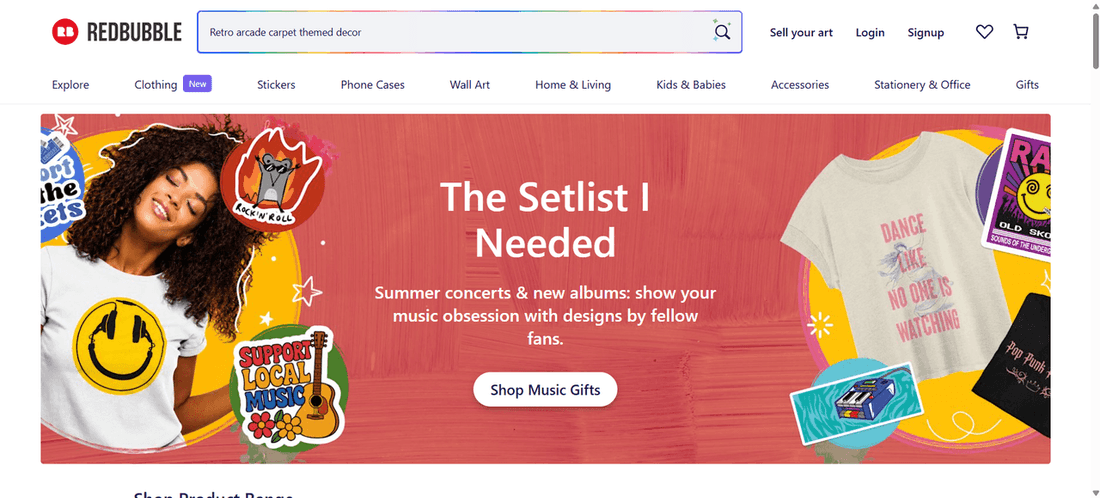
Redbubble is the marketplace most new sellers reach for first, and for good reason. It has a large, steady flow of shoppers who come looking for art on a huge range of products: stickers, t-shirts, phone cases, wall art, mugs, notebooks, and more. You upload one design and it maps across dozens of product types automatically.
You earn a royalty on each sale, and you control your markup on top of the base price. That flexibility is nice, but the built-in traffic is the real draw. You do not need an audience to make your first sale here, because buyers are already browsing.
The trade-off is competition. The catalog is enormous, so getting found depends heavily on tags, titles, and picking niches that have demand without being saturated. Stickers and niche apparel tend to move well.
Best for: artists who want one upload to reach many product types with zero audience. If you are starting from scratch, read how to sell on Redbubble for the practical steps.
2. Amazon Merch on Demand
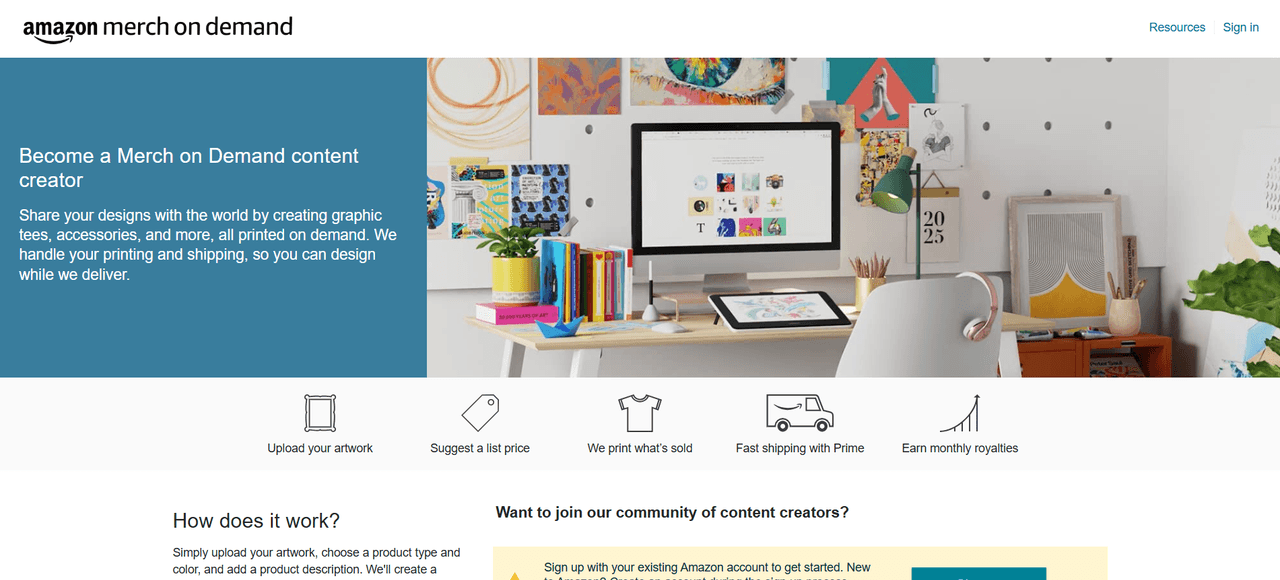
Amazon Merch on Demand puts your designs in front of the largest shopping audience on the internet. It is apparel-focused: t-shirts, hoodies, sweatshirts, pop sockets, and a few other items. When something sells, Amazon prints and ships it and pays you a royalty.
The catch is access. You have to apply and get approved, and approval is not instant or guaranteed. Once you are in, you start at a low tier with a limited number of design slots and earn more slots as you sell. It rewards patience.
The upside is buyer intent. People on Amazon are there to buy, not just browse, and the trust and shipping speed are already built in. Simple, text-based apparel designs in clear niches tend to do well.
Best for: sellers who want Amazon-scale reach and are willing to apply and grow into higher tiers over time.
3. TeePublic
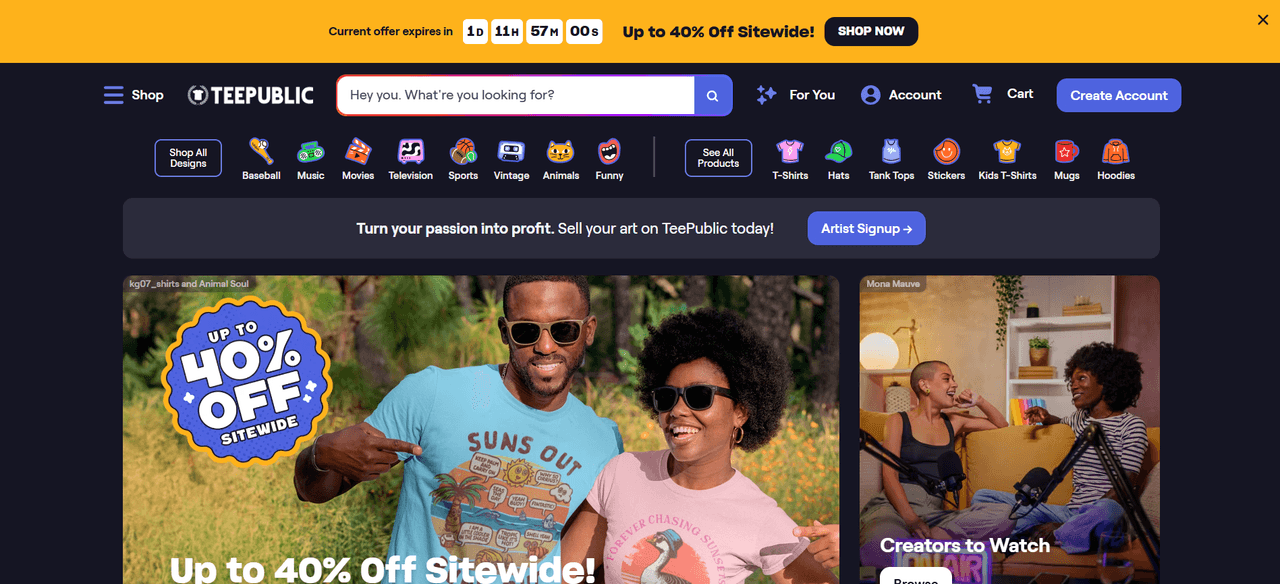
TeePublic is apparel-first and popular with the pop-culture and fandom crowd. It is owned by the same parent company as Redbubble, so the two feel similar, but TeePublic leans harder into t-shirts and everyday apparel. It runs frequent site-wide sales that drive volume.
You upload designs, TeePublic handles printing and shipping, and you earn a royalty per sale. The base royalty is often higher during the ongoing sale periods, which is worth understanding before you price.
Because it is apparel-heavy, it suits designs meant to be worn: funny lines, fandom-adjacent art, hobby and identity niches. It is a common second marketplace for Redbubble sellers to cross-list into.
Best for: t-shirt and apparel designs, especially fandom and pop-culture niches. If you are weighing the two, see TeePublic vs Redbubble, and if you are unsure it is trustworthy, is TeePublic legit answers that plainly.
4. Etsy (with a POD production partner)
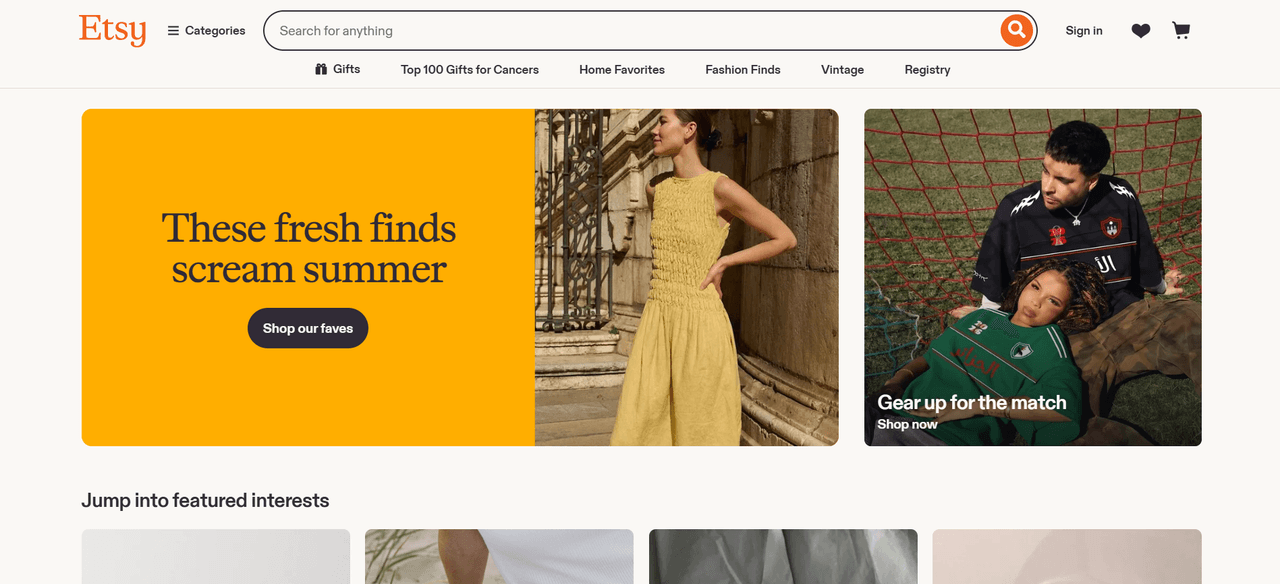
Etsy is a huge marketplace with strong buyer intent, especially for gifts, personalized items, and anything that feels handmade or thoughtful. It is different from the other sites here in one important way: Etsy does not print your orders. You run your own storefront on Etsy and fulfill orders yourself or through a print-on-demand production partner that you disclose on your listings.
That means a little more setup. You connect a fulfillment provider, list your products, and Etsy sends the buyers. You keep the margin between your retail price and the base cost, minus Etsy's listing and transaction fees. Because you own the storefront, you also have more room to build a brand than on a pure marketplace.
Etsy shoppers pay for personalization and gift-ready items, so custom names, occasions, and specific niches tend to convert well. The competition is real, so listing quality and niche choice matter a lot.
Best for: sellers who want a real storefront with built-in buyers and are comfortable connecting a POD partner. Start with Etsy print on demand for how the setup works.
5. Society6
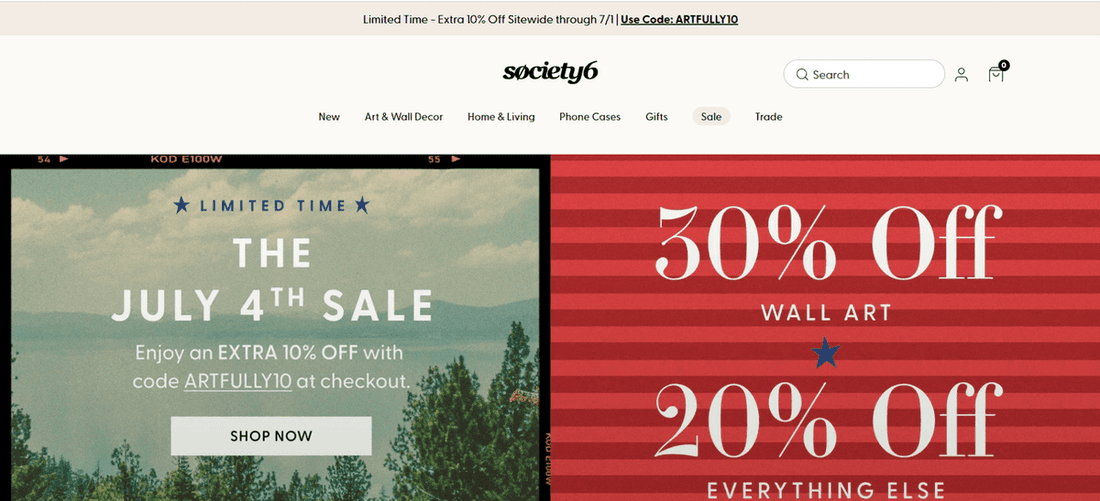
Society6 is built around art and home decor. Think framed prints, canvas, wall art, throw pillows, bedding, and apparel, aimed at people decorating a space rather than buying a joke tee. The aesthetic bar is higher, and the audience skews toward design-conscious buyers.
You upload art and earn a royalty. On art prints you often set your own markup, while on many home and lifestyle products the royalty is a fixed rate, so your control over margin varies by product type. Confirm the current structure on the site.
Traffic is decent but smaller than the giants above. If your work is genuinely decor-worthy, Society6 can be a strong fit. If your designs are text-based apparel jokes, it is probably not your best home.
Best for: artists whose work suits home decor and wall art rather than novelty apparel.
6. Zazzle
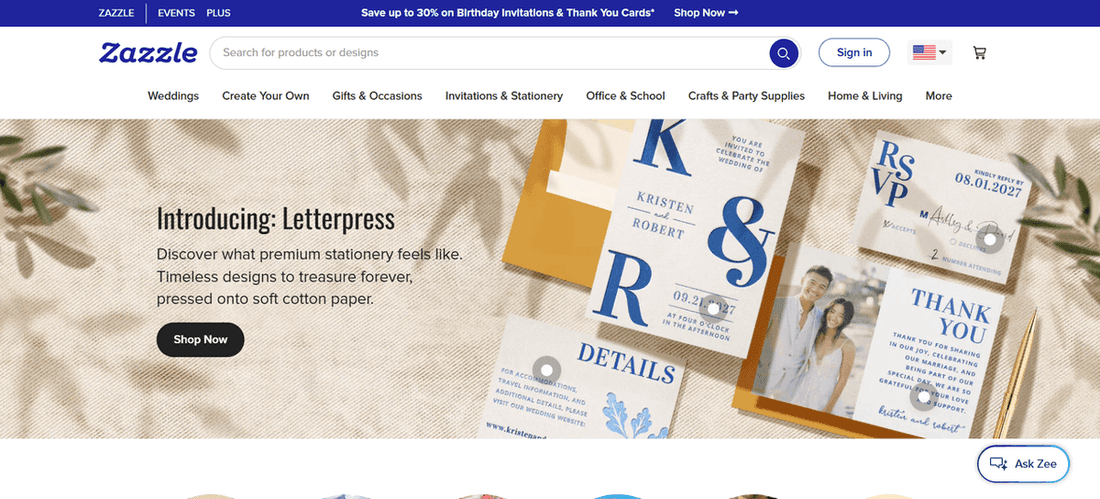
Zazzle's angle is deep customization. Buyers can personalize products before they order: invitations, business cards, mugs, apparel, gifts, and a wide catalog of occasion items. That makes it strong for personalized and event-driven purchases like weddings, birthdays, and holidays.
You set your own royalty rate within Zazzle's limits, which gives you pricing control, and Zazzle handles printing and shipping. The platform rewards sellers who build out templates that buyers can easily customize.
It has a real audience, though the interface and design workflow feel more dated than some rivals. If personalization and occasion products fit your niche, it is worth a slot.
Best for: personalized and occasion products where buyers want to customize before ordering.
7. Spring (formerly Teespring)
Update, October 2026: Amaze closed Spring on 15 September 2026 and moved creators to Amaze Commerce, its own storefront product. What follows describes Spring as it worked, and the audience-first logic carries over to Amaze Commerce. Details in Printify vs Teespring.
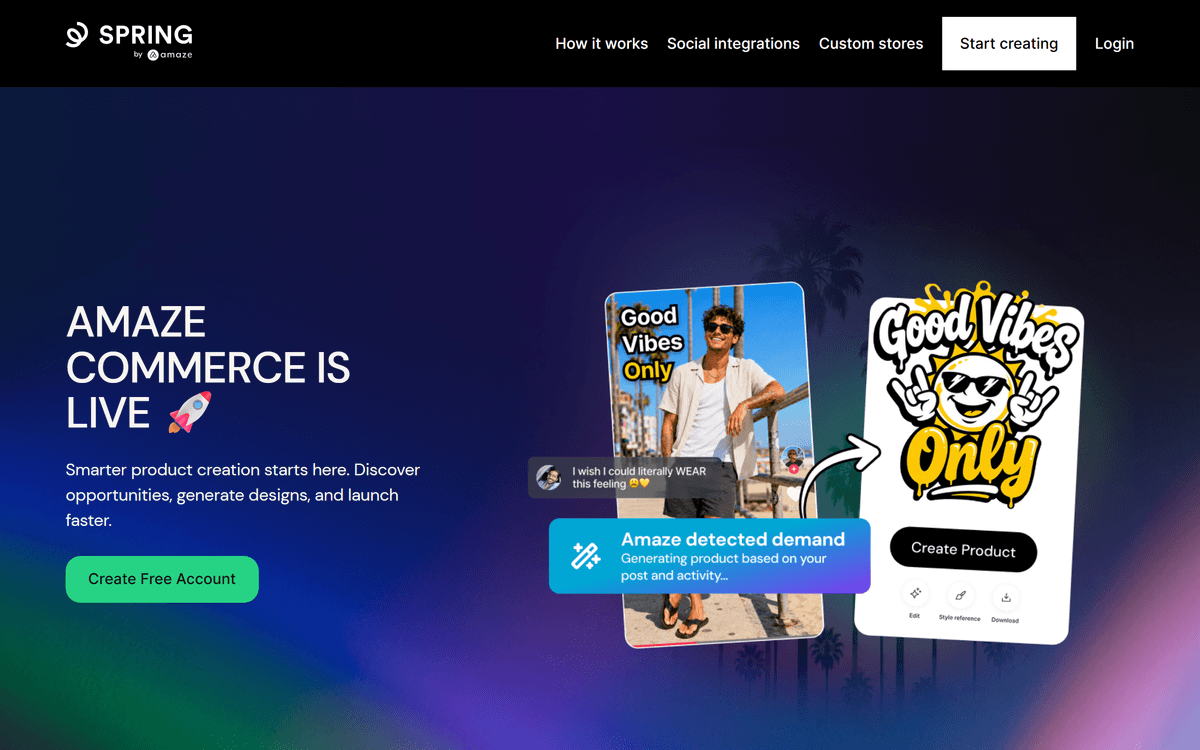
Spring, previously Teespring, is built for creators who already have an audience. It integrates with YouTube, social platforms, and creator storefronts so you can sell merch directly to your followers. You pick products, set your price above the base cost, and keep the difference.
The important thing to understand: Spring does not really bring you buyers. Its marketplace exists, but the platform is designed around you driving your own traffic from an existing following. If you have subscribers or fans, it is smooth. If you do not, do not expect the site to send shoppers your way.
Product range is solid and setup is quick. It shines as a creator merch tool, not as a discovery marketplace.
Best for: creators with an existing audience who want a fast way to sell merch to their followers.
8. Your own store (Shopify / Fourthwall / Big Cartel)
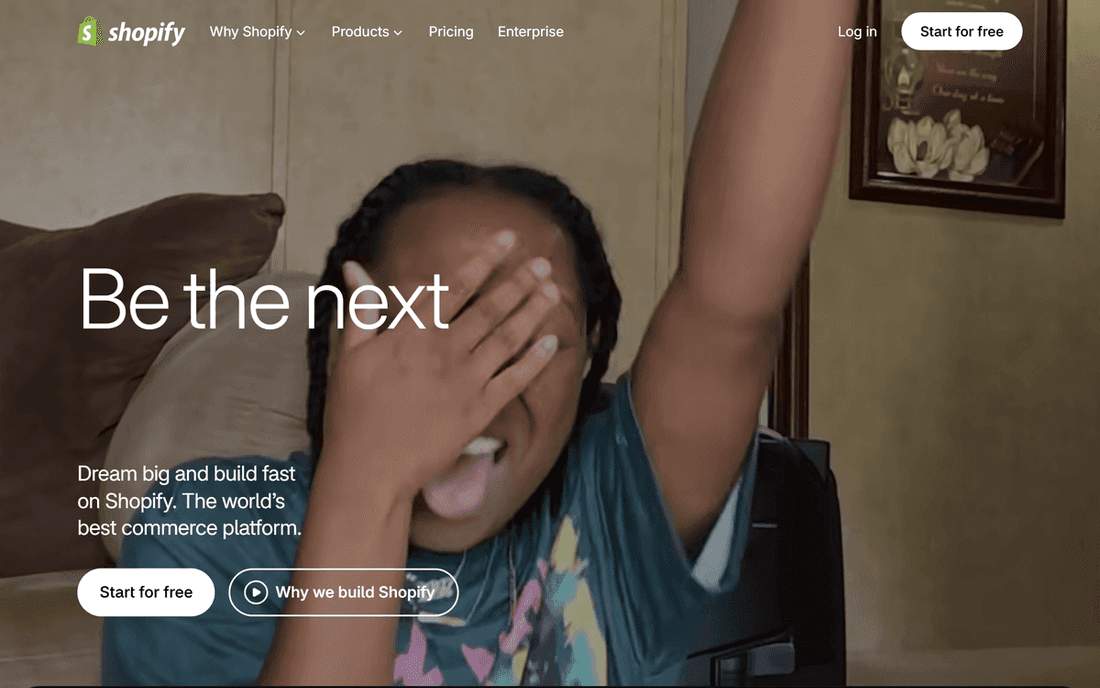
Running your own store means full control and the best margins, at the cost of doing all the marketing yourself. Shopify is the most powerful and flexible, Fourthwall is creator-friendly and includes fulfillment, and Big Cartel is a simple low-cost option for small catalogs. You connect a print-on-demand fulfillment provider, and orders print and ship under your brand.
The upside is that you own the customer relationship, the email list, and the pricing. There is no royalty cap and no marketplace taking a cut of every sale beyond payment processing. Over time, a brand you own is worth far more than a shop on someone else's platform.
The honest downside is traffic. No one visits your store unless you send them there through ads, social, SEO, or an audience you already have. This is the highest-ceiling and highest-effort option, and it is usually a step you graduate into rather than start with.
Best for: sellers ready to build a brand and drive their own traffic for full margins and ownership.
How to pick where to sell
The single biggest question is traffic. If you cannot bring your own buyers yet, start with marketplaces that already have them: Redbubble, Amazon Merch, TeePublic, and Etsy. If you can bring traffic, your own store gives you far better margins and ownership.
After traffic, match the site to your product focus. For apparel, TeePublic and Amazon Merch are natural homes. For variety across many product types from one upload, Redbubble, Society6, and Zazzle work well. For handmade-feeling and personalized items with a real storefront, Etsy paired with a POD partner is strong. For selling to an existing following, a creator storefront fits (Spring was that until it closed in September 2026; Amaze Commerce is its successor).
My advice is simple: start on one or two sites, learn how listings and search work there, then cross-list your winning designs onto more. Cross-listing the same design across several marketplaces is the common strategy, and it costs you almost nothing once the design exists. Do not try to be everywhere on day one. Get good on one platform first.
How to find what sells on these sites
Here is the part most "best sites" lists skip. The platform matters less than what you choose to sell on it. A great design in a dead niche loses to an average design in a niche with real demand. So before you design anything, validate demand against competition.
The principle is this: look at what is actually selling right now, not just what has a lot of searches. High search volume with a flooded catalog is a trap. What you want is genuine buyer demand that is not already saturated with a thousand near-identical designs. You also want to check that your phrase is not trademarked before you build around it, because a takedown can wipe out a listing overnight.
Doing this by hand is slow. You would be opening Etsy, Redbubble, TeePublic, and Amazon Merch in separate tabs, reading through best-sellers, and trying to eyeball demand versus competition across all four. That is hours of work per idea, and it is easy to fool yourself.
This is the exact job I built Trendlytic to do. It shows what is actually selling across Etsy, Redbubble, TeePublic, and Amazon Merch in a single search, scored for demand versus competition, with a live USPTO trademark check so you know if a phrase is risky before you commit. It also includes an AI Studio that generates listings, titles, tags, descriptions, and niche ideas, so the research and the listing work happen in one place. It is $19.99 a month with a 3-day free trial.
Don't miss the next one.
New POD niche analysis every Wednesday.
FAQ
What is the best print on demand site? There is no single best one. Redbubble is the easiest place to start with zero audience, Amazon Merch has the largest reach but requires approval, and Etsy has the strongest buyer intent for gifts and personalized items. The best site for you depends on your product focus and whether you can bring your own traffic.
What is the best free print on demand site? Redbubble, TeePublic, Amazon Merch, Society6, and Zazzle all cost nothing to start. You upload designs for free and earn a royalty when something sells. Etsy charges a small per-listing fee, and your own store has hosting or subscription costs, so the marketplaces are the truly free entry points.
Which print on demand site pays the most? It depends on how you sell. Marketplaces cap your margin with a royalty, while your own store lets you keep the full margin over the base cost. Among marketplaces, sites where you set your own markup (like Redbubble and Zazzle) can pay more per sale than fixed-royalty products, but the exact numbers change, so confirm current rates on each site.
Can I sell on multiple print on demand sites? Yes, and most successful sellers do. Cross-listing the same design across several marketplaces is a common strategy, and it costs almost nothing once the design exists. Just check each site's rules and avoid uploading designs you do not own the rights to.
Do I need my own website for print on demand? No. Marketplaces like Redbubble, Amazon Merch, TeePublic, and Etsy bring their own buyers, so you can sell without any website. Your own store gives you better margins and full control, but you have to drive all the traffic yourself, which is why most people start on marketplaces first.
Which print on demand site is best for beginners? Redbubble is the friendliest starting point because it is free, requires no approval, brings its own buyers, and maps one design across many products. TeePublic is a close second for apparel. Both let you learn how listings and search work before you expand elsewhere.
The honest takeaway
The best print-on-demand site is the one that matches how you sell. If you have no audience, start on a marketplace like Redbubble or TeePublic where buyers are already browsing. If you can bring traffic, your own store gives you the best margins. Either way, pick one or two, get good, then cross-list.
And remember that the niche you choose matters more than the platform you choose it on. That is the part Trendlytic handles: what is actually selling across Etsy, Redbubble, TeePublic, and Amazon Merch, scored for demand versus competition, with a live USPTO trademark check and an AI Studio for listings and niche ideas. It is $19.99 a month, with a 3-day free trial. Validate first, then design.
Where are you selling right now, and what is holding you back from adding a second site?
Like this? Get one like it every Wednesday.
Niche data, trademark alerts, one tactic per week.
Try Trendlytic
Find your next winning POD niche in 40 seconds
Live data from TeePublic, Amazon Merch, Redbubble, and Etsy, with a trademark check built in. Then turn any winner into a listing for a design of your own in that niche. Plans from $19.99/month.
Start researchingKeep reading
- Trendlytickeywords for t shirts
Keywords for T-Shirts: How to Find Ones That Sell (2026)
The JournalKeywords for T-Shirts: How to Find Ones That Sell (2026)
October 15, 2026 · 17 min read
- Trendlytichoodie mockup generator
Best Hoodie Mockup Generator for 2026: Free and Paid
The JournalBest Hoodie Mockup Generator for 2026: Free and Paid
October 14, 2026 · 18 min read
- Trendlyticcustom napkins
Custom Napkins: Sets, Weddings and What Sells in 2026
The JournalCustom Napkins: Sets, Weddings and What Sells in 2026
October 10, 2026 · 20 min read