TL;DR: The best print on demand products to sell in 2026 are stickers, t-shirts, and mugs — they have the strongest demand-to-competition ratio across Redbubble, TeePublic, and Amazon Merch. But the product almost never decides whether you make money. Profit comes from product margin multiplied by how unsaturated your niche is. A mug in a fresh niche beats a t-shirt in a flooded one, every time.
Most "best print on demand products" lists rank products by popularity. That sounds helpful until you realize popularity is just another word for saturation. The more people selling a product, the harder it is to get seen — so the most "popular" products are often the worst place for a new seller to start.
Here is the part those lists skip: the product matters far less than the niche printed on it. You can sell the most in-demand product in the world and still earn nothing if you are competing against 200,000 near-identical designs. (Brand new to this? Start with how to start a print on demand business for the full setup, then come back here to choose what to put on.)
This post is data-backed, drawn from tracking what top sellers actually move across marketplaces — not search-volume guesses. Trendlytic is ours (it is the research tool we built), so I will keep this honest: the goal here is to help you pick a product and a niche that can actually sell, not to push a list. You will get realistic margins, the right marketplace for each product, and how saturated each one really is.
Don't miss the next one.
New POD niche analysis every Wednesday.
How we picked these products
A product is worth selling when four things line up. Most lists only look at the first one.
- Demand — are people actually buying it, not just searching for it? Search volume tells you curiosity. Sales tell you intent. We weight sales.
- Profit margin — the royalty you keep per unit. A product with a $0.40 royalty needs volume; one with a $4 royalty can be profitable on a handful of sales.
- Competition / saturation — how many sellers are already crowding the product. A high-demand product with brutal competition is a worse bet than a steady product with room to breathe.
- Store-first validation — instead of trusting keyword counts, look at what the top sellers in a niche are actually moving. Their #1 to #3 best-sellers are proven winners. Everything else is noise.
That last point is the whole game. When you research what's actually selling inside top sellers' stores — which product, which niche, which angle — you stop guessing and start copying proven demand into a fresh angle. That is the difference between a design that gets buried and one that gets bought. Trendlytic does this across TeePublic, Amazon Merch on Demand, Redbubble, and Etsy in a single search, and it gives you a one-click USPTO lookup, so a trademarked phrase can be spotted before you design around it.
The table below ranks products by demand-to-competition ratio first — not alphabetically, and not by raw popularity.
| Product | Why it sells | Best marketplace | Margin | Competition |
|---|---|---|---|---|
| Stickers | Cheap impulse buy, low risk | Redbubble | ~$0.30–0.60 | Medium |
| T-shirts | Evergreen, biggest market | Amazon Merch / TeePublic | ~$2.50–4 | High |
| Mugs | Gift-driven, repeat buyers | Redbubble | ~$1.50 | Medium |
| Hoodies & sweatshirts | High ticket, seasonal spikes | TeePublic / Amazon Merch | ~$3–5 | Medium |
| Posters & wall art | Illustration-friendly, decor demand | Redbubble | ~$2.50 | Medium |
| Tote bags | Niche communities, low saturation | Redbubble | ~$2.50 | Low–Medium |
| Phone cases | Constant device upgrades | Redbubble | ~$2 | Medium |
| Throw pillows | Highest per-unit royalty | Redbubble | ~$3.50 | Low |
| Notebooks & journals | Gift + planner niches | Redbubble | ~$1.50 | Low |
| Kids & baby apparel | Emotional gift buyers, premium pricing | Amazon Merch / Redbubble | ~$3 | Low–Medium |
1. Stickers
Stickers are the best entry product in print on demand, and it is not close. They are a low-cost impulse buy — a few dollars — so buyers do not deliberate. That low price is also what makes them sell in volume.
Why it sells: People buy stickers on a whim for laptops, water bottles, and notebooks. The decision is fast and the basket adds up. Redbubble's sticker marketplace is enormous because the format suits the platform's browse-and-discover shoppers.
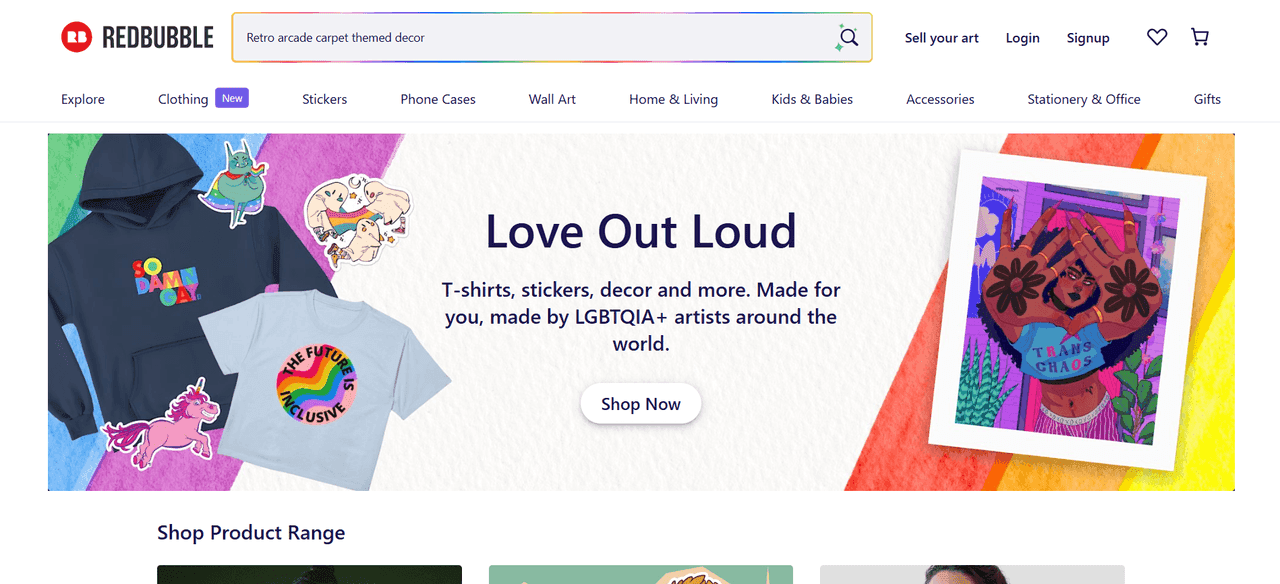
Best marketplace: Redbubble, by a wide margin. TeePublic sells stickers too, but Redbubble is where sticker discovery happens.
Competition / saturation: Medium. There are a lot of stickers, but demand is high enough — and design variety wide enough — that fresh niches still surface every month. Pop-culture-adjacent and identity-based stickers (hobbies, jobs, pets) move best.
Niche angle: The royalty is small (around $0.30 to $0.60), so stickers reward breadth and tight niches. Find a community with strong identity — a specific job, a niche hobby, a regional in-joke — and design for it. Validate by checking what the top sticker sellers in that niche actually move before you commit a day of design work. If you are new to the platform, the how to sell on Redbubble guide covers setup end to end.
2. T-shirts
T-shirts are the backbone of print on demand. The market is the biggest, which cuts both ways: massive demand, but also the most competition you will face anywhere.
Why it sells: Evergreen. People always buy shirts — for themselves, as gifts, for events, for in-jokes. Text-based designs in particular do well because shirts are how people wear a statement.
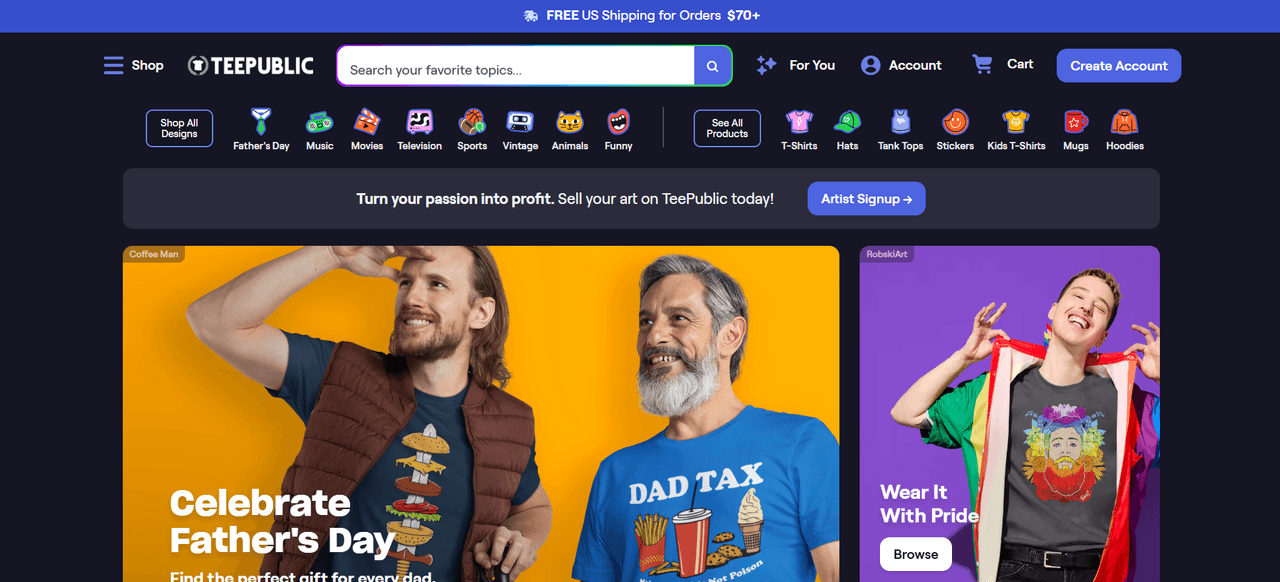
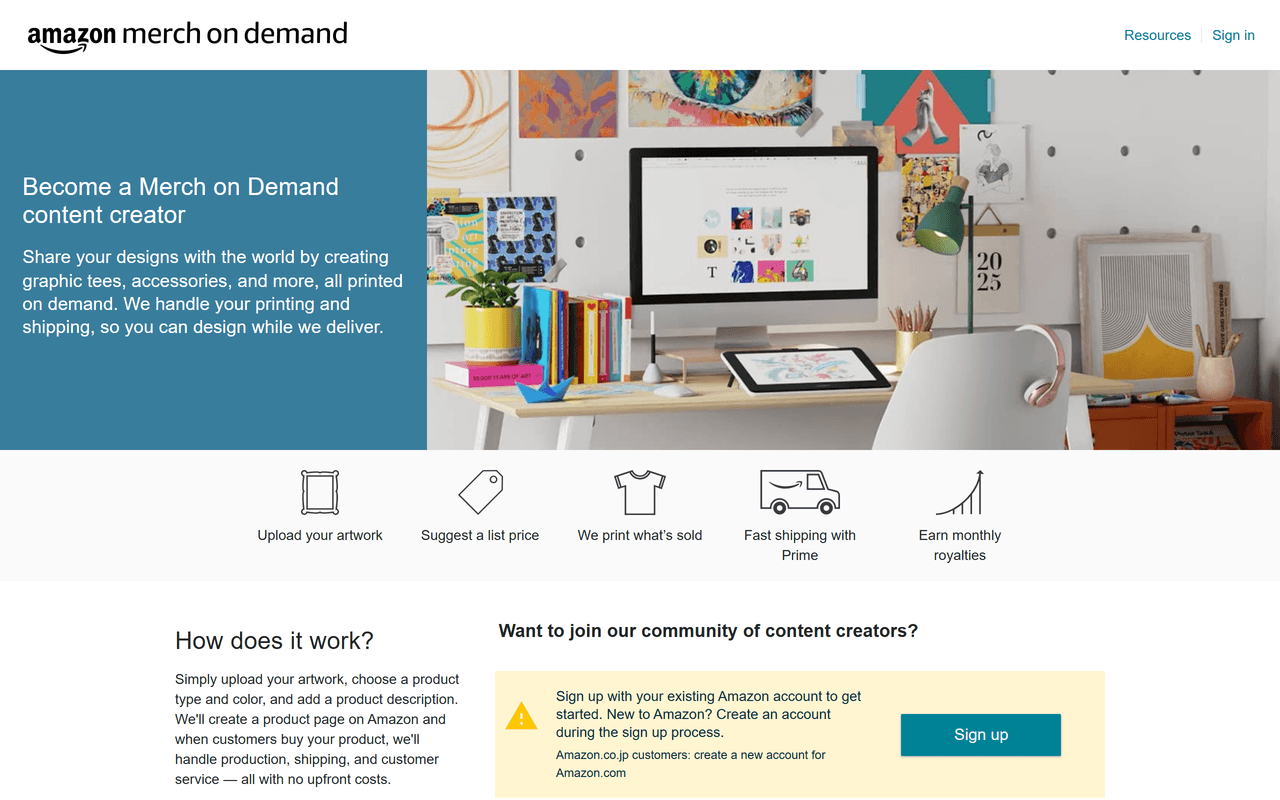
Best marketplace: Amazon Merch on Demand for reach and trust, TeePublic for the design-savvy browse audience. Both reward sharp niche text.
Competition / saturation: High. This is the most saturated product in POD, full stop. Generic shirt ideas are hopeless. The only way through is a narrow, well-defined niche where you are one of a handful of sellers, not one of thousands.
Niche angle: Royalty runs around $2.50 to $4 depending on marketplace and price point — healthy enough that a few sales a day is real money. Text wins on shirts. Lean into specific identities and micro-communities rather than broad themes. Because competition is so heavy, store-first validation matters most here: look at which shirt niches top sellers are quietly dominating, then find an adjacent angle they have not covered. The how to find trending POD niches post breaks down that process.
3. Mugs
Mugs are quietly one of the best print on demand products to sell because they are gift-driven. People do not buy a mug for themselves as often as they buy one for someone else — and gift buyers are far less price-sensitive.
Why it sells: Birthdays, holidays, coworker gifts, "world's best [role]" humor. Mug demand spikes around every gifting occasion and stays steady in between. Repeat buyers are common.
Best marketplace: Redbubble handles mugs well and surfaces them in gift-search browsing. They sell across marketplaces, but Redbubble's discovery suits them.
Competition / saturation: Medium. The classic "best [job] ever" mug space is crowded, but specific relationship and occasion niches still have room.
Niche angle: The royalty is modest (around $1.50), so mugs work best as part of a niche where you also offer shirts and stickers — the buyer who loves the joke wants it on multiple products. Design for the giver, not the wearer: who is buying this for whom, and why.
4. Hoodies & sweatshirts
Hoodies are the high-ticket play. Fewer units sell, but each one earns more, and demand is strongly seasonal.
Why it sells: Cold months drive a real spike from autumn through winter. Hoodies also carry niche identity well — fandoms, hobbies, and group-pride designs do strong numbers.
Best marketplace: TeePublic and Amazon Merch on Demand. Both have the audience and the apparel pricing structure that makes hoodies worthwhile.
Competition / saturation: Medium. Less saturated than t-shirts because the higher price point scares off lazy sellers, but the good niches are still contested.
Niche angle: Royalty runs around $3 to $5, so even a handful of sales matters. Plan around the season — get designs live before the autumn demand curve, not during it. The same niche text that works on a shirt usually transfers to a hoodie, so build product pairs rather than one-offs.
5. Posters & wall art
Posters are where illustration sellers outperform text sellers. If your strength is artwork rather than typography, this is your product.
Why it sells: Steady home-decor demand. People decorate rooms, dorms, and offices, and they search for art by style and theme. Illustration-heavy, aesthetic-driven designs do best.
Best marketplace: Redbubble. Its audience browses for art and decor, which fits posters and wall prints naturally.
Competition / saturation: Medium. Generic motivational quotes are saturated; specific aesthetics and illustration styles are not. A defined visual identity beats a broad theme.
Niche angle: Around $2.50 royalty. Posters reward a cohesive style — buyers who like one of your prints often buy several. Illustration travels across products, so a strong poster design can become a sticker, a tote, and a phone case in the same niche.
6. Tote bags
Tote bags are underrated. They have lower saturation than the headline products and strong appeal in specific communities.
Why it sells: Totes are tied to identity and values — reusable, ethical, statement-carrying. Book lovers, plant people, farmers'-market crowds, and cause-driven communities buy them reliably.
Best marketplace: Redbubble, which surfaces totes well in lifestyle and aesthetic browsing.
Competition / saturation: Low to medium. This is one of the less-crowded products, which is exactly why it deserves attention. Less noise means a good niche design gets seen faster.
Niche angle: Around $2.50 royalty. Design for a community with a clear identity and a habit of carrying things — readers, shoppers, crafters. Both text and illustration work here, which makes totes a flexible second product for almost any niche.
7. Phone cases
Phone cases ride a permanent demand wave: people upgrade devices constantly, and a new phone means a new case.
Why it sells: Recurring, built-in demand. Every device launch and every upgrade cycle refreshes the buyer pool. Cases are also a personalization product, so niche and aesthetic designs sell.
Best marketplace: Redbubble carries the widest device coverage and the browse audience for cases.
Competition / saturation: Medium. Plenty of sellers, but constant device turnover keeps demand fresh, so good niches are not locked up the way shirt niches are.
Niche angle: Around $2 royalty. Aesthetic and pattern-based designs do well, alongside niche-identity humor. Like posters, cases favor illustration and pattern over heavy text.
8. Throw pillows
Throw pillows carry the highest per-unit royalty on this list, which makes them worth a look even though they sell in lower volume.
Why it sells: Home-decor demand, often gift-driven. Buyers decorating a space or furnishing a gift are not chasing the lowest price.
Best marketplace: Redbubble, again because of its decor-browsing audience.
Competition / saturation: Low. One of the least-saturated products in POD — a strong signal for sellers willing to design for decor rather than apparel.
Niche angle: Around $3.50 royalty, the best on this list. Pillows suit illustration, patterns, and aesthetic themes more than punchy text. Pair them with posters and totes to build a full decor niche around one visual style.
9. Notebooks & journals
Notebooks are a sleeper product — low saturation, steady gift and planner demand, and a natural fit for both text and illustration.
Why it sells: Journaling, planning, and back-to-school demand, plus gifting. Buyers want a notebook that matches an identity or a goal, which is exactly where niche designs win.
Best marketplace: Redbubble surfaces notebooks well in its lifestyle and stationery browsing.
Competition / saturation: Low. Far less crowded than apparel, so a clear niche design stands out quickly.
Niche angle: Around $1.50 royalty. Design for planner communities, students, hobbyists, and gift-givers. A clean typographic cover or a tidy illustration both work — and the same artwork extends to stickers and totes.
10. Kids & baby apparel
Kids and baby apparel is an emotional, gift-heavy category where buyers pay premium prices without much hesitation.
Why it sells: New parents, grandparents, and gift-givers buy constantly, and they are not price-shopping. "First birthday," sibling announcements, and family-humor designs move well.
Best marketplace: Amazon Merch on Demand for gift-search reach, with Redbubble as a solid second.
Competition / saturation: Low to medium. Less crowded than adult apparel, with strong, recurring occasion-driven demand.
Niche angle: Around $3 royalty. Design for the occasion and the giver — milestones, family roles, and gentle humor. Keep it trademark-safe; this category gets a lot of cute phrases that are quietly registered marks, so check before you publish.
How to pick products that actually sell
Here is the framework I would use if I were starting again. It comes down to four questions.
Which marketplace are you on? This shapes the product before anything else. If you sell on Amazon Merch on Demand, lead with t-shirts, hoodies, and kids' apparel — apparel is where Amazon's reach pays off. If you sell on Redbubble, the world is wider: stickers, mugs, posters, totes, pillows, and notebooks all suit its browse-and-discover audience. TeePublic sits between the two, strong on shirts and hoodies for a design-aware crowd. The TeePublic vs Redbubble comparison goes deeper if you are choosing between them.
What is your design style? Be honest about it. If you write sharp, specific text, shirts and hoodies are your home. If you make illustrations, patterns, or aesthetics, you have an advantage — illustration travels across far more products. A single strong illustration becomes a poster, a sticker, a tote, a pillow, and a phone case in one niche. Text rarely transfers that cleanly. So illustration sellers should build product families; text sellers should go deep on apparel.
Are you starting or scaling? Beginners should start with stickers and mugs. They are cheap to buy, low-risk for buyers, and forgiving while you learn what sells. Once you have a niche that works, scale it up the value ladder into shirts, hoodies, and decor — same niche, more products, higher royalties. Do not start with hoodies; the higher price point makes early mistakes more expensive.
Is the niche fresh? This is the rule that overrides every other one: a mediocre product in a fresh niche beats a great product in a saturated one. A mug in an untapped community will out-earn a t-shirt in a flooded keyword. So before you design, validate. Look at what top sellers in your target niche actually move, find the gap they have not filled, and design into it. That is exactly what store-first research is for — and why it is worth doing the homework to research before you design instead of guessing.
One more piece of honest advice: master one product on one marketplace before you spread out. Sellers who try to be everywhere on day one usually end up nowhere. Pick one product, one marketplace, one niche, and learn it for 60 days. Then expand. If you are still deciding which tool helps you find those niches, the best POD niche research tools roundup compares the options honestly.
FAQ
What is the most profitable print on demand product? Per unit, throw pillows have the highest royalty on most marketplaces (around $3.50), followed by hoodies (around $3 to $5). But "most profitable" depends on volume, not just margin. Stickers earn far less per sale yet often out-earn pillows overall because they sell in much higher numbers. The most profitable print on demand products are the ones in a fresh niche where you face little competition — margin matters less than whether anyone can find your design.
What POD products sell best for beginners? Stickers and mugs. They are inexpensive, low-risk impulse and gift buys, so they convert without a buyer deliberating, and they forgive the mistakes you will make while learning. Start there, find a niche that works, then scale that same niche up into shirts and hoodies once you understand your audience.
Are stickers worth it on print on demand? Yes — stickers are one of the best print on demand products to start with, despite the small royalty (around $0.30 to $0.60). They sell in volume because the price is an easy yes for buyers, and Redbubble's sticker marketplace has enormous, steady demand. Treat them as a high-volume, tight-niche product rather than a per-sale earner.
Which marketplace pays the best royalties? It depends on the product. TeePublic and Amazon Merch on Demand tend to give strong apparel royalties, while Redbubble offers the widest product range and lets you set your own markup on many items. Rather than chase the highest headline royalty, match the product to the marketplace — apparel on Amazon Merch and TeePublic, everything else on Redbubble. For a fuller picture, is Redbubble worth it and the Redbubble keywords and tags SEO guide cover earnings and discovery in detail.
Do I need to trademark-check my designs? Yes, and skipping it is the fastest way to lose your account. Amazon and Redbubble suspend sellers for using trademarked phrases — common-sounding ones like "Karen," "main character," and "boss babe" are registered marks. Check every phrase against the USPTO trademark database before you publish. Trendlytic includes a USPTO lookup on every plan, a click on any phrase you are weighing, which is the simplest way to keep that habit if you research a lot of niches.
What are the best selling print on demand products in 2026? Across marketplaces, the best selling print on demand products are stickers, t-shirts, and mugs by volume, with hoodies leading on seasonal value. But "best selling" overall also means "most saturated" — so the smart move is to take a proven product and pair it with a niche that has not been flooded yet, rather than competing head-on in the most crowded categories.
Can I sell the same design on multiple products? Yes, and you should. The buyer who loves your niche joke or illustration often wants it on more than one item. Illustration in particular extends cleanly across posters, stickers, totes, pillows, and cases. Build a product family around one strong design and one niche instead of scattering single designs across unrelated themes.
Conclusion
The best print on demand products to sell in 2026 are stickers, t-shirts, and mugs for demand and accessibility, with totes, pillows, and notebooks offering lower competition for sellers willing to look past the obvious. But no product sells itself. Profit is product × fresh niche × trademark-safe — get all three right and almost any product on this list can work.
The hard part is finding the fresh, safe niche to put on the product. That is what Trendlytic does: it finds the top sellers in a niche, surfaces their actual best-sellers across TeePublic, Amazon Merch on Demand, Redbubble, and Etsy in one search, and puts a live USPTO lookup next to the research, so a registered phrase can be caught before you design around it. Start a free trial — and research what is actually selling before you spend a day designing. And if you want the big-picture map of how product choice fits with niche research, pricing, and platforms, the print on demand master guide ties it all together.
Which product are you starting with — and what niche are you putting on it?
Like this? Get one like it every Wednesday.
Niche data, trademark alerts, one tactic per week.
Try Trendlytic
Find your next winning POD niche in 40 seconds
Live data from TeePublic, Amazon Merch, Redbubble, and Etsy, with a trademark check built in. Then turn any winner into a listing for a design of your own in that niche. Plans from $19.99/month.
Start researchingKeep reading
- Trendlyticredbubble
Best Selling Redbubble Products in 2026 (What Actually Sells)
The JournalBest Selling Redbubble Products in 2026 (What Actually Sells)
June 11, 2026 · 19 min read
- Trendlyticprint on demand
8 Print on Demand Niches That Actually Sell in 2026
The Journal8 Print on Demand Niches That Actually Sell in 2026
June 9, 2026 · 21 min read
- Trendlyticpod niches
How to Find Trending POD Niches in 2026 (Without Guessing)
The JournalHow to Find Trending POD Niches in 2026 (Without Guessing)
May 23, 2026 · 20 min read