TL;DR: The best Redbubble alternatives depend on why you're leaving. For a similar hands-off marketplace, TeePublic, Society6, and Zazzle are the closest fits. For far more reach, Amazon Merch on Demand. For control over your margins and your own brand, Etsy paired with Printful or Printify. But switching platforms rarely fixes the real issue, which is usually a saturated niche, not the platform itself.
If you already sell on Redbubble, or you tried it and walked away, you have probably typed "Redbubble alternatives" for a reason. Maybe your designs stopped getting impressions. Maybe the royalties felt thin once you did the math. Maybe you had a design removed, or an account scare over a trademark strike. Or maybe you just do not want your whole side income riding on one marketplace's algorithm.
All of those are fair reasons, and I want to be honest up front: Redbubble is still a perfectly good place to start. It is legit, it pays, and one upload can turn into a sticker, a shirt, a mug, and a poster in minutes. (If you are still weighing that question, is Redbubble legit covers it in full.) But "fine to start on" and "the best place for you right now" are two different things. This guide is for the seller who wants options, and every platform below is judged specifically on how well it works as a Redbubble replacement or a second platform next to it.
Don't miss the next one.
New POD niche analysis every Wednesday.
Why sellers look for Redbubble alternatives
Before the list, it helps to name what people are actually running from. In two years of tracking POD sellers, the same four reasons come up again and again.
Saturation. This is the big one. Redbubble has millions of sellers and hundreds of millions of designs. The popular niches ("funny cat shirt," "live laugh love") are so crowded that a new design may never earn a single impression. That is not Redbubble being broken. It is just what a massive, open, no-approval marketplace looks like after fifteen years. But it does mean a beginner today faces a much steeper climb than someone who started in 2016.
Thin margins. Redbubble sets a base price and you add a markup on top, and that markup is your royalty. At default margins you earn a couple of dollars per shirt and cents per sticker. You make real money through volume across many designs over time, not from any single sale. Sellers who want a bigger cut per item, or the ability to set their own prices, start looking elsewhere.
Account and removal risk. Redbubble runs an aggressive automated trademark scanner. Upload a phrase that turns out to be registered (there are far more of those than you would guess) and the design gets pulled, you get a strike, and enough strikes can suspend the account. Losing months of work over a phrase you assumed was generic pushes a lot of people to spread their risk.
Not wanting one point of failure. Even happy Redbubble sellers reach a point where depending on one platform feels fragile. One policy change, one algorithm shift, one suspension, and the income is gone. Diversifying across two or three platforms is simply good business.
Notice that only one of those four (margins) is really about Redbubble itself. The other three follow you to almost any open marketplace. Keep that in mind as you read, because it changes which "alternative" actually solves your problem.
The best Redbubble alternatives
I have ordered these roughly from "most Redbubble-like" (a hands-off marketplace you upload to) down to "most different" (your own storefront that you drive yourself). Here is the shortlist first, then a section on each.
| Alternative | Most like Redbubble in | Best for |
|---|---|---|
| TeePublic | Same upload-and-browse model, same group | Apparel and humor sellers who want frequent sales |
| Society6 | Marketplace feel, art-print range | Decor, wall art, and aesthetic illustration |
| Zazzle | Wide product range, marketplace traffic | Customizable and personalized products |
| Amazon Merch | Hands-off apparel marketplace | Reach, if you can get accepted and stay trademark-safe |
| Spreadshirt / Spreadshop | Marketplace plus own-shop option | EU audiences and a semi-branded shop |
| Etsy + Printful/Printify | Nothing (your storefront, real buyer intent) | Control over margins and building a brand |
| Gelato | Fulfillment layer, not a marketplace | Going independent with global printing |
| Printful | Fulfillment layer, not a marketplace | Branded products and higher print quality |
1. TeePublic
What it is: An apparel-first marketplace built around a design-aware browsing crowd, with frequent sitewide sales that drive volume. Notably, TeePublic is part of the same group as Redbubble, so the two share a lot of DNA (and yes, TeePublic is legit and safe).
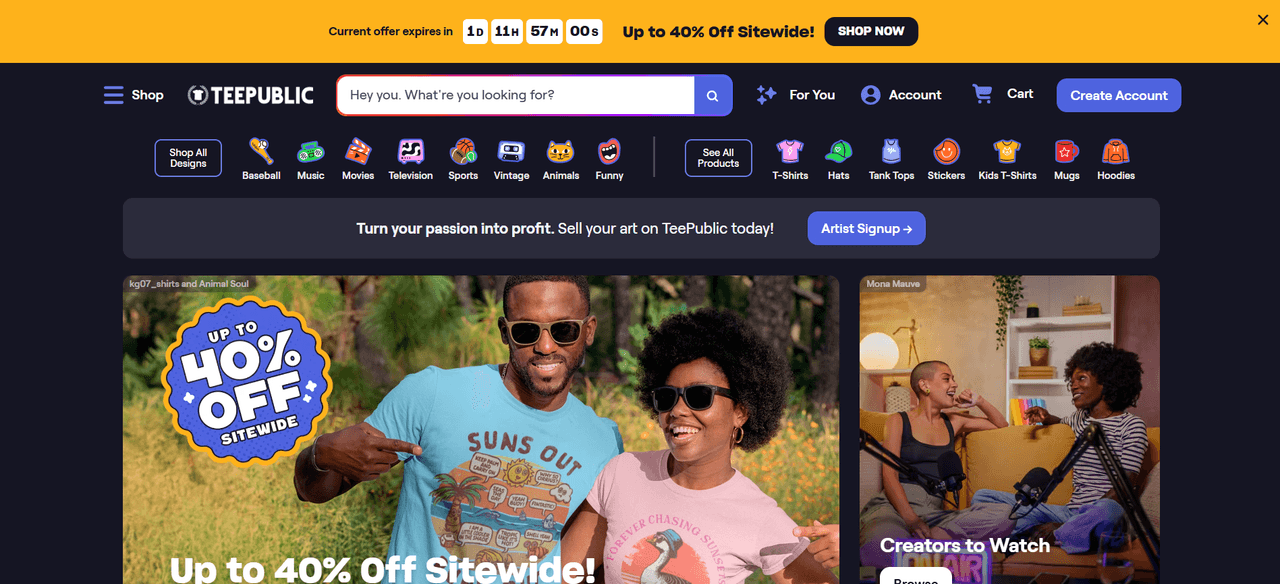
How it compares to Redbubble: This is the closest alternative there is, which is exactly why it is first. The upload-and-browse model is nearly identical, so anything you already make for Redbubble ports over with almost no extra work. The differences that matter: TeePublic leans harder into apparel and niche humor, and it runs regular sales that can move real volume during promo periods. Because it is the same corporate group, some sellers cross-list to both from one workflow. The downside is the same one you know, saturation, and new-seller discovery can actually be tougher here because the front page favors established shops.
Best for: Apparel and typography sellers, especially anyone doing tight niche humor or fandom-adjacent text designs. If you want the lowest-friction second platform, start here. The TeePublic vs Redbubble comparison goes deeper on royalties and which to lead with.
2. Society6
What it is: A design-led marketplace that leans into home decor and art prints. Wall art, framed prints, throw pillows, tapestries, patterns, with a tasteful, curated feel and an audience to match.
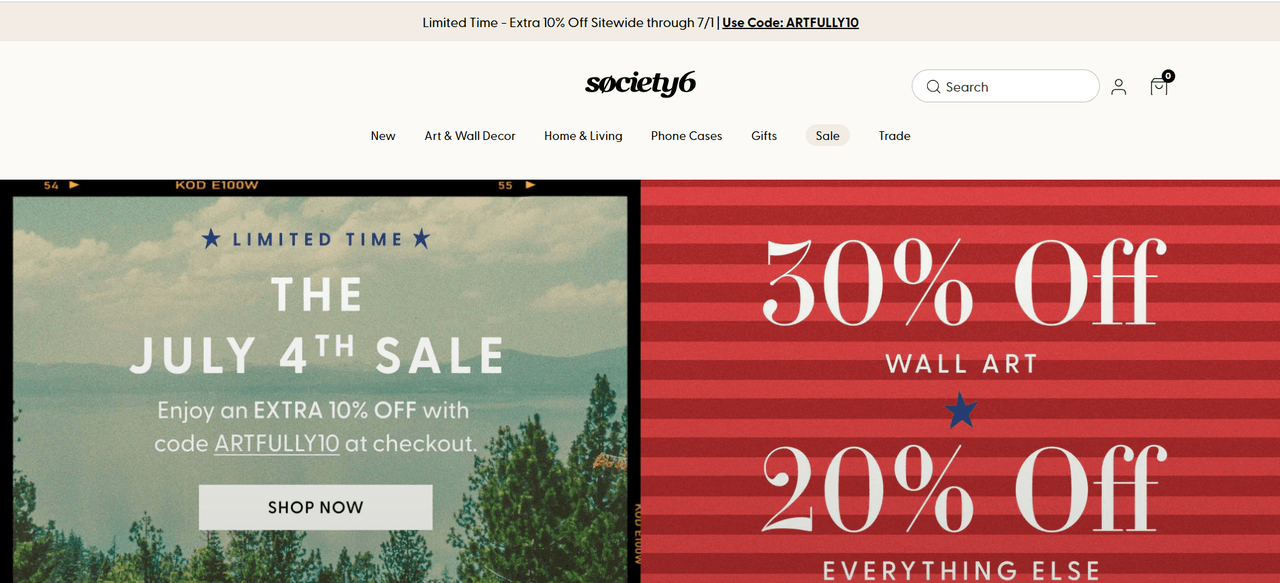
How it compares to Redbubble: Society6 is more curated and more decor-focused than Redbubble. If your work is aesthetic illustration or pattern art that belongs on a wall or a pillow, it often reads better on Society6 than buried among Redbubble's apparel. The audience is decor-minded and design-aware rather than impulse-driven, so they care how a piece looks in a styled room. The trade-off is lower traffic. Society6 does not push your work the way Redbubble's browse pages do, so discovery is harder and slower. You can set your own markup on art prints, which is a margin edge over Redbubble's apparel royalties.
Best for: Artists whose strength is wall art, decor, and cohesive aesthetic collections rather than one-line joke shirts.
3. Zazzle
What it is: A huge marketplace built around customization. Beyond the usual apparel and decor, Zazzle is known for personalized and customizable products, invitations, business cards, gifts, where the buyer tweaks the design before ordering.
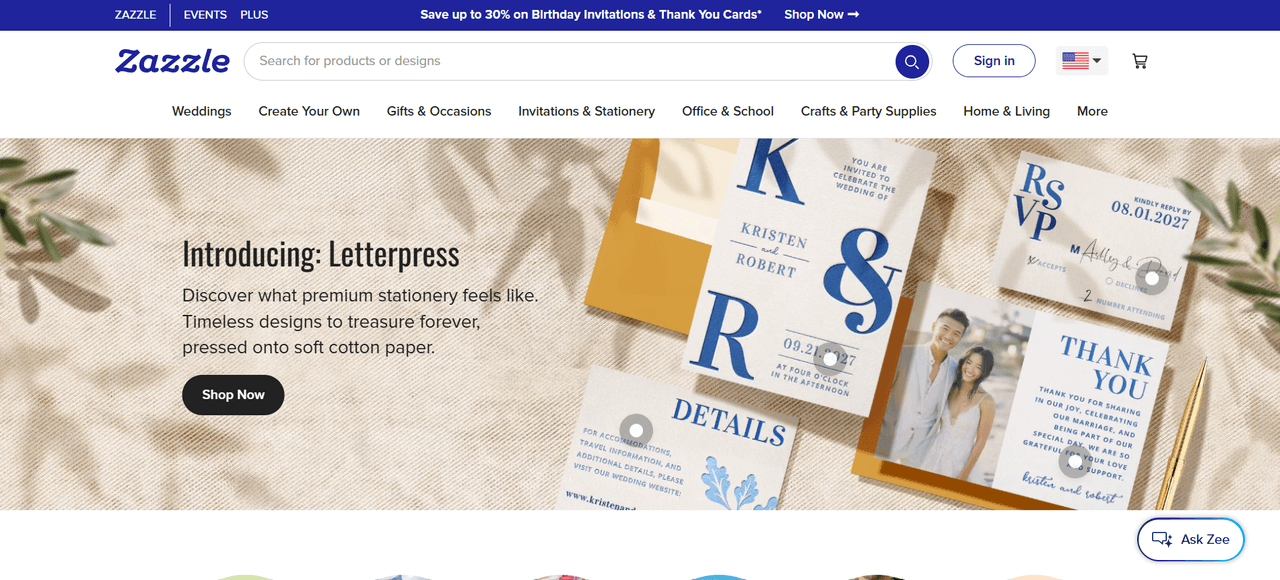
How it compares to Redbubble: Zazzle's product range is even wider than Redbubble's, and its customization angle is genuinely different. On Redbubble a design is fixed; on Zazzle a buyer might change the name, date, or colors on your template, which suits the gift and event market well. Zazzle also lets you set royalty rates within a range, so there is more margin control than Redbubble's default markup. The interface is dated and the learning curve is steeper, and like Redbubble it is a crowded marketplace where discovery is on you.
Best for: Sellers who want to lean into personalized, customizable, and occasion-based products (weddings, birthdays, baby showers) rather than static graphic tees.
4. Amazon Merch on Demand
What it is: Amazon's own print-on-demand program that puts your apparel in front of the largest buyer pool in the world. You upload designs, Amazon handles everything else, and you earn a royalty.
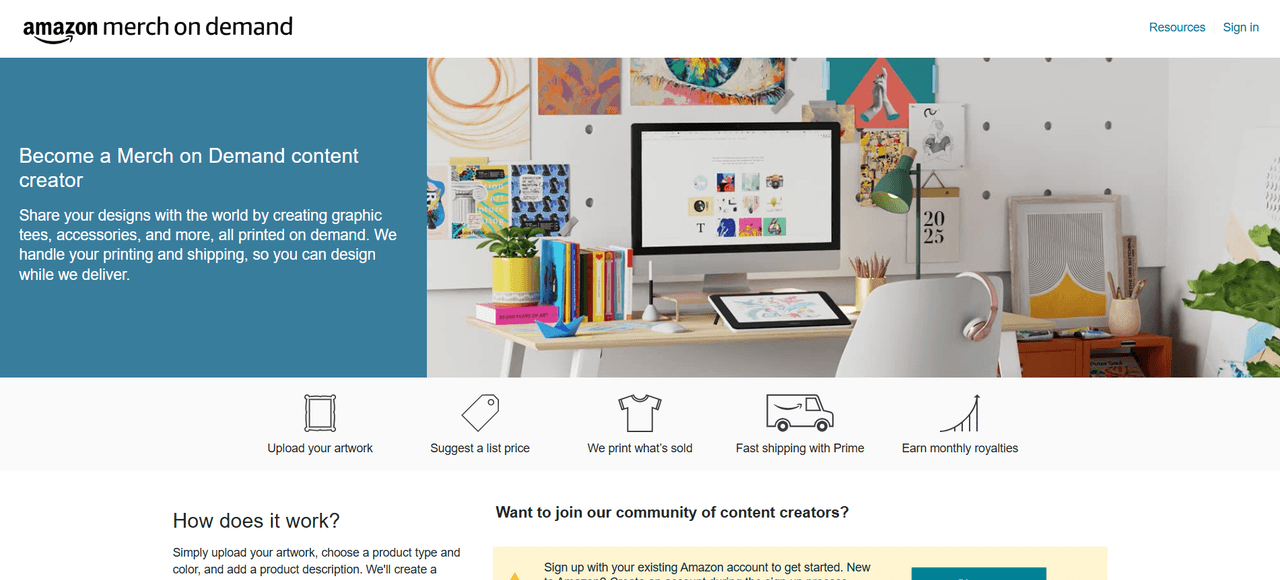
How it compares to Redbubble: This is the reach play. The single biggest thing Amazon Merch has over Redbubble is buyer traffic and intent. Amazon shoppers arrive ready to buy, with trust and fast shipping already in place, which no independent marketplace can match. The catches are real, though. Merch is invite-based with tiered selling limits, so you start small and unlock more slots as you sell, and it is the strictest platform there is on trademarks. A single registered phrase can get your whole account banned, so it is arguably less forgiving than Redbubble on that front. It is apparel-focused, so it is not a home for fine-art prints.
Best for: Apparel sellers who want raw reach over a curated art audience, and who are disciplined about trademark-checking every single phrase before upload.
5. Spreadshirt / Spreadshop
What it is: A print-on-demand platform with two sides. Spreadshirt is a marketplace you can sell into, and Spreadshop lets you spin up your own branded shop on their fulfillment. It is particularly strong in Europe.
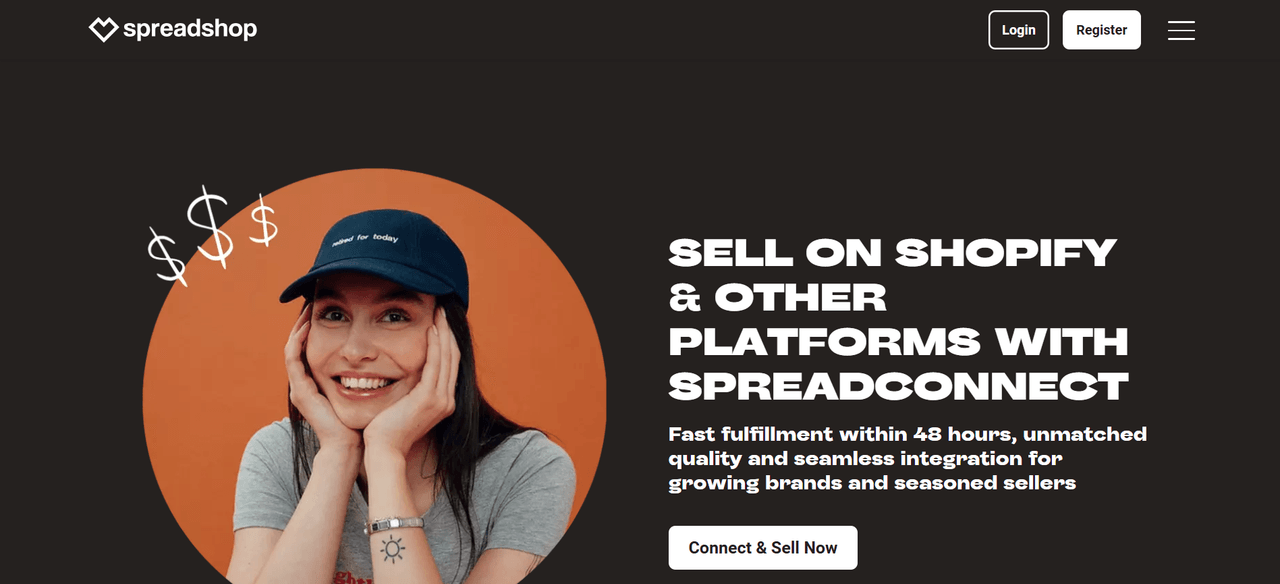
How it compares to Redbubble: Spreadshirt gives you a halfway step between a pure marketplace and your own store. The marketplace side works like Redbubble (upload, get found through browse and search), but Spreadshop lets you run a semi-branded storefront without building a full Etsy or Shopify operation. Its real edge over Redbubble is European reach and localized fulfillment, which matters if a chunk of your audience is in the EU. Traffic on the marketplace side is lower than Redbubble's, so the own-shop route only pays off if you can send your own visitors.
Best for: Sellers with an EU-leaning audience, or anyone who wants a light branded shop without leaving the POD comfort zone entirely.
6. Etsy + Printful or Printify
What it is: Not a POD marketplace itself. Etsy is your own storefront, and you connect a fulfillment provider like Printful or Printify that prints and ships each order. The result is a shop you own, with the best margins and the most control.
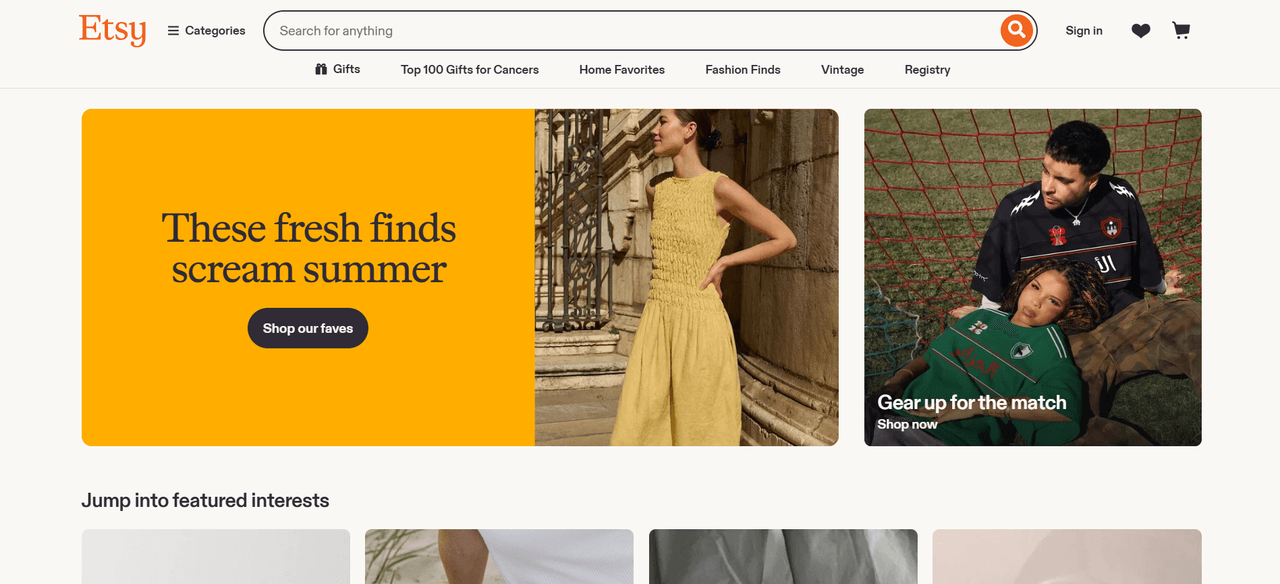
How it compares to Redbubble: This is the biggest departure from Redbubble, and for a lot of frustrated sellers it is the real answer. On Etsy you set your own prices and keep the difference, so margins beat Redbubble's markup model. You own the customer relationship and the brand instead of renting space. And Etsy buyers arrive with genuine buyer intent, actively shopping rather than idly browsing. The honest cost is work. Etsy does not hand you traffic the way Redbubble's browse pages do, so you drive it through listing SEO, and sometimes ads. There are listing fees, and you handle customer questions yourself. More control means more responsibility. If you are comparing the two head to head, Etsy vs Redbubble breaks down the trade-offs.
Best for: Sellers ready to treat POD as a real business, who want margin and brand control and are willing to do the marketing work.
7. Gelato
What it is: A fulfillment provider, not a marketplace. Gelato prints and ships through a global network of local print partners, which cuts shipping times and costs across many countries. You connect it to a store (Etsy, Shopify, and others).
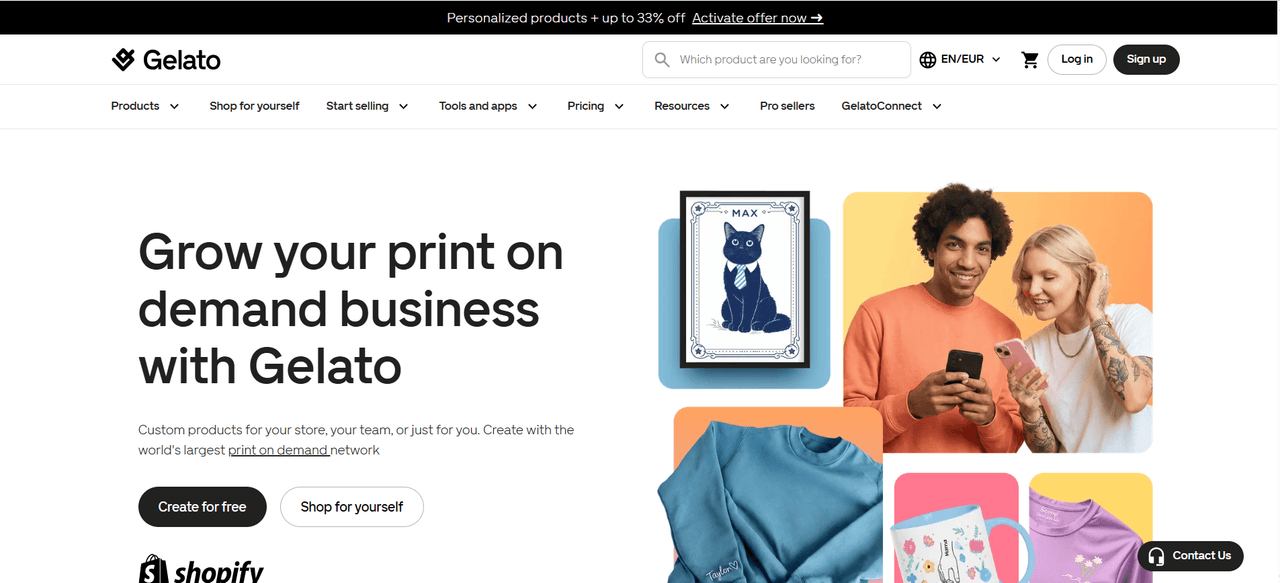
How it compares to Redbubble: Gelato is not somewhere you list, it is the printing layer behind your own shop. Compared to selling on Redbubble, going the Gelato route means you own everything and Gelato just handles production. Its standout feature is local fulfillment in many regions, so a European or Asian customer gets a faster, cheaper print than a single central factory would manage. It only makes sense once you have your own storefront and traffic. It does nothing for discovery on its own.
Best for: Sellers going independent who want strong global shipping economics behind their own store.
8. Printful
What it is: The other major fulfillment provider, known for higher print quality, strong branding options (custom labels, packaging inserts), and deep integrations with Etsy, Shopify, and most store builders.
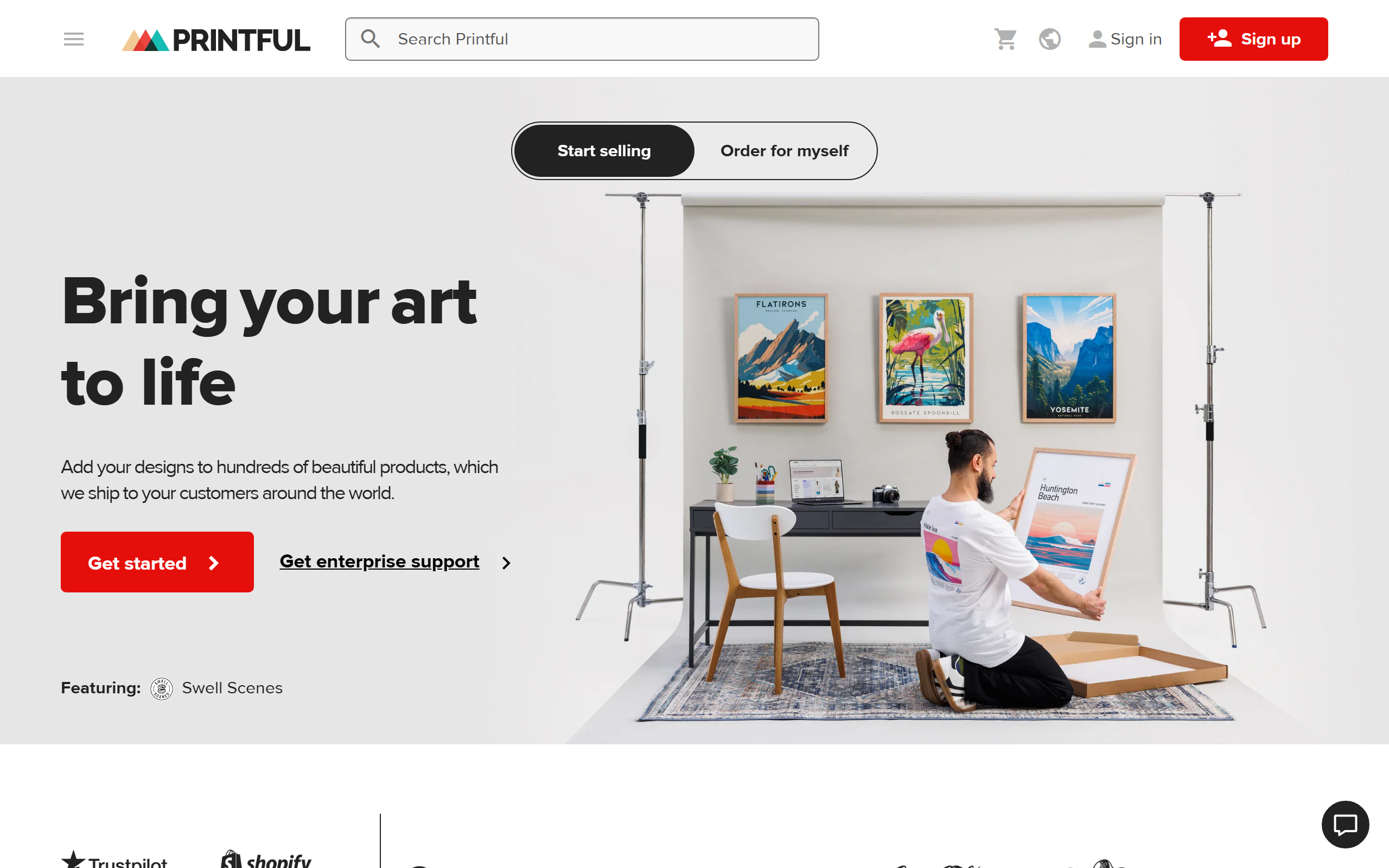
How it compares to Redbubble: Like Gelato, Printful is the engine behind your own shop rather than a marketplace to join. Its edge is product quality and branding: the finish tends to be a step up, and you can white-label the unboxing so it feels like your brand, not a generic POD drop. Base costs run a little higher, which you offset by setting your own retail price. Same caveat as Gelato, no built-in audience. You bring the traffic.
Best for: Sellers building a real brand who care about print quality and a branded customer experience, and who are ready to market their own store.
For the full landscape beyond just Redbubble replacements, the best print on demand companies roundup compares the whole field on royalties, audience, and ease of entry.
Should you switch or just add a platform?
Here is the part most "alternatives" lists skip, and it is the most important part.
For most Redbubble sellers, the honest answer is not "switch" but "add." Diversifying beats jumping ship. The same design that sits on Redbubble can also live on TeePublic and Society6 for modest extra effort, which spreads your account risk and multiplies your surface area without abandoning the work you have already done. Cross-listing to two or three platforms is what most serious sellers actually do, and it directly answers the "one point of failure" worry that sends people looking in the first place.
But there is a deeper thing to face before you rebuild your catalog anywhere. Look back at those four reasons people leave Redbubble. Three of them (saturation, account risk, and single-platform fragility) are not really Redbubble problems. They follow you. A saturated, generic design fails on TeePublic and Zazzle and Amazon Merch too. A trademark strike can hit you just as hard, in fact harder, on Amazon. Moving a losing catalog to a new platform usually just gets you the same result in a new place.
The real lever, almost always, is the niche, not the platform. A flooded, generic niche buries good work everywhere. A specific, under-served niche gets found on Redbubble and on every alternative here. So before you spend a week rebuilding your shop somewhere new, it is worth checking that the niche you are moving into actually sells and is not already just as flooded as the one you are leaving.
Doing that by hand is slow. It means opening several marketplaces, looking at what top sellers are genuinely moving (not just what gets searched), and cross-checking that your phrases are not trademarked, across four sites, for every idea. Trendlytic takes most of that homework off your hands: one search surfaces what is actually selling across TeePublic, Amazon Merch, Redbubble, and Etsy, and a one-click lookup tells you whether a phrase is live in the USPTO register. Whichever alternative you land on, validating the niche first is what decides whether the switch was worth it. If you want the manual method instead, how to find trending POD niches walks through it step by step.
FAQ
What is the best Redbubble alternative? There is no single winner, it depends on why you are leaving. For the closest, most similar marketplace, TeePublic is the best fit (same model, same group, frequent sales). For far more reach, Amazon Merch on Demand. For control over margins and your own brand, an Etsy shop paired with Printful or Printify. Most sellers do best adding one or two of these alongside Redbubble rather than fully switching.
Is TeePublic better than Redbubble? It depends on your work. TeePublic is apparel-first with a design-aware audience and frequent sitewide sales, and it tends to offer competitive apparel royalties, so it is often better for niche humor and typography sellers. Because it is part of the same group as Redbubble and works almost identically, most sellers list on both rather than choosing one. See TeePublic vs Redbubble for the full comparison.
What sites are like Redbubble? The most Redbubble-like sites are TeePublic (nearly identical model, same group), Society6 (more curated, decor-focused), and Zazzle (wider range, customization-focused). All three are open marketplaces you upload to and get found through browse and search. Amazon Merch on Demand is also similar in being hands-off, but it is gated and far stricter on trademarks.
Is there a better print on demand site than Redbubble? "Better" depends on your goal. For bigger reach, Amazon Merch beats Redbubble on raw traffic. For higher margins and brand control, an Etsy storefront with Printful or Printify beats it. But no alternative fixes saturation or a weak niche, which is usually the actual problem. The better move is often adding a platform, not replacing Redbubble.
Why are people leaving Redbubble? The four common reasons are heavy saturation (hard for new designs to get seen), thin per-sale royalties on the base-price model, account and removal risk from the aggressive trademark scanner, and not wanting all their income tied to one platform. Only the margin issue is unique to Redbubble, the others follow you to most open marketplaces.
Can I sell on multiple print on demand sites at once? Yes, and most serious sellers do. Cross-listing the same designs across Redbubble, TeePublic, and Society6 spreads your account risk and multiplies your visibility for modest extra effort. The main thing to manage is keeping designs and trademark checks consistent across platforms so a phrase that is safe on one does not get you struck on another.
Do I need my own store to leave Redbubble? No. You can move to another hands-off marketplace like TeePublic or Amazon Merch with no storefront of your own. You only need a store (Etsy, Shopify) if you want margin and brand control, in which case you pair it with a fulfillment provider like Printful, Printify, or Gelato. That path earns more per sale but you have to drive the traffic yourself.
Conclusion
The best Redbubble alternative is the one that matches your reason for leaving. Want the smoothest similar marketplace? TeePublic, then Society6 and Zazzle. Want reach? Amazon Merch. Want margin and a real brand? Etsy with Printful or Printify, backed by Gelato or Printful for fulfillment. And for most sellers, the smartest move is not switching at all but adding a second and third platform so you are never one suspension away from zero.
Just remember the honest throughline: a new platform does not fix an old problem. If a design is not selling because the niche is flooded or generic, it will not sell on the alternative either. So whichever route you pick, validate that the niche actually sells and is not already saturated before you rebuild your catalog. Trendlytic reads that across TeePublic, Amazon Merch, Redbubble, and Etsy in one search, and you can run any phrase through the free trademark checker before it goes on a design. Start a free trial, and research what is selling before you spend a week designing.
What is pushing you to look past Redbubble, the saturation, the margins, or the account risk? That answer usually tells you which alternative on this list is actually right for you.
Like this? Get one like it every Wednesday.
Niche data, trademark alerts, one tactic per week.
Try Trendlytic
Find your next winning POD niche in 40 seconds
Live data from TeePublic, Amazon Merch, Redbubble, and Etsy, with a trademark check built in. Then turn any winner into a listing for a design of your own in that niche. Plans from $19/month.
Start researchingKeep reading
- Trendlyticwhere to sell ai art
Where to Sell AI Art: The Best Marketplaces (Honest Guide)
The JournalWhere to Sell AI Art: The Best Marketplaces (Honest Guide)
July 18, 2026 · 18 min read
- Trendlyticcan you sell ai art on redbubble
Can You Sell AI Art on Redbubble? What's Allowed
The JournalCan You Sell AI Art on Redbubble? What's Allowed
July 17, 2026 · 15 min read
- Trendlyticprintify alternatives
8 Best Printify Alternatives in 2026 (Faster & More Reliable)
The Journal8 Best Printify Alternatives in 2026 (Faster & More Reliable)
July 6, 2026 · 14 min read