TL;DR: If you've listed on Etsy and have zero sales, it's almost never bad luck. It's usually one of four fixable things: a saturated or no-demand niche, listing SEO (your title and tags) that doesn't match how buyers actually search, too few listings, or no reviews yet because you're brand new. Fix the niche and the SEO first, add more relevant listings to widen your search surface, and use a few honest tactics to trigger that first order. This is diagnosable, not random. Work through the four causes in order and you'll usually find yours.
You did the hard part. You opened the shop, made something, wrote the listing, hit publish. And then nothing happened. Days pass, maybe weeks, and the "you made a sale" email never comes. It's a specific kind of frustrating, because you can't tell whether you're one tweak away or doing it all wrong.
Let me be straight before we start: the reason you have no sales is almost certainly not bad luck, and it's almost certainly fixable. In two years of watching new shops across Etsy, Redbubble, TeePublic, and Amazon Merch, the "stuck at zero" problem comes down to a short list of causes that repeat. This is a diagnosis, not a pep talk. I'll walk you through the four usual reasons you have no first sale, how to tell which one is yours, and the tactics that actually trigger that first order.
This assumes you've already got a shop open with listings live. If you haven't listed yet, start with how to sell on Etsy instead. If you're live and stuck, keep reading.
Don't miss the next one.
New POD niche analysis every Wednesday.
Why you have no sales yet (it's fixable)
Let go of the idea that the market is rigged or you got unlucky. Etsy has tens of millions of active buyers searching every day. If none of them are finding and buying your product, that's information, not a verdict. Something specific is blocking the connection between what you listed and the people who'd buy it.
Here's the honest reframe: a first sale is a chain of small things going right. A buyer has to search a phrase, see your listing, click it, trust the page, and decide the price is fair. Break any link and you get zero. So "no sales" isn't one problem. It's a diagnostic question: which link is broken?
Almost every time, the broken link is one of four things:
| Symptom | Likely cause | The fix |
|---|---|---|
| Listings get views but no sales | Trust, photos, or price problem (the click happens, the buy doesn't) | Improve first photo, add reviews/social proof, sanity-check pricing |
| Listings get almost no views at all | SEO mismatch or a dead/saturated niche | Rewrite titles and tags to buyer phrases; validate real demand |
| A handful of listings, no traction | Too few shots at the search box | Add more relevant, well-researched listings |
| Everything looks fine but still zero | Brand-new shop with no history or reviews | Time, first-buyer tactics, complete branding |
Notice the split between the top two rows. Views but no sales is a conversion problem. No views at all is a discovery problem. Before you change anything, open your Etsy shop stats: are your listings getting impressions and visits, or basically nothing? That one number tells you which half of this post to focus on first. Let's take the four causes in the order they usually matter.
1. Your niche might be saturated or have no demand
This is the biggest cause of no first sale, and the one people are least willing to look at, because it means the problem started before the listing. But it's the first thing to check: if it's wrong, nothing downstream can save you. There are two ways a niche kills sales before you begin.
No demand. You made something you personally think is great, but very few people are searching for it or buying it. The product is fine. The audience just isn't there. Etsy is a search engine, and if nobody types phrases that lead to your product, it doesn't matter how good it looks.
Too much saturation. The opposite problem. The niche has plenty of demand, but thousands of established shops with sales history and reviews already own every search term. As a brand-new listing, you rank on page 30 and no buyer scrolls that far. There's demand, but none of it can reach you.
The sweet spot, the only place a new shop reliably wins, is proven demand without crushing saturation. Something people are genuinely buying, in a corner specific enough that you can actually surface in results.
So how do you check which side you're on? Look at what's actually selling, not what's being searched. Search your product idea on Etsy the way a buyer would. Count how many results come back (tens of thousands is a warning sign for a new shop). Then look at the top listings: real sales counts and recent reviews, or a thin field? A niche with real sales spread across many shops, and room lower down, is one you can enter. A niche where a few giants own everything, or where nothing seems to sell at all, is one to rethink.
Doing this by hand is genuinely slow. It means searching across marketplaces, sorting by what sells, and reading top-seller signals one niche at a time, which is hours of work per idea. Trendlytic, my own tool, exists to shorten that part: a single search puts Etsy, Redbubble, TeePublic, and Amazon Merch in one view so you can read real demand and saturation before you commit, and a USPTO lookup for whichever phrase makes the cut. It won't make the sale for you, and you don't need it to succeed. It just replaces the manual digging so you find out a niche is dead or flooded before you've built ten listings into it, not after.
Tool or spreadsheet, the principle is the same: before you blame the algorithm, confirm the niche has real demand and isn't already owned. Get this right and every fix below starts to matter. Get it wrong and none of them will.
If you need concrete starting points with demand behind them, I put together the best things to sell on Etsy.
2. Your listing SEO doesn't match how buyers search
Say the niche is fine. There's real demand and you can plausibly rank. The next place first sales die is the gap between the words you wrote and the words buyers type. This is the single most common fixable mistake, and the reason for most "almost no views" shops.
Etsy matches a buyer's search against your title, tags, attributes, and category. If the phrase someone types doesn't appear in those fields, your listing isn't even in the running. Not ranked low. Not in the race at all. A listing can be beautiful and still be invisible, purely because it's written in your language instead of the buyer's.
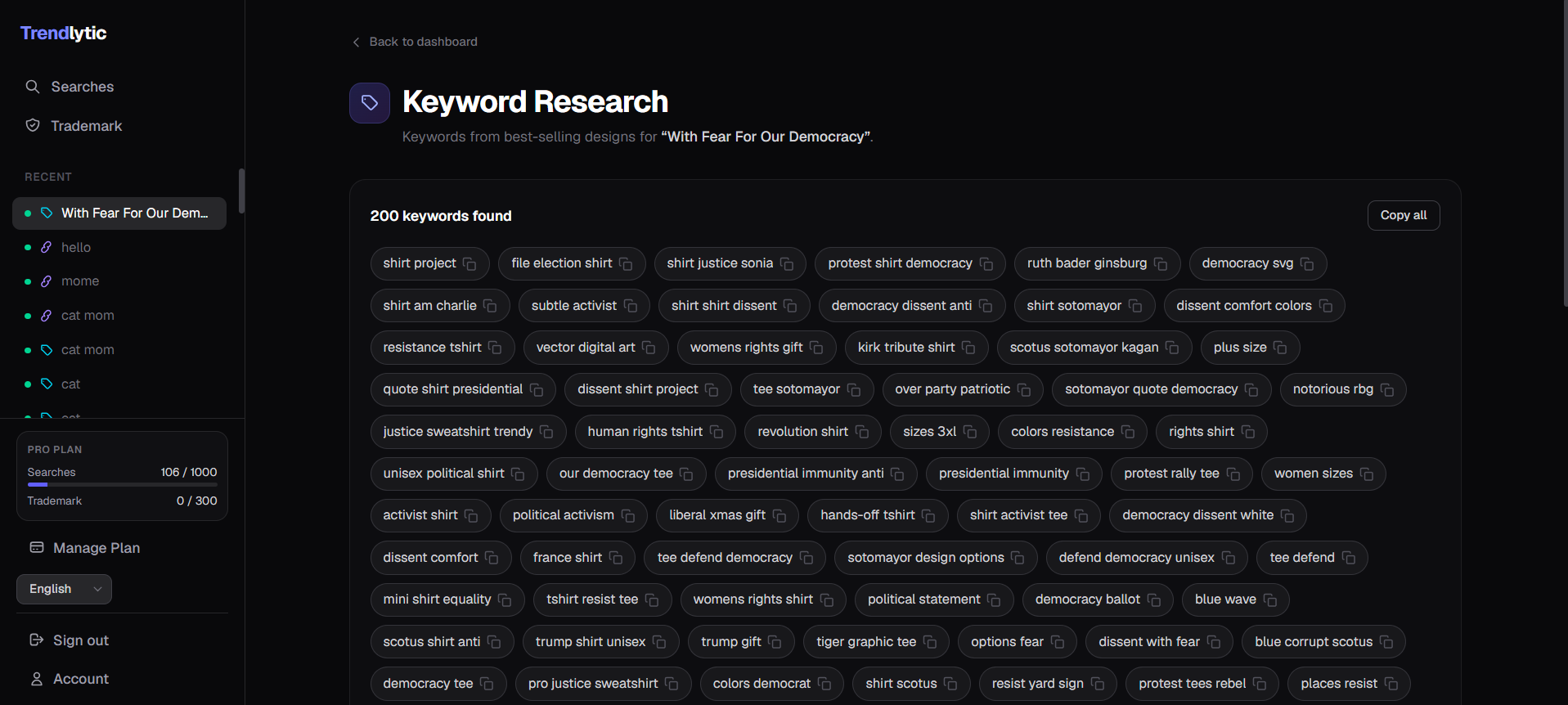
The two fields that carry the most weight:
Your title. Most beginners write a name, not a search phrase. "Cozy Autumn Mug" is a name. No one types that. A buyer types "personalized fall coffee mug" or "pumpkin spice gift for her." You get up to 140 characters, so front-load the exact phrase you want to rank for, then stack supporting descriptors and gift context, separated by commas. Compare:
- Weak:
Cute Dog Mug - Strong:
Personalized Golden Retriever Dad Mug, Dog Lover Gift for Him, Custom Name Coffee Mug
The strong version names the breed, the persona, personalization, the recipient, and gift framing. Several real searches in one title, and it still reads like a human wrote it.
All 13 tags. Etsy gives you 13 tag slots, each up to 20 characters, and they're your highest-leverage SEO surface. The rules that hold up: use all 13, make every one a multi-word buyer phrase ("dog dad gift," not "dog"), don't repeat the same phrase across slots, and mirror your strongest tags in the title. Single broad words like "mug" or "gift" are unwinnable, millions of listings compete for them, and the intent is weak. A quick test for any tag: would a real person type this into Etsy's search bar? If not, it's a wasted slot.
Specific beats broad every time. "Dog mug" is a flooded, low-intent search. "Golden retriever dad mug" has far fewer competitors and a buyer much closer to purchasing. Narrower phrases are easier to rank for and pull higher-intent traffic, exactly what you need for a first sale.
For the full mechanics of how Etsy ranks and how to write titles, tags, attributes, and quality signals that win, read Etsy SEO: the complete guide to ranking your listings. And to skip the blank page, our free Etsy tag generator expands any niche into a grouped set of buyer-phrase tags in one click, already capped to Etsy's 13-tag, 20-character limit so each one is usable as is.
One more thing people skip: fill every attribute Etsy offers (color, occasion, recipient, holiday, style, material) and pick the most specific category available. Attributes are effectively hidden tags and filtered-search entries. Leaving them blank drops you out of results a buyer would have found you in. Free relevance most sellers leave half-done.
3. You have too few listings
Here's a quieter cause new sellers rarely consider: you might just not have enough listings yet. Early on, Etsy is partly a numbers game, in a specific, non-spammy way.
Every well-made listing is another entry point into search. Another set of keywords you can rank for, another product in front of a slightly different buyer, another shot at the top-of-results click. A shop with three listings has three doors into it. A shop with thirty relevant, well-researched listings has thirty. More surface area means more chances for one to catch the search that becomes your first sale.
This gets misread, so be careful: more listings is not "upload anything to hit a number." Thirty lazy listings in a dead niche still sell nothing. The point is that once the niche and SEO are right, thin catalog size is often the last thing holding you back. You did everything correctly on five listings and concluded it doesn't work, when five was never enough surface area to reliably catch a search.
I won't give you a magic number, because there isn't an honest one, and anyone quoting an exact "you need X listings" is guessing. What's true is directional: a handful is usually too few to judge anything, and steadily adding good ones widens your chances. The seller who lists consistently over weeks, applying what they learn each time, almost always beats the one who published five and waited.
So if your niche checks out and your SEO is solid but you're still at zero, the answer may simply be volume. Keep building the catalog, one well-researched listing at a time. Each new one is both another shot at the first sale and another data point about what your buyers actually search.
4. You have no reviews or social proof yet
This is the cold-start problem, and it's real. Etsy buyers lean heavily on reviews and shop signals to decide who to trust, which is a genuine catch-22: you need sales to get reviews, and reviews help you get sales. When you're brand new you have neither, and that first buyer has to take a chance on a shop with an empty review section.
You can't manufacture reviews, and you shouldn't try (fake reviews break Etsy's rules and buyers see through them). But you can close a lot of the trust gap in honest ways within your control:
- Complete your branding. A shop with a proper banner, a filled-out About section, a shop logo, and a clear voice reads as a real business. A half-built profile reads as abandoned, and buyers hesitate. This is free trust you can add this afternoon.
- Nail your photos. With no reviews to lean on, your images carry the trust load. For t-shirts, the free mockup generator turns your design file into on-model listing photos. Clear, well-lit photos that show the product in use or in context do the reassuring that reviews would otherwise do. A blurry first photo on a brand-new shop is a double trust hit.
- Write real policies. Shipping, returns, and processing times that are clearly stated make a new shop feel safe to buy from. Vague or empty policies make a nervous first buyer click away.
- Make the description do the reassuring. Explain materials, sizing, what's included, and how it ships. Answer the questions a first-time buyer of an unreviewed shop would worry about, before they have to ask.
- Earn the first reviews carefully. Once orders start, over-deliver on those early transactions. Fast fulfilment, clear communication, and a polite follow-up after delivery (within Etsy's messaging rules) is how the first handful of reviews appear. They're the hardest and by far the most valuable ones you'll ever get.
The cold-start problem solves itself once you're past it. Early on, the goal is just to reduce the friction enough that one buyer says yes. After that, the first review makes the second sale easier, and it compounds.
Tactics to actually trigger your first sale
Diagnosis is most of the battle, but let's get tactical. Assuming the niche is sound and the SEO is fixed, here's how to push for that first order without doing anything spammy or desperate.
Nail one strong listing before spreading thin. Pick your best product and make its listing genuinely excellent: keyword-led title, all 13 buyer-phrase tags, every attribute filled, the most specific category, and photos you're proud of. One outstanding listing that ranks and converts beats twenty mediocre ones. Get one working, then repeat the pattern.
Price for a fair first sale, sustainably. Price competitively to lower the barrier for that first buyer, but don't gut your margin. Underpricing out of fear ("cheaper feels safer") nets almost nothing after Etsy's fees and trains you to resent the work. Cover your fees, price for the niche, and if you want an early edge, a small honest intro offer beats a permanent loss-leader.
Share to your own network and relevant communities, without spamming. New listings have no search history, so send them a little traffic yourself for the first weeks. Pinterest sends real Etsy traffic and compounds over months. Share with people in your circle who'd genuinely want the product. Post in communities where it fits naturally, not as a drive-by "check out my shop" drop. Early clicks help Etsy learn your listing is worth showing.
Use Etsy Ads only cautiously. Ads can get eyeballs on a new listing, but they don't fix a weak niche or bad SEO, and it's easy to pay for clicks that never convert. If you try them, set a tiny daily budget, run them only on your strongest listing, and treat it as a test, not a rescue. If the listing doesn't convert organically, ads just cost you money faster.
Be patient with indexing. A brand-new listing takes time to gain search history before it settles into a stable ranking. The first few weeks are often quiet by design, not because you failed. Don't tear a listing apart after five days. Give it real time in a real niche before you judge it.
Here's a fast pre-flight checklist to run on any listing that isn't selling:
- The niche has real, verified demand and isn't hopelessly saturated
- The title front-loads the exact phrase a buyer would type
- All 13 tags are filled with multi-word buyer phrases, none repeated
- Every attribute is filled and the category is the most specific one
- The first photo is clear, well-lit, and readable as a small thumbnail
- Branding, policies, and About section are complete
- The price covers Etsy's fees and leaves a real margin
- You've given it a few weeks and shared it beyond Etsy search
If every box is checked and you're still at zero after a fair stretch, the most likely remaining cause is catalog size (cause 3) or the niche after all (cause 1). Go back to the top of the list.
How long does the first Etsy sale usually take?
The honest answer is that it varies widely, and anyone quoting a precise average is making it up. Your timeline depends mostly on your niche and your SEO. A well-targeted listing in a niche with real demand and beatable competition can land a first sale in days. A shop still working out its niche and keywords can take weeks, and that's normal, not a sign of failure.
What I can give you is the shape of it. New listings need time to build search history before they rank stably, so the first weeks are commonly quiet even when you've done everything right. First sales usually start once you've added consistently to a researched catalog, not off a single listing on day one. And once the first sale and first review land, the next ones tend to come faster, because the trust and ranking signals compound.
The trap is judging results at week two, right before the compounding would have started. If your fundamentals are sound (niche, SEO, enough listings), give it longer than feels comfortable and keep adding, rather than concluding it's broken.
FAQ
Why am I not getting sales on Etsy? Almost always one of four fixable things: your niche has no real demand or is too saturated for a new shop to rank, your listing SEO (title and tags) doesn't match how buyers actually search, you have too few listings to catch enough searches, or you're brand new with no reviews yet. Check your shop stats first. Lots of views but no sales points to a conversion or trust problem; almost no views points to SEO or the niche.
How long until my first Etsy sale? It varies widely, from days to several weeks, depending mostly on your niche and SEO. A well-targeted listing in a niche with real demand can sell quickly. A shop still figuring out its keywords takes longer. The first few weeks are often quiet while listings gain search history, which is normal. There's no honest fixed average, so treat any specific number you see with suspicion.
How many listings do I need to get sales on Etsy? There's no magic number, and anyone quoting an exact one is guessing. Directionally, a handful of listings is usually too few to judge anything, because each listing is another entry point into search. Steadily adding well-researched, relevant listings widens your chances. The point isn't volume for its own sake. It's that too small a catalog often isn't enough surface area to reliably catch a first sale.
Do Etsy ads help get your first sale? Sometimes, but cautiously. Etsy Ads can put a new listing in front of buyers, but they don't fix a weak niche or bad SEO, and you can easily pay for clicks that never convert. If you try them, use a tiny daily budget on your single strongest listing and treat it as a test. If the listing doesn't convert organically, ads just spend your money faster.
How do I get found on Etsy with no reviews? Reviews help, but they're not required to be found. Getting found is an SEO problem: keyword-led titles, all 13 buyer-phrase tags, complete attributes, and the most specific category. Getting the found-buyer to actually buy is where no reviews hurts, so close the trust gap other ways: complete branding, clear photos, real policies, and a description that answers a first-time buyer's worries. The first sale and first review are the hardest; after that it compounds.
I have views but no sales on Etsy. What's wrong? Views mean your SEO is working and buyers are seeing you, so the broken link is conversion. Usually it's the first photo (not compelling enough to click or trust), the price (too high for the niche, or so low it reads as suspicious), or the trust gap of a brand-new shop with no reviews. Improve the first image, sanity-check pricing against competitors, and complete your shop's branding and policies.
Is it normal to have no sales on Etsy at first? Yes, completely. New listings need time to build search history, and a brand-new shop has no reviews to lean on, so a quiet start is the default, not a failure. What's not normal is staying at zero for months without changing anything. Use the quiet period to diagnose and fix the niche, SEO, catalog size, and trust signals, rather than just waiting.
Final thoughts
If you're stuck at zero, hold onto the one idea that matters most: this is diagnosable, not random. You're not unlucky and Etsy isn't rigged against new shops. One specific link in the chain is broken, and it's almost always the niche, the SEO, the catalog size, or the cold-start trust gap. Work through those four in order and you'll usually find yours.
Start at the top, because it's upstream of everything else: make sure the niche actually has demand and isn't already owned by established shops. Then fix the SEO so buyers can find you, add enough well-researched listings to catch real searches, and close the trust gap while you earn those first reviews. The first sale is the hardest one you'll ever get. After it, the reviews and rankings compound and the second comes easier.
If you want help with the upstream step, checking whether a niche has real demand and how saturated it is across Etsy, Redbubble, TeePublic, and Amazon Merch, that is the work Trendlytic was built for. It is my tool, so discount the plug; the USPTO lookup covers the phrase you pick. It's $19/month for 100 searches, with a free trial. It won't make the first sale for you, but it stops you from pouring effort into a niche that was never going to convert.
Which of the four causes do you think is yours: the niche, the SEO, too few listings, or the cold start? Tell me where you're stuck and I'll point you to the right next read.
Like this? Get one like it every Wednesday.
Niche data, trademark alerts, one tactic per week.
Try Trendlytic
Find your next winning POD niche in 40 seconds
Live data from TeePublic, Amazon Merch, Redbubble, and Etsy, with a trademark check built in. Then turn any winner into a listing for a design of your own in that niche. Plans from $19/month.
Start researchingKeep reading
- Trendlyticlow competition keywords
How to Find Low-Competition Keywords (Without Guessing)
The JournalHow to Find Low-Competition Keywords (Without Guessing)
July 25, 2026 · 13 min read
- Trendlyticetsy jewelry keywords
Most Popular Jewelry Keywords on Etsy: The Ones That Actually Sell
The JournalMost Popular Jewelry Keywords on Etsy: The Ones That Actually Sell
July 18, 2026 · 16 min read
- Trendlyticbest keywords for etsy
Best Keywords for Etsy: How to Find the Ones That Actually Sell
The JournalBest Keywords for Etsy: How to Find the Ones That Actually Sell
July 14, 2026 · 17 min read